


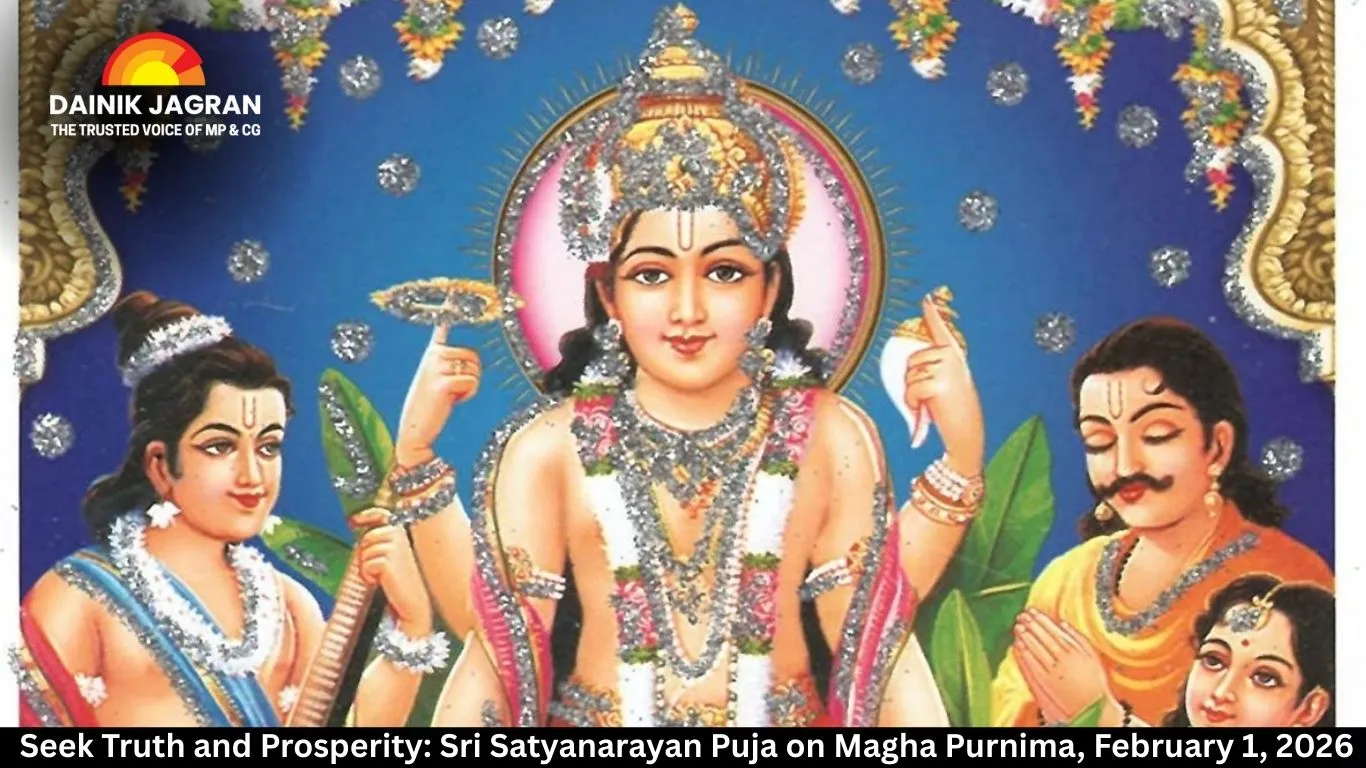
Seek Truth and Prosperity: Sri Satyanarayan Puja on Magha Purnima, February 1, 2026
Digital Desk
The Satyanarayan Puja 2026 observance offers a spiritual cornerstone for the year, promising peace, prosperity, and a reaffirmation of integrity for all who participate with devotion.
The Significance of Magha Purnima and Satyanarayan Worship
Magha Purnima holds immense religious weight in Hinduism. It is a day dedicated to honoring Lord Vishnu and performing rituals that purify the body, mind, and soul. Performing the Satyanarayan Puja on this full moon day is believed to amplify its benefits, aligning the devotee with lunar energies that symbolize completeness and spiritual illumination.
A Puja for Kali Yuga: Scriptural references indicate that worship of Satyanarayan is especially prescribed for the current age, Kali Yuga, as a means to overcome suffering and attain happiness.
Embodiment of Truth: The name "Satyanarayan" combines Satya (truth) and Narayan (the supreme being). The puja centers on the principle that a life grounded in truthfulness and righteousness invites divine blessings and abundance.
Key Details for the February 1, 2026 Observance
For those planning to observe the fast and ceremony, here are the essential astrological timings:
| Detail | Date & Time |
| Purnima Tithi Begins | February 1, 2026, at 05:52 AM |
| Purnima Tithi Ends | February 2, 2026, at 03:38 AM |
| Recommended Puja Time | Evening, after moonrise (approx. 5:26 PM) |
How to Perform the Puja: A Simplified Guide
The puja vidhi (procedure) can be performed at home with family, fostering unity and shared spiritual growth. While customs vary by region, the core steps remain consistent.
1. Sankalp (Vow): Begin by cleansing yourself and declaring your sincere intention to perform the puja for the well-being and prosperity of your family.
2. Invoke Lord Ganesha: Always start by worshipping Lord Ganesha to remove any obstacles from the ceremony.
3. Kalash Sthapana: Set up a sacred pot (kalash) filled with water, decorated with mango leaves and a coconut, representing the presence of the divine.
4. Main Puja & Katha: Invoke Lord Satyanarayan, offer flowers, incense, and naivedya (food offering). The heart of the ritual is the recitation of the Satyanarayan Katha—sacred stories that illustrate the rewards of faith and the consequences of neglecting one's vows.
5. Aarti & Prasad: Conclude with the ceremonial aarti (light offering) and distribute prasad. The traditional prasad is often a sweet halwa made from semolina, ghee, sugar, and bananas.
The Benefits and Global Observance
Performed with devotion, the puja is believed to bring multiple blessings:
Removal of sorrow and suffering.
Harmony in family and marital life.
Success in endeavors and overall prosperity.
The practice is a unifying force, observed from major temples in India like the famous Sri Satyanarayana Swamy temple in Annavaram to community centers across the globe, such as the Kalpavruksha Kshetra in Mysuru, which has listed February 1st for its special Magha Hunnime pooja, and temples in the United States.
A Truthful Start to the New Year
The Sri Satyanarayan Puja on February 1, 2026, offers more than ritual; it is an opportunity to anchor the new year in the values of truth, gratitude, and spiritual discipline. Whether performed in a grand temple or a humble home altar, this Magha Purnima observance invites divine grace and a powerful, positive intention for the months ahead.




.jpg)




