

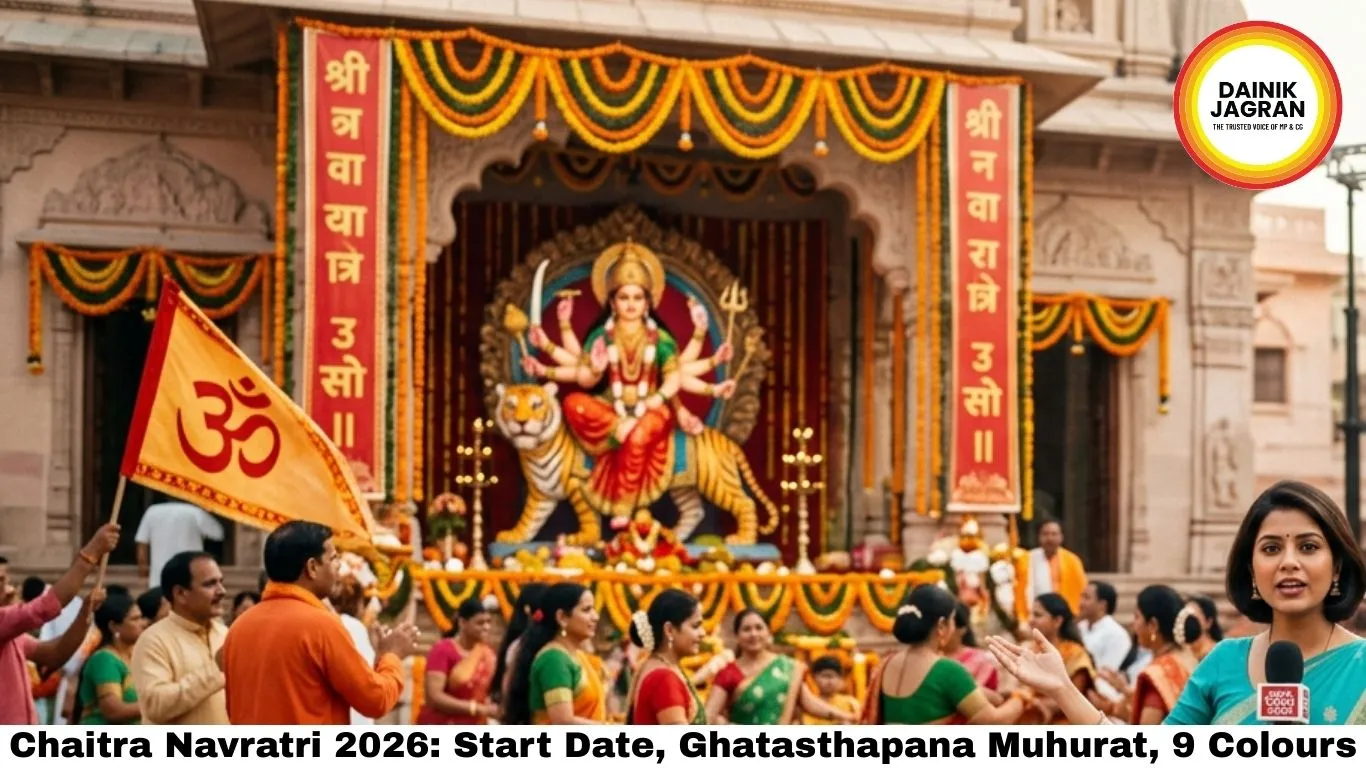
Chaitra Navratri 2026: Start Date, Ghatasthapana Muhurat, 9 Colours, Puja Vidhi and Complete Day-by-Day Guide

Digital Desk

Chaitra Navratri 2026: Start Date, Ghatasthapana Muhurat, 9 Colours, Puja Vidhi and Complete Day-by-Day Guide

Chaitra Navratri 2026 starts March 19 and ends March 27. Get the correct Ghatasthapana muhurat, 9 colours, day-wise goddess, fasting rules and Ram Navami date.

Maa Durga is coming. In just three days, millions of devotees across India will wake before sunrise, clean their homes, light the first diya of the season, and invite the divine energy of Shakti into their lives. Chaitra Navratri 2026 begins on Thursday, March 19 — and it is not just the most sacred nine-day festival of the Hindu calendar. It is also the beginning of the Hindu New Year, the first day of Gudi Padwa, and the season of new beginnings.

Here is your complete, verified, and fully detailed guide to Chaitra Navratri 2026 — dates, timings, colours, rituals, fasting rules, and everything in between.


The Correct Date — March 19, Not March 18

There has been confusion online about whether Navratri begins on March 18 or March 19 this year. Here is the clear answer from the Hindu Panchang.

The Pratipada Tithi — the first lunar day of Chaitra Shukla Paksha — begins at 8:20 PM on March 18 but continues well into March 19. Since Ghatasthapana, the ritual that officially marks the start of Navratri, must be performed during a Shubh Muhurat in the morning hours with Pratipada Tithi prevailing at sunrise — March 19 is the confirmed and correct first day.

Most temples and puja authorities across India have confirmed March 19 as the official start date.

Chaitra Navratri 2026 runs from Thursday, March 19 to Friday, March 27.


Ghatasthapana Muhurat — The Most Important Timing of Day 1

Ghatasthapana, also called Kalash Sthapana, is the ritual that invites Goddess Durga into your home. It must be performed during a specific Shubh Muhurat — never in the evening or night.

Primary Ghatasthapana Muhurat: Morning — 6:18 AM to 10:14 AM on March 19, 2026

Abhijit Muhurat (Alternative — if morning window is missed): 12:05 PM to 12:53 PM on March 19, 2026

During Ghatasthapana, devotees place a sacred Kalash — a copper or clay pot filled with water, mango leaves, and a coconut on top — in the puja space. Barley seeds are sown around the Kalash, symbolising prosperity and growth over the nine days of worship. This Kalash represents the divine presence of Maa Durga in your home from Day 1 to Day 9.


Complete 9-Day Goddess, Colour and Date Guide

Each of the nine days of Navratri is dedicated to a specific form of Goddess Durga — the Navdurga — and has a specific auspicious colour associated with it. Wearing the colour of the day is a way of aligning yourself with the divine energy of that form of the goddess.

Day 1 — March 19 (Thursday) ๐ŸŸก Yellow Goddess: Maa Shailputri — Daughter of the Mountains The yellow colour represents happiness, optimism, and new beginnings. Ghatasthapana is performed today.

Day 2 — March 20 (Friday) ๐ŸŸข Green Goddess: Maa Brahmacharini — The Ascetic Goddess Green represents growth, fertility, and harmony. Devotees offer panchamrit and fruits.

Day 3 — March 21 (Saturday) ๐Ÿฉถ Grey Goddess: Maa Chandraghanta — The Bell-Bearer Grey represents balance and the strength to face challenges. Maa Chandraghanta blesses devotees with courage and grace.

Day 4 — March 22 (Sunday) ๐ŸŸ  Orange Goddess: Maa Kushmanda — Creator of the Universe Orange represents energy, warmth, and creativity. Maa Kushmanda is worshipped for health and prosperity.

Day 5 — March 23 (Monday) โšช White Goddess: Maa Skandamata — Mother of Lord Kartikeya White represents purity, peace, and innocence. Devotees offer white flowers and milk-based sweets.

Day 6 — March 24 (Tuesday) ๐Ÿ”ด Red Goddess: Maa Katyayani — The Warrior Goddess Red represents power, passion, and divine strength. Maa Katyayani is especially worshipped by unmarried women for blessings in marriage.

Day 7 — March 25 (Wednesday) ๐Ÿ”ต Royal Blue Goddess: Maa Kalaratri — The Dark Night Royal blue represents confidence and fearlessness. Maa Kalaratri is the most fierce form of Durga and destroyer of all darkness.

Day 8 — March 26 (Thursday) ๐Ÿฉท Pink — Sandhi Puja Day Goddess: Maa Mahagauri — The Pure White Goddess Pink represents compassion and inner beauty. This is the most important day of Navratri — Durga Ashtami. The sacred Sandhi Puja falls on this day between 11:24 AM and 12:12 PM — a 48-minute window marking the junction of Ashtami and Navami tithis. Kanya Puja — the worshipping of nine young girls as the nine forms of Durga — is performed today. Girls between the ages of 2 and 10 are invited home, their feet are washed, and they are served puri, chana, halwa, and kheer.

Day 9 — March 27 (Friday) ๐ŸŸฃ Purple — Ram Navami Goddess: Maa Siddhidatri — Granter of All Siddhis Purple represents spiritual wisdom and divine grace. This year, Ram Navami — the birth anniversary of Lord Rama — coincides with the ninth day of Navratri, making March 27 exceptionally sacred. The final Siddhidatri Puja, havan, and uprooting of the Javaara barley sprouts are performed today before the fast is broken.


Sandhi Puja 2026 — The Most Sacred 48 Minutes of Navratri

Sandhi Puja is performed at the junction of Ashtami and Navami tithis — the most powerful moment in the entire nine-day festival. In 2026, this sacred window falls on March 26 between 11:24 AM and 12:12 PM. During these 48 minutes, devotees worship Goddess Durga in her form as Chamunda — commemorating the slaying of the demons Chanda and Munda. Missing Sandhi Puja is considered a significant spiritual loss. Set a reminder for 11:24 AM on March 26.


Navratri Fasting Rules — What to Eat and What to Avoid

Navratri fasting is about purifying the body and mind simultaneously. The foods allowed during the fast are sattvic — light, pure, and energy-giving.

Allowed foods include all fruits, rock salt (Sendha Namak) instead of regular salt, milk, curd, paneer, butter and kheer, sattvic vegetables like sweet potato, pumpkin, bottle gourd and potatoes, dry fruits like almonds, cashews, walnuts and raisins, coconut water, fresh fruit juices, and herbal teas.

Strictly avoided foods include regular salt, wheat flour, rice (for strict fasters), onion, garlic, non-vegetarian food, alcohol, and all tamasic or rajasic foods.

The goal of fasting is not starvation — it is conscious, mindful eating that redirects energy from the physical to the spiritual.


Kanya Puja — The Ritual That Completes Navratri

Kanya Puja is performed on Ashtami — March 26, 2026. Nine young girls between the ages of 2 and 10 are invited home and worshipped as the nine living forms of Maa Durga. Their feet are washed with water, tilak is applied to their foreheads, and they are served a meal of puri, chana, halwa, and kheer. Gifts and dakshina are offered before and after the ceremony. Kanya Puja is considered one of the most meritorious rituals of the entire year — with devotees believing that the goddess herself accepts the worship through the presence of these young girls.


Navratri Parana — Breaking the Fast on March 27

The nine-day fast is broken on Navami — March 27, 2026 — after completing the final Siddhidatri Puja, the concluding havan, and the ritual uprooting of the Javaara barley sprouts that were sown on Day 1. The fast should be broken with light, easily digestible food — fruits, khichdi, or light dal — before gradually returning to a normal diet.


Why Chaitra Navratri 2026 Is Extra Special

This year's Chaitra Navratri carries unique spiritual weight for three reasons. First, it coincides with Gudi Padwa on March 19 — the Marathi New Year — making the first day a double celebration of new beginnings. Second, Ram Navami falls on the ninth day — meaning the nine days of Navratri end with the celebration of Lord Rama's birth, joining the energies of Shakti and Rama in one sacred conclusion. Third, this Navratri falls during the Parabhava Nama Samvatsara — a year of transformation — making the nine days of prayer, fasting, and devotion particularly powerful for new beginnings, healing, and spiritual reset.


Which Temples to Visit During Navratri 2026

The most sacred temples to visit during Chaitra Navratri include Vaishno Devi Temple in Jammu, the Vindhyavasini Temple in Mirzapur, Uttar Pradesh, the Kamakhya Temple in Guwahati, Assam, the Meenakshi Amman Temple in Madurai, Tamil Nadu, Chamundeshwari Temple in Mysuru, Karnataka, and the Ram Janmabhoomi Temple in Ayodhya — which will host grand Ram Navami celebrations on March 27.


The Spirit of Navratri — Beyond the Rituals

Navratri is ultimately not about the colour you wear or the food you avoid. It is about nine days of deliberate alignment with the divine feminine energy of the universe — Shakti in her nine forms. It is about waking before sunrise when the world is still quiet, lighting a lamp in the dark, and saying clearly: I am here. I am ready. Guide me.

In a world that moves faster every day — noisier, more anxious, more distracted — Navratri asks you to slow down. To clean your home and your mind at the same time. To fast not just from food but from anger, ego, and negativity. To worship not just the goddess in the temple but the divine energy in every person and living thing around you.

Nine days. Nine goddesses. One invitation to become a better version of yourself.

--------

๐Ÿšจ Beat the News Rush โ€“ Join Now!

Get breaking alerts, hot exclusives, and game-changing stories instantly on your phone. No delays, no fluff โ€“ just the edge you need. โšก

Tap to join:ย 

๐ŸŸข WhatsApp Channel: Dainik Jagran MP CG

Crave more?

๐Ÿ…• Facebook: Dainik Jagran MP CG English

๐Ÿ…ง Twitter (X): Dainik Jagran MP CG

๐Ÿ…˜ Instagram: Dainik Jagran MP CG

Share the fire โ€“ keep your crew ahead! ๐Ÿ—ž๏ธ๐Ÿ”ฅ

english.dainikjagranmpcg.com
16 Mar 2026 By Nitin Trivedi

Chaitra Navratri 2026: Start Date, Ghatasthapana Muhurat, 9 Colours, Puja Vidhi and Complete Day-by-Day Guide

Digital Desk

Maa Durga is coming. In just three days, millions of devotees across India will wake before sunrise, clean their homes, light the first diya of the season, and invite the divine energy of Shakti into their lives. Chaitra Navratri 2026 begins on Thursday, March 19 — and it is not just the most sacred nine-day festival of the Hindu calendar. It is also the beginning of the Hindu New Year, the first day of Gudi Padwa, and the season of new beginnings.

Here is your complete, verified, and fully detailed guide to Chaitra Navratri 2026 — dates, timings, colours, rituals, fasting rules, and everything in between.


The Correct Date — March 19, Not March 18

There has been confusion online about whether Navratri begins on March 18 or March 19 this year. Here is the clear answer from the Hindu Panchang.

The Pratipada Tithi — the first lunar day of Chaitra Shukla Paksha — begins at 8:20 PM on March 18 but continues well into March 19. Since Ghatasthapana, the ritual that officially marks the start of Navratri, must be performed during a Shubh Muhurat in the morning hours with Pratipada Tithi prevailing at sunrise — March 19 is the confirmed and correct first day.

Most temples and puja authorities across India have confirmed March 19 as the official start date.

Chaitra Navratri 2026 runs from Thursday, March 19 to Friday, March 27.


Ghatasthapana Muhurat — The Most Important Timing of Day 1

Ghatasthapana, also called Kalash Sthapana, is the ritual that invites Goddess Durga into your home. It must be performed during a specific Shubh Muhurat — never in the evening or night.

Primary Ghatasthapana Muhurat: Morning — 6:18 AM to 10:14 AM on March 19, 2026

Abhijit Muhurat (Alternative — if morning window is missed): 12:05 PM to 12:53 PM on March 19, 2026

During Ghatasthapana, devotees place a sacred Kalash — a copper or clay pot filled with water, mango leaves, and a coconut on top — in the puja space. Barley seeds are sown around the Kalash, symbolising prosperity and growth over the nine days of worship. This Kalash represents the divine presence of Maa Durga in your home from Day 1 to Day 9.


Complete 9-Day Goddess, Colour and Date Guide

Each of the nine days of Navratri is dedicated to a specific form of Goddess Durga — the Navdurga — and has a specific auspicious colour associated with it. Wearing the colour of the day is a way of aligning yourself with the divine energy of that form of the goddess.

Day 1 — March 19 (Thursday) ๐ŸŸก Yellow Goddess: Maa Shailputri — Daughter of the Mountains The yellow colour represents happiness, optimism, and new beginnings. Ghatasthapana is performed today.

Day 2 — March 20 (Friday) ๐ŸŸข Green Goddess: Maa Brahmacharini — The Ascetic Goddess Green represents growth, fertility, and harmony. Devotees offer panchamrit and fruits.

Day 3 — March 21 (Saturday) ๐Ÿฉถ Grey Goddess: Maa Chandraghanta — The Bell-Bearer Grey represents balance and the strength to face challenges. Maa Chandraghanta blesses devotees with courage and grace.

Day 4 — March 22 (Sunday) ๐ŸŸ  Orange Goddess: Maa Kushmanda — Creator of the Universe Orange represents energy, warmth, and creativity. Maa Kushmanda is worshipped for health and prosperity.

Day 5 — March 23 (Monday) โšช White Goddess: Maa Skandamata — Mother of Lord Kartikeya White represents purity, peace, and innocence. Devotees offer white flowers and milk-based sweets.

Day 6 — March 24 (Tuesday) ๐Ÿ”ด Red Goddess: Maa Katyayani — The Warrior Goddess Red represents power, passion, and divine strength. Maa Katyayani is especially worshipped by unmarried women for blessings in marriage.

Day 7 — March 25 (Wednesday) ๐Ÿ”ต Royal Blue Goddess: Maa Kalaratri — The Dark Night Royal blue represents confidence and fearlessness. Maa Kalaratri is the most fierce form of Durga and destroyer of all darkness.

Day 8 — March 26 (Thursday) ๐Ÿฉท Pink — Sandhi Puja Day Goddess: Maa Mahagauri — The Pure White Goddess Pink represents compassion and inner beauty. This is the most important day of Navratri — Durga Ashtami. The sacred Sandhi Puja falls on this day between 11:24 AM and 12:12 PM — a 48-minute window marking the junction of Ashtami and Navami tithis. Kanya Puja — the worshipping of nine young girls as the nine forms of Durga — is performed today. Girls between the ages of 2 and 10 are invited home, their feet are washed, and they are served puri, chana, halwa, and kheer.

Day 9 — March 27 (Friday) ๐ŸŸฃ Purple — Ram Navami Goddess: Maa Siddhidatri — Granter of All Siddhis Purple represents spiritual wisdom and divine grace. This year, Ram Navami — the birth anniversary of Lord Rama — coincides with the ninth day of Navratri, making March 27 exceptionally sacred. The final Siddhidatri Puja, havan, and uprooting of the Javaara barley sprouts are performed today before the fast is broken.


Sandhi Puja 2026 — The Most Sacred 48 Minutes of Navratri

Sandhi Puja is performed at the junction of Ashtami and Navami tithis — the most powerful moment in the entire nine-day festival. In 2026, this sacred window falls on March 26 between 11:24 AM and 12:12 PM. During these 48 minutes, devotees worship Goddess Durga in her form as Chamunda — commemorating the slaying of the demons Chanda and Munda. Missing Sandhi Puja is considered a significant spiritual loss. Set a reminder for 11:24 AM on March 26.


Navratri Fasting Rules — What to Eat and What to Avoid

Navratri fasting is about purifying the body and mind simultaneously. The foods allowed during the fast are sattvic — light, pure, and energy-giving.

Allowed foods include all fruits, rock salt (Sendha Namak) instead of regular salt, milk, curd, paneer, butter and kheer, sattvic vegetables like sweet potato, pumpkin, bottle gourd and potatoes, dry fruits like almonds, cashews, walnuts and raisins, coconut water, fresh fruit juices, and herbal teas.

Strictly avoided foods include regular salt, wheat flour, rice (for strict fasters), onion, garlic, non-vegetarian food, alcohol, and all tamasic or rajasic foods.

The goal of fasting is not starvation — it is conscious, mindful eating that redirects energy from the physical to the spiritual.


Kanya Puja — The Ritual That Completes Navratri

Kanya Puja is performed on Ashtami — March 26, 2026. Nine young girls between the ages of 2 and 10 are invited home and worshipped as the nine living forms of Maa Durga. Their feet are washed with water, tilak is applied to their foreheads, and they are served a meal of puri, chana, halwa, and kheer. Gifts and dakshina are offered before and after the ceremony. Kanya Puja is considered one of the most meritorious rituals of the entire year — with devotees believing that the goddess herself accepts the worship through the presence of these young girls.


Navratri Parana — Breaking the Fast on March 27

The nine-day fast is broken on Navami — March 27, 2026 — after completing the final Siddhidatri Puja, the concluding havan, and the ritual uprooting of the Javaara barley sprouts that were sown on Day 1. The fast should be broken with light, easily digestible food — fruits, khichdi, or light dal — before gradually returning to a normal diet.


Why Chaitra Navratri 2026 Is Extra Special

This year's Chaitra Navratri carries unique spiritual weight for three reasons. First, it coincides with Gudi Padwa on March 19 — the Marathi New Year — making the first day a double celebration of new beginnings. Second, Ram Navami falls on the ninth day — meaning the nine days of Navratri end with the celebration of Lord Rama's birth, joining the energies of Shakti and Rama in one sacred conclusion. Third, this Navratri falls during the Parabhava Nama Samvatsara — a year of transformation — making the nine days of prayer, fasting, and devotion particularly powerful for new beginnings, healing, and spiritual reset.


Which Temples to Visit During Navratri 2026

The most sacred temples to visit during Chaitra Navratri include Vaishno Devi Temple in Jammu, the Vindhyavasini Temple in Mirzapur, Uttar Pradesh, the Kamakhya Temple in Guwahati, Assam, the Meenakshi Amman Temple in Madurai, Tamil Nadu, Chamundeshwari Temple in Mysuru, Karnataka, and the Ram Janmabhoomi Temple in Ayodhya — which will host grand Ram Navami celebrations on March 27.


The Spirit of Navratri — Beyond the Rituals

Navratri is ultimately not about the colour you wear or the food you avoid. It is about nine days of deliberate alignment with the divine feminine energy of the universe — Shakti in her nine forms. It is about waking before sunrise when the world is still quiet, lighting a lamp in the dark, and saying clearly: I am here. I am ready. Guide me.

In a world that moves faster every day — noisier, more anxious, more distracted — Navratri asks you to slow down. To clean your home and your mind at the same time. To fast not just from food but from anger, ego, and negativity. To worship not just the goddess in the temple but the divine energy in every person and living thing around you.

Nine days. Nine goddesses. One invitation to become a better version of yourself.

https://english.dainikjagranmpcg.com/religion/chaitra-navratri-2026-start-date-ghatasthapana-muhurat-9-colours-puja/article-15434

Related Posts

Latest News


