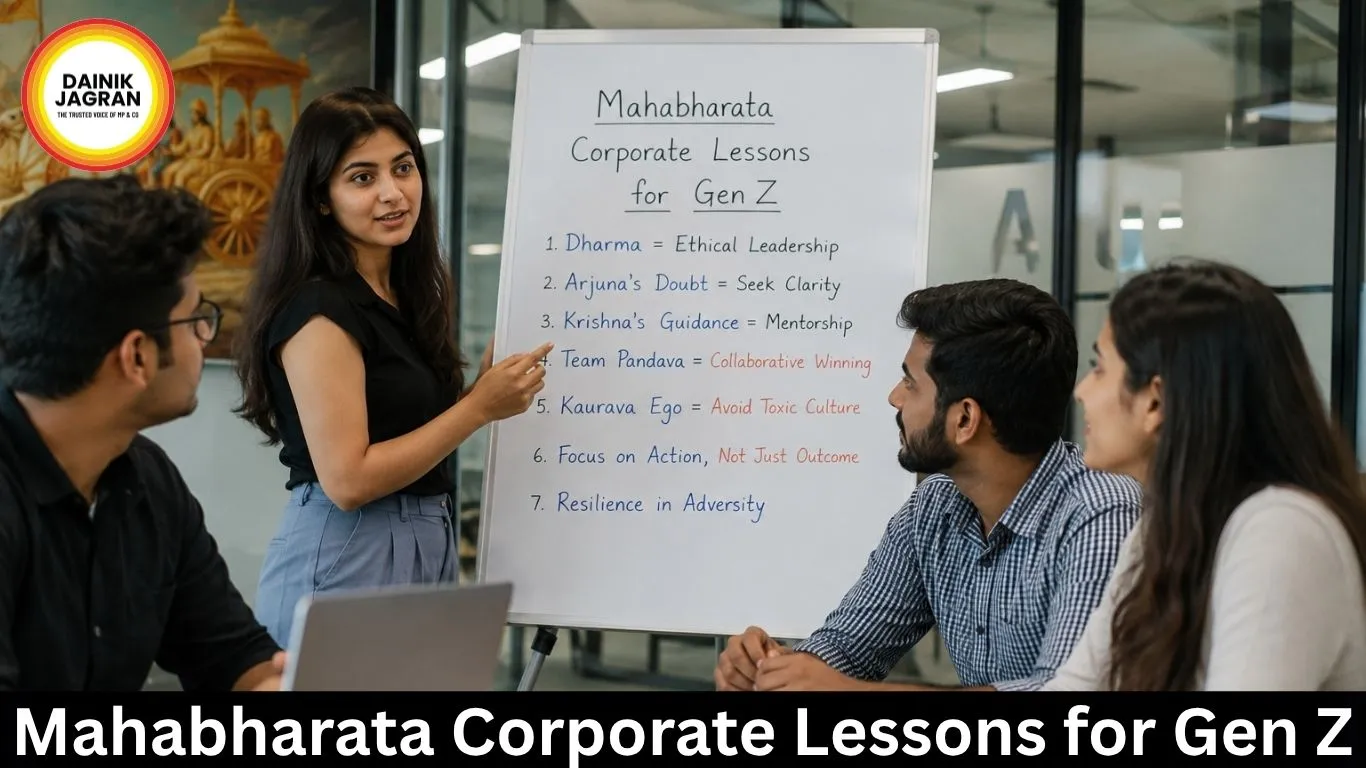
Mahabharata Corporate Lessons for Gen Z
Digital Desk
The Mahabharata's Kurukshetra mirrors today's workplace politics. Discover how Gen Z uses ancient leadership lessons to survive corporate toxicity.
The 'Kurukshetra' in the Office – How Mahabharata's Workplace Politics Explain Gen Z Burnout
In boardrooms and coffee breaks, a different kind of war is being fought. The Mahabharata, with its 100 cousins and zero HR policies, is being pulled off the shelves and onto the desks of young corporate climbers as the ultimate guide to navigating modern workplace toxicity.
The Eternal Boardroom Battle
A recent CII workshop in the Northern Region titled "Leadership Lessons from the Mahabharata" sold out in days. The premise is simple: modern corporations are Kurukshetra, and Gen Z is Arjuna—confused, morally conflicted, and caught between what is right (Dharma) and what is easy (Adharma).
"If you think your team's management is messy, try the Mahabarata," quipped a recent article on corporate kathakalakshepam.
For the Gen Z employee, who often feels weaponized between a micromanaging boss (Duryodhana) and a gaslighting senior (Shakuni), the epic is a source of coded survival language.
The 'Krishna' Factor – Managing Up
The biggest lesson? Detachment. In the Gita, Lord Krishna advises focusing on action, not the fruits. For a generation terrified of performance reviews, this is revolutionary.
Studies on the "Yakshaprashna" highlight commitment to truth, humility, and discernment as essential for ethical leadership. Young workers are using this to filter toxic work environments, realizing that "Greatness isn’t born from privilege alone—it’s nurtured through inclusion, recognition, and opportunity".
Inclusion vs. Ego
The Mahabharata also offers uncomfortable truths about ambition. While Gen Z preaches "quiet quitting," the epic warns against lethargy (Tamas). It pushes for "Swadharma"—doing your specific job well, even if it seems imperfect, rather than chasing someone else's "perfect" script.
The story of Karna, often seen as the tragic outsider, resonates deeply. His struggle against casteism and lack of social capital mirrors the frustrations of first-generation graduates in India’s startup scene.
Ethical Algorithms
As AI threatens to replace coding jobs, the Mahabharata insists that human emotional intelligence is irreplaceable. The epic teaches that a leader must have a "moral compass."
"Every boardroom is, in essence, a modern-day Kurukshetra demanding clarity, courage, and ethical judgment," explains a new book on the subject.
For Gen Z, the takeaway is clear: strategy wins battles, but integrity wins the war.

--------
π¨ Beat the News Rush β Join Now!
Get breaking alerts, hot exclusives, and game-changing stories instantly on your phone. No delays, no fluff β just the edge you need. β‘
Tap to join:Β
π’ WhatsApp Channel: Dainik Jagran MP CG
Crave more?
π Facebook: Dainik Jagran MP CG English
π § Twitter (X): Dainik Jagran MP CG
π Instagram: Dainik Jagran MP CG
Share the fire β keep your crew ahead! ποΈπ₯
Mahabharata Corporate Lessons for Gen Z
Digital Desk
The 'Kurukshetra' in the Office – How Mahabharata's Workplace Politics Explain Gen Z Burnout
In boardrooms and coffee breaks, a different kind of war is being fought. The Mahabharata, with its 100 cousins and zero HR policies, is being pulled off the shelves and onto the desks of young corporate climbers as the ultimate guide to navigating modern workplace toxicity.
The Eternal Boardroom Battle
A recent CII workshop in the Northern Region titled "Leadership Lessons from the Mahabharata" sold out in days. The premise is simple: modern corporations are Kurukshetra, and Gen Z is Arjuna—confused, morally conflicted, and caught between what is right (Dharma) and what is easy (Adharma).
"If you think your team's management is messy, try the Mahabarata," quipped a recent article on corporate kathakalakshepam.
For the Gen Z employee, who often feels weaponized between a micromanaging boss (Duryodhana) and a gaslighting senior (Shakuni), the epic is a source of coded survival language.
The 'Krishna' Factor – Managing Up
The biggest lesson? Detachment. In the Gita, Lord Krishna advises focusing on action, not the fruits. For a generation terrified of performance reviews, this is revolutionary.
Studies on the "Yakshaprashna" highlight commitment to truth, humility, and discernment as essential for ethical leadership. Young workers are using this to filter toxic work environments, realizing that "Greatness isn’t born from privilege alone—it’s nurtured through inclusion, recognition, and opportunity".
Inclusion vs. Ego
The Mahabharata also offers uncomfortable truths about ambition. While Gen Z preaches "quiet quitting," the epic warns against lethargy (Tamas). It pushes for "Swadharma"—doing your specific job well, even if it seems imperfect, rather than chasing someone else's "perfect" script.
The story of Karna, often seen as the tragic outsider, resonates deeply. His struggle against casteism and lack of social capital mirrors the frustrations of first-generation graduates in India’s startup scene.
Ethical Algorithms
As AI threatens to replace coding jobs, the Mahabharata insists that human emotional intelligence is irreplaceable. The epic teaches that a leader must have a "moral compass."
"Every boardroom is, in essence, a modern-day Kurukshetra demanding clarity, courage, and ethical judgment," explains a new book on the subject.
For Gen Z, the takeaway is clear: strategy wins battles, but integrity wins the war.