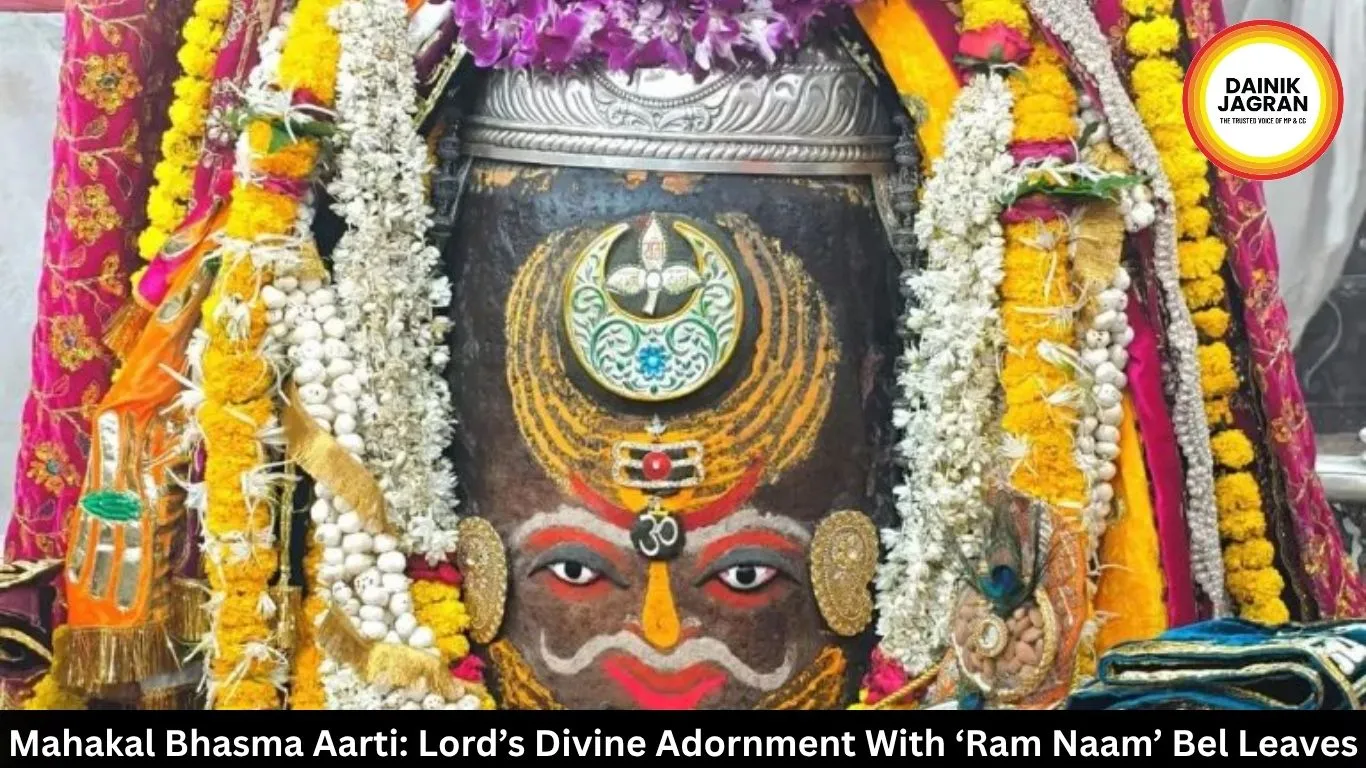
Mahakal Bhasma Aarti: Lord’s Divine Adornment With ‘Ram Naam’ Bel Leaves

Digital Desk

Mahakal Bhasma Aarti: Lord’s Divine Adornment With ‘Ram Naam’ Bel Leaves

Ujjain’s Mahakaleshwar temple witnessed a special Bhasma Aarti on May 12. Lord Mahakal was adorned with ‘Ram Naam’ bel leaves, crescent moon, and tripund.


 Mahakal Bhasma Aarti: ‘Ram Naam’ Bel Leaves, Crescent Moon Mark Lord’s Divine Shringar in Ujjain

The pre-dawn hours at the Shri Mahakaleshwar Temple on Tuesday witnessed a deeply symbolic edition of the famous Bhasma Aarti, as priests adorned the Jyotirlinga with ‘Ram Naam’ bel leaves, a silver crescent moon, and tripund tilak. The rituals coincided with the Dashami tithi of the Krishna Paksha in the Jyeshtha month.

Temple doors opened sharply at 4 am. What followed was a nearly two-hour-long sequence of Vedic chants, perfumed smoke, and elaborate alankar, drawing several hundred devotees who had waited through the night for a glimpse of the Lord.

Special Adornment Before Dawn

After the jalabhishek with holy water, the priests performed the panchamrit snan using milk, curd, ghee, honey, and fruit juices. The distinct element this time was the shringar. Officials said the idol was offered bel leaves inscribed with ‘Ram Naam’ – a practice considered highly auspicious during specific lunar phases. A silver crescent moon (chandra) was placed on the matted locks, and tripund (three horizontal lines of sacred ash) was applied with precision.

The bhasma itself was offered with care. “The first ghantal was sounded before offering Hariom jal,” a priest familiar with the proceedings explained. “The jyotirlinga was covered with a cloth while the ash was gently smeared. This part is done away from the public eye, maintaining the sanctity of the ritual.”

Crown, Garland, and Mundamala

Following the ash offering, the deity was decked in a silver serpent crown (Sheshnag mukut), a silver mundamala (garland of severed heads, symbolising the annihilation of ego), and multiple strands of rudraksha and fragrant flowers. The priests moved unhurriedly, oil lamps flickered in the sanctum’s dim glow, and the low hum of mantras filled the space.

The entire garbhagriha became heavy with the smell of camphor, sandal, and damp marigold.

Devotees Seek Blessings at Nandi

Outside the sanctum, the queue moved slowly but without complaint. By the time the aarti concluded around 6 am, the temple complex was packed. Many devotees made a beeline for the Nandi idol. The tradition here is specific – you whisper your wish into the ears of the sacred bull. It requires a bit of bending and patience, but most didn’t seem to mind.

"Baba Mahakal ki jai," the chants grew louder as the sun came up. The sound bounced off the stone walls, creating a layered, almost echoing rhythm.

For the temple trust, managing the crowd on Dashami – a day many believe multiplies the merits of darshan – was a tight operation. But barring the usual jostling near the exit, things moved steadily.

What’s Next at the Temple

With Dashami tithi ending at 2:52 pm, the rituals will shift to Ekadashi preparations by late afternoon. Priests will begin cleaning the sanctum for the next cycle of worship. For those unable to make it to Ujjain, the temple’s live darshan feed remains an option – though regulars will tell you, it’s not quite the same as standing in that queue before dawn.

The Bhasma Aarti will continue as per the daily schedule. But the particular combination of Ram Naam bel leaves and the crescent shringar – that likely won't repeat anytime soon.
--------

🚨 Beat the News Rush – Join Now!

Get breaking alerts, hot exclusives, and game-changing stories instantly on your phone. No delays, no fluff – just the edge you need. ⚡

Tap to join: 

🟢 WhatsApp Channel: Dainik Jagran MP CG

Crave more?

🅕 Facebook: Dainik Jagran MP CG English

🅧 Twitter (X): Dainik Jagran MP CG

🅘 Instagram: Dainik Jagran MP CG

Share the fire – keep your crew ahead! 🗞️🔥

english.dainikjagranmpcg.com
12 May 2026 By Abhishek Joshi

Mahakal Bhasma Aarti: Lord’s Divine Adornment With ‘Ram Naam’ Bel Leaves

Digital Desk

 Mahakal Bhasma Aarti: ‘Ram Naam’ Bel Leaves, Crescent Moon Mark Lord’s Divine Shringar in Ujjain

The pre-dawn hours at the Shri Mahakaleshwar Temple on Tuesday witnessed a deeply symbolic edition of the famous Bhasma Aarti, as priests adorned the Jyotirlinga with ‘Ram Naam’ bel leaves, a silver crescent moon, and tripund tilak. The rituals coincided with the Dashami tithi of the Krishna Paksha in the Jyeshtha month.

Temple doors opened sharply at 4 am. What followed was a nearly two-hour-long sequence of Vedic chants, perfumed smoke, and elaborate alankar, drawing several hundred devotees who had waited through the night for a glimpse of the Lord.

Special Adornment Before Dawn

After the jalabhishek with holy water, the priests performed the panchamrit snan using milk, curd, ghee, honey, and fruit juices. The distinct element this time was the shringar. Officials said the idol was offered bel leaves inscribed with ‘Ram Naam’ – a practice considered highly auspicious during specific lunar phases. A silver crescent moon (chandra) was placed on the matted locks, and tripund (three horizontal lines of sacred ash) was applied with precision.

The bhasma itself was offered with care. “The first ghantal was sounded before offering Hariom jal,” a priest familiar with the proceedings explained. “The jyotirlinga was covered with a cloth while the ash was gently smeared. This part is done away from the public eye, maintaining the sanctity of the ritual.”

Crown, Garland, and Mundamala

Following the ash offering, the deity was decked in a silver serpent crown (Sheshnag mukut), a silver mundamala (garland of severed heads, symbolising the annihilation of ego), and multiple strands of rudraksha and fragrant flowers. The priests moved unhurriedly, oil lamps flickered in the sanctum’s dim glow, and the low hum of mantras filled the space.

The entire garbhagriha became heavy with the smell of camphor, sandal, and damp marigold.

Devotees Seek Blessings at Nandi

Outside the sanctum, the queue moved slowly but without complaint. By the time the aarti concluded around 6 am, the temple complex was packed. Many devotees made a beeline for the Nandi idol. The tradition here is specific – you whisper your wish into the ears of the sacred bull. It requires a bit of bending and patience, but most didn’t seem to mind.

"Baba Mahakal ki jai," the chants grew louder as the sun came up. The sound bounced off the stone walls, creating a layered, almost echoing rhythm.

For the temple trust, managing the crowd on Dashami – a day many believe multiplies the merits of darshan – was a tight operation. But barring the usual jostling near the exit, things moved steadily.

What’s Next at the Temple

With Dashami tithi ending at 2:52 pm, the rituals will shift to Ekadashi preparations by late afternoon. Priests will begin cleaning the sanctum for the next cycle of worship. For those unable to make it to Ujjain, the temple’s live darshan feed remains an option – though regulars will tell you, it’s not quite the same as standing in that queue before dawn.

The Bhasma Aarti will continue as per the daily schedule. But the particular combination of Ram Naam bel leaves and the crescent shringar – that likely won't repeat anytime soon.

https://english.dainikjagranmpcg.com/religion/mahakal-bhasma-aarti-lord%E2%80%99s-divine-adornment-with-%E2%80%98ram-naam%E2%80%99-bel/article-18063

Latest News