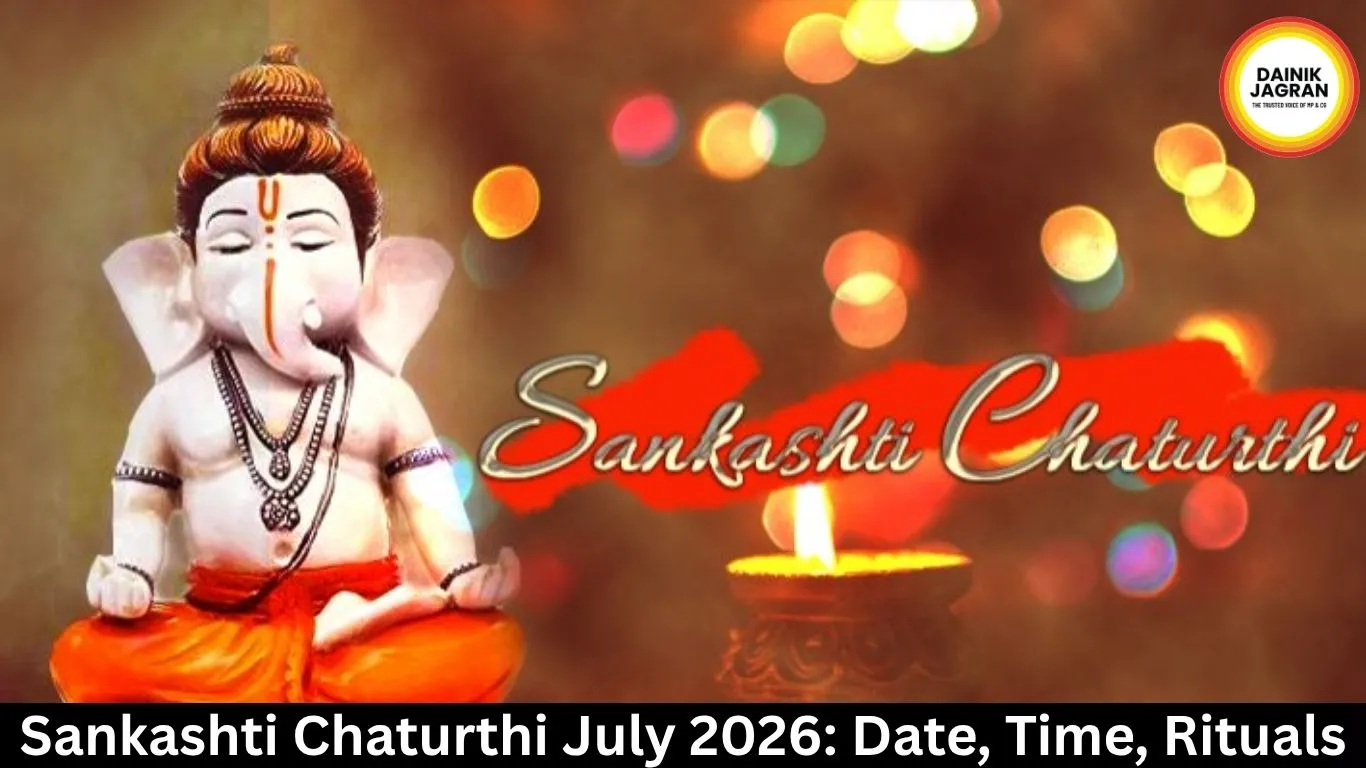
Sankashti Chaturthi 2026: Date, Muhurat, Rituals and Significance
Digital Desk
Sankashti Chaturthi 2026 falls on July 3. Chaturthi tithi from 11:20 AM on July 3 to 12:40 PM on July 4. Know the fasting rules, puja rituals and significance.
The next Sankashti Chaturthi falls on Friday, July 3, 2026, with the Chaturthi tithi beginning at 11:20 am on July 3 and ending at 12:40 pm on July 4. The festival, one of the most significant monthly observances for devotees of Lord Ganesha, is celebrated on the fourth day of the Krishna Paksha — the waning phase of the moon — in every Hindu calendar month.
Known as Sankatahara Chaturthi in southern India, the name itself carries meaning. "Sankashti" derives from Sanskrit and translates roughly to "deliverance during difficult times," while "chaturthi" refers to the fourth day, traditionally associated with Lord Ganesha. Together, the festival is an occasion for devotees to seek Ganesha's blessings to remove obstacles and navigate hardship.
When Sankashti Chaturthi coincides with a Tuesday, it is observed as Angarki Chaturthi — considered the most auspicious of all Sankashti days. July 3 falls on a Friday, so this month's observance is a standard Sankashti Chaturthi, though still widely observed across the country. The festival carries particular weight in Maharashtra, where the celebrations are more elaborate.
Observances begin early in the morning, with devotees dedicating the day to prayer and keeping a strict fast. Those fasting consume only fruits, vegetables, and plant roots — peanuts, potatoes, and sabudana khichdi are among the most common foods on the day. The central puja, however, takes place in the evening, and the fast is broken only after the moon has been sighted and Lord Ganesha has been worshipped.
During the evening puja, the idol of Ganesha is adorned with durva grass and fresh flowers, a lamp is lit, incense is burned, and Vedic mantras are recited. Devotees read the vrat katha specific to the month. Special naivedya — offerings that include modaks, considered Ganesha's favourite sweet — are prepared, followed by the aarti and distribution of prasad among devotees.
The moon also receives dedicated worship on this day. Devotees sprinkle water, sandalwood paste, consecrated rice, and flowers in the direction of the moon as part of the ritual. Reciting the Ganesha Ashtothra, Sankashtnashana Sthothra, and Vakrathunda Mahakaya are considered especially auspicious on this occasion.

--------
🚨 Beat the News Rush – Join Now!
Get breaking alerts, hot exclusives, and game-changing stories instantly on your phone. No delays, no fluff – just the edge you need. ⚡
Tap to join:
🟢 WhatsApp Channel: Dainik Jagran MP CG
Crave more?
🅕 Facebook: Dainik Jagran MP CG English
🅧 Twitter (X): Dainik Jagran MP CG
🅘 Instagram: Dainik Jagran MP CG
Share the fire – keep your crew ahead! 🗞️🔥
Sankashti Chaturthi 2026: Date, Muhurat, Rituals and Significance
Digital Desk
The next Sankashti Chaturthi falls on Friday, July 3, 2026, with the Chaturthi tithi beginning at 11:20 am on July 3 and ending at 12:40 pm on July 4. The festival, one of the most significant monthly observances for devotees of Lord Ganesha, is celebrated on the fourth day of the Krishna Paksha — the waning phase of the moon — in every Hindu calendar month.
Known as Sankatahara Chaturthi in southern India, the name itself carries meaning. "Sankashti" derives from Sanskrit and translates roughly to "deliverance during difficult times," while "chaturthi" refers to the fourth day, traditionally associated with Lord Ganesha. Together, the festival is an occasion for devotees to seek Ganesha's blessings to remove obstacles and navigate hardship.
When Sankashti Chaturthi coincides with a Tuesday, it is observed as Angarki Chaturthi — considered the most auspicious of all Sankashti days. July 3 falls on a Friday, so this month's observance is a standard Sankashti Chaturthi, though still widely observed across the country. The festival carries particular weight in Maharashtra, where the celebrations are more elaborate.
Observances begin early in the morning, with devotees dedicating the day to prayer and keeping a strict fast. Those fasting consume only fruits, vegetables, and plant roots — peanuts, potatoes, and sabudana khichdi are among the most common foods on the day. The central puja, however, takes place in the evening, and the fast is broken only after the moon has been sighted and Lord Ganesha has been worshipped.
During the evening puja, the idol of Ganesha is adorned with durva grass and fresh flowers, a lamp is lit, incense is burned, and Vedic mantras are recited. Devotees read the vrat katha specific to the month. Special naivedya — offerings that include modaks, considered Ganesha's favourite sweet — are prepared, followed by the aarti and distribution of prasad among devotees.
The moon also receives dedicated worship on this day. Devotees sprinkle water, sandalwood paste, consecrated rice, and flowers in the direction of the moon as part of the ritual. Reciting the Ganesha Ashtothra, Sankashtnashana Sthothra, and Vakrathunda Mahakaya are considered especially auspicious on this occasion.