


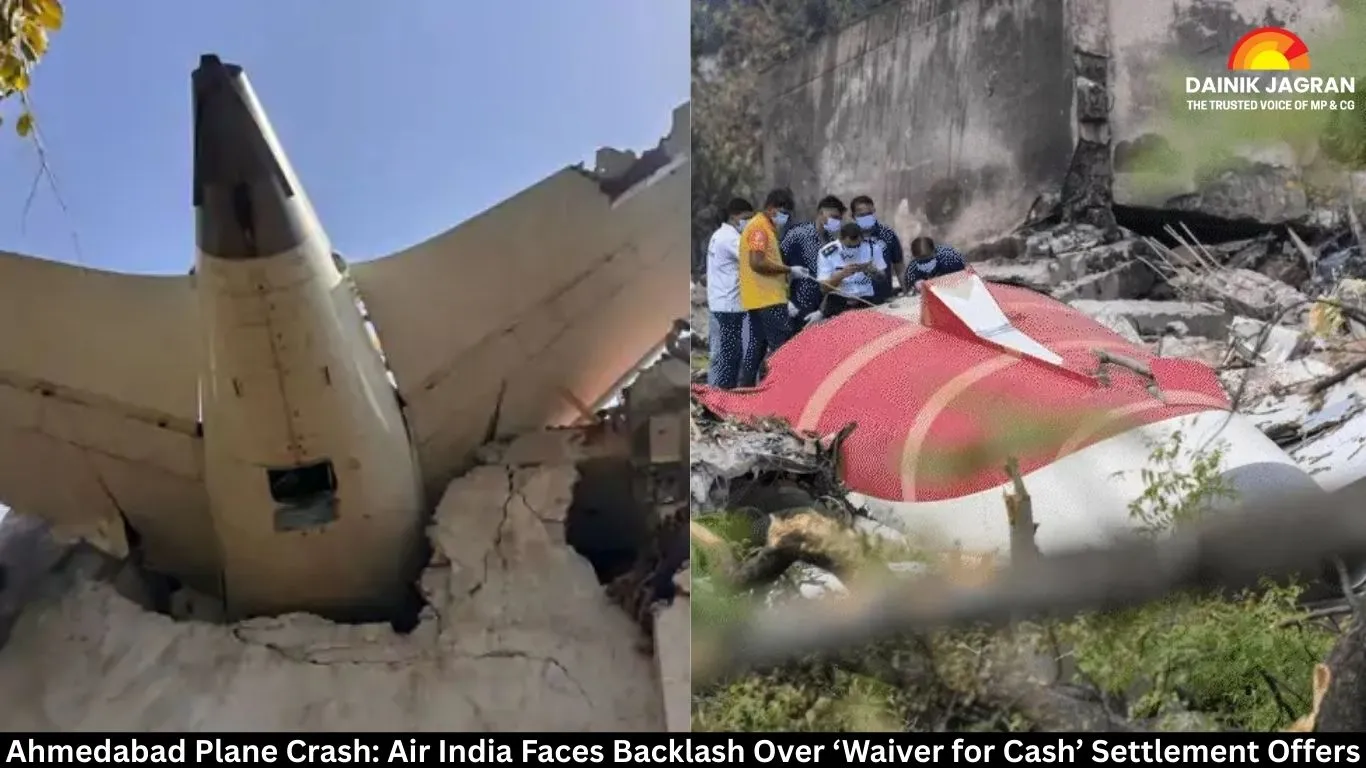
Ahmedabad Plane Crash: Air India Faces Backlash Over ‘Waiver for Cash’ Settlement Offers
Digital Desk
The aftermath of the tragic Ahmedabad plane crash has taken a contentious legal turn. A new report from London-based daily The Independent claims that Air India is offering victims’ families settlements ranging from ₹10 lakh to ₹20 lakh, provided they sign an indemnity bond. This document reportedly requires families to "irrevocably and forever" waive their right to sue the airline or the aircraft manufacturer, Boeing, in any court globally.
This development comes as the investigation into the June 12, 2025, disaster—which claimed 270 lives—remains in its final, albeit unreleased, stages.
Legal Teams Slam "Inappropriate" Settlement Terms
The proposal has met stiff resistance from the legal team representing 130 of the victims' families. Lawyers argue that pressuring families to sign away their legal rights before the AAIB investigation is finalized is ethically and legally questionable.
-
Ongoing Treatment: Many survivors and families of those injured on the ground are still undergoing medical care.
-
Unclear Liability: The final report from the Aircraft Accident Investigation Bureau (AAIB) has not yet determined whether the crash was due to pilot error or a technical failure in the Boeing 787-8.
-
Global Reach: The waiver would block families from joining international lawsuits, including ongoing proceedings in the UK and US against Boeing and Honeywell.
Air India, however, maintains that these offers are part of a "transparent and compassionate" process. A spokesperson stated that after the initial interim payments, the final amounts are calculated according to the "applicable legal framework" to help families navigate this difficult period.
The Supreme Court's 3-Week Deadline
On February 11, 2026, the Supreme Court of India intervened, directing the Centre to submit a detailed report on the procedural protocols of the investigation within three weeks. Chief Justice Suryakant emphasized the "considerable anxiety" among the public and the aviation community.
During the hearing, advocate Prashant Bhushan, representing the NGO Safety Matters, raised concerns over the independence of the probe, noting that several members of the AAIB team are from the DGCA—the very body responsible for oversight. Bhushan also cited claims from pilot associations that over 8,000 pilots have expressed concerns regarding the safety of the Boeing 787 fleet.
Looking Back: What Happened on June 12?
The tragedy occurred when Air India Flight 171, bound for London, crashed into a medical hostel building just 32 seconds after takeoff from Ahmedabad.
-
Casualties: 241 people on board (passengers and crew) and 19 people on the ground were killed.
-
Last Signal: Data from Flightradar24 showed the aircraft reached an altitude of only 190 meters (625 feet) before losing thrust.
-
The Switch Controversy: Recent reports from Italian media suggest investigators are looking into whether the fuel control switches were moved to "cutoff" during takeoff—a claim the pilot's family and associations strongly dispute.
Why This Matters Now
For the aviation industry and the families involved, this case is about more than just money; it is about corporate accountability. If families sign these waivers, they lose the power to hold manufacturers responsible should a systemic technical flaw be discovered later. As the Supreme Court awaits the final AAIB report, the focus remains on whether justice will be served or settled for a fraction of what many believe is fair.
.jpg)




