


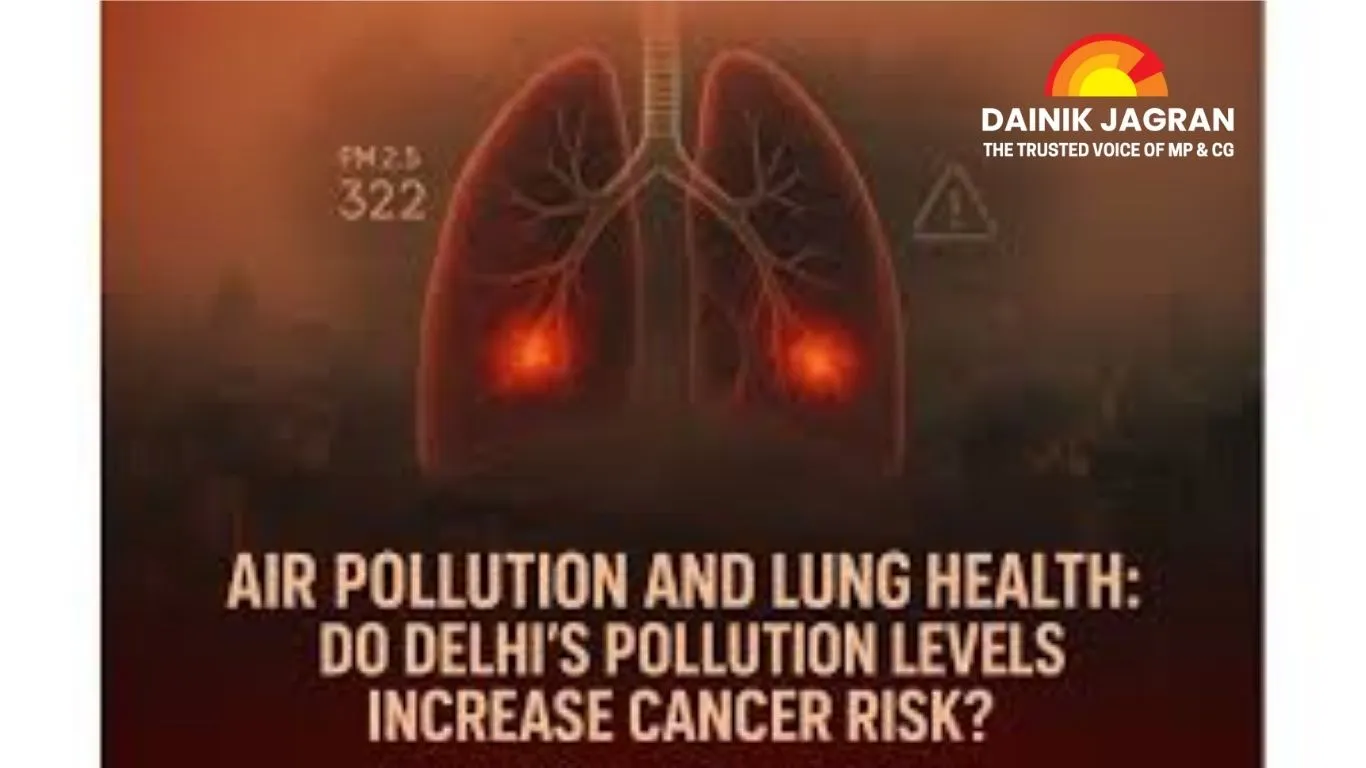
Air Pollution Emerges as a Major Lung Cancer Threat, Matching Smoking Rates: What You Must Know
Digital Desk
Air Pollution Emerges as a Major Lung Cancer Threat, Matching Smoking Rates: What You Must Know
In a significant shift that underscores a growing public health crisis, toxic air is now responsible for causing nearly as many lung cancer cases as tobacco smoking in India. This alarming finding, highlighted by leading pulmonologists and a stark new global study, reframes the common perception that lung cancer is solely a smoker’s disease. For millions of non-smokers living in heavily polluted cities, the very air they breathe has become a silent carcinogen.
The data paints a grim picture. According to the World Health Organization's International Agency for Research on Cancer (IARC), lung cancer was the most commonly diagnosed cancer globally in 2022, with over 2.4 million new cases. In India, it is now the fourth most common cancer. Traditionally linked to cigarettes and bidis, the etiology of the disease is rapidly changing.
The Tipping Point: Pollution vs. Tobacco
“Three to four decades ago, almost 90% of our lung cancer surgery patients were related to tobacco use. Today, that equation has balanced shockingly,” explains Dr. Arvind Kumar, a renowned chest surgeon, emphasizing the air pollution lung cancer link. “Now, about 43% of cases are due to smoking and another 43% are due to pollution. This is a problem that will only intensify as industrial and vehicular pollution rises while tobacco use slowly declines.”
This shift is backed by a study published in the British Journal of Cancer on April 4, 2025, which confirms that airborne particulate matter significantly drives lung cancer incidence and mortality.
Understanding the Invisible Killer: PM2.5
The primary villain is fine particulate matter known as PM2.5. These microscopic particles, 30 times smaller than a human hair, carry a toxic cocktail deep into the lungs:
· Sulphates and nitrates
· Organic compounds
· Polycyclic aromatic hydrocarbons
· Heavy metals like arsenic and lead
“These are proven carcinogens,” Dr. Kumar states. “When you inhale PM2.5 health risk, you are essentially inhaling cancer-causing agents directly into the most vulnerable parts of your respiratory system.” It is estimated that non-smoker lung cancer now accounts for 15-20% of all cases, largely attributable to this pollution.
Recognizing the Early Signs
Early detection is critical, yet symptoms can be subtle. Doctors urge immediate consultation if you experience:
· A persistent cough lasting more than a month that worsens over time.
· Blood in sputum, even if minor.
As cancer advances,symptoms may include chest pain, breathlessness, unexplained weight loss, and loss of appetite.
How to Protect Yourself in a Polluted World
While systemic change is needed, individuals can take steps to mitigate risk, especially during high Delhi pollution cancer risk periods when AQI soars.
At Home:
· Reduce Outdoor Activity: Limit time outside when PM2.5 or PM10 levels exceed 300-400.
· Use Air Purifiers: Invest in a good-quality air purifier with HEPA filters for your living and sleeping spaces.
· Indoor Greenery: Maintain indoor plants that can help filter some pollutants.
Outside:
· Wear the Right Mask: Use a well-fitted N95 or N99 respirator mask when outdoors. An N95 mask filters 95% of PM2.5 particles.
· Choose Public Transport: Reducing personal vehicle use contributes to cleaner air for all.
The fight against air pollution lung cancer requires a multi-pronged approach—strong public policy, industrial regulation, and informed personal choices.
As pollution levels continue to climb, prioritizing lung health is no longer optional. If you have a lingering cough in our polluted cities, seeing a doctor is not an overreaction—it could be a life-saving decision.



.jpg)




