


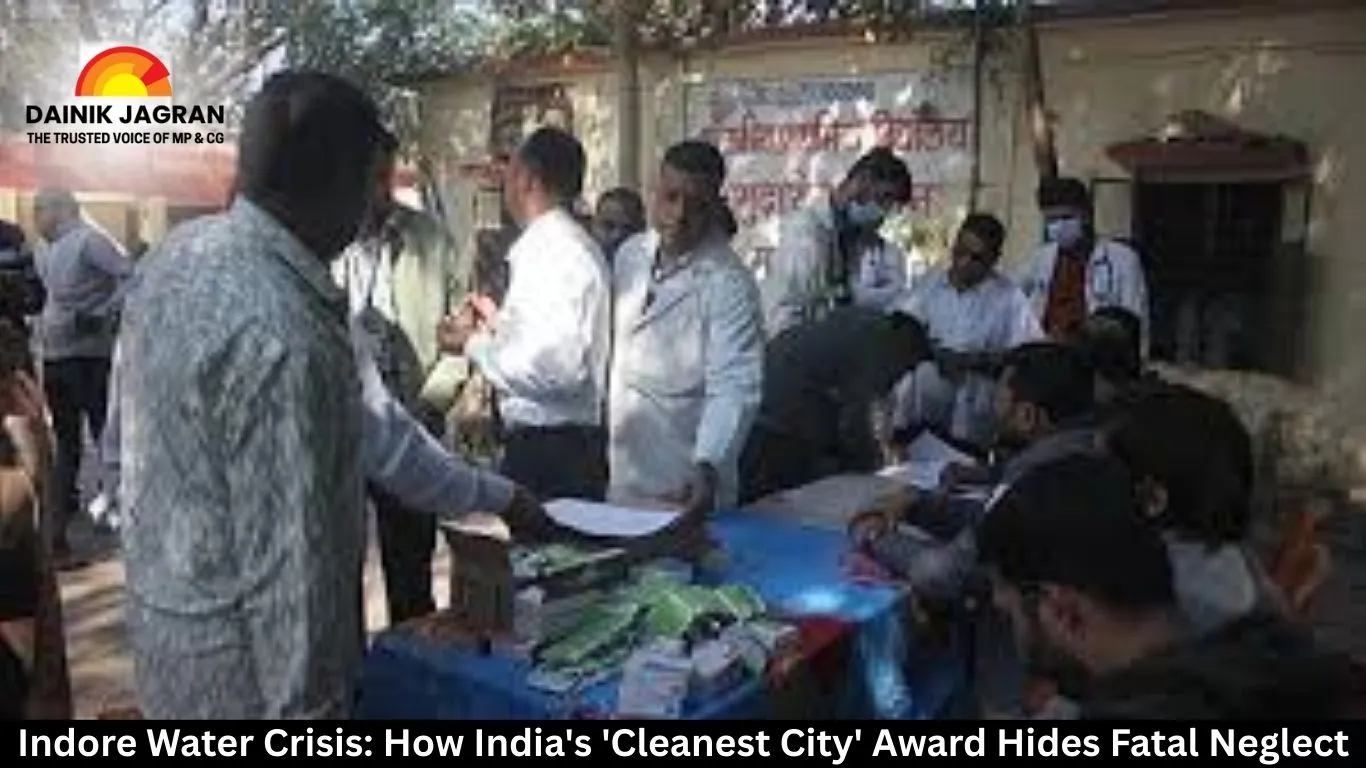
Indore Water Crisis: How India's 'Cleanest City' Award Hides Fatal Neglect
Digital Desk
The Indore Water Tragedy: When 'Cleanest City' Awards Hide Fatal Neglect
In the heart of India, a city celebrated for seven consecutive years as the country's "cleanest" is now grappling with a tragedy so basic, so preventable, it shames the very notion of urban development. Indore, the jewel of Swachh Bharat, has seen its water turn to poison.
The contradiction is stark and deadly: ribbons and rankings adorn the surface, while beneath the streets, corroded pipes bleed sewage into drinking water lines. This is not merely a civic failure; it is a profound betrayal of trust and a glaring indictment of a model of urban governance that prizes spectacle over substance, and awards over accountability.
The Anatomy of a Preventable Disaster
The facts, though mired in official obfuscation, are clear enough to paint a horrifying picture. In Indore's Bhagirathpura area, a leak allowed sewage from a toilet structure to infiltrate the municipal drinking water pipeline. The result was biological contamination with bacteria commonly found in human waste. Citizens reported foul-smelling, discoloured water for days, if not weeks, before the crisis erupted. Their complaints, it appears, vanished into the void of bureaucratic inertia.
The human cost is measured in vomiting, diarrhoea, and death. While the city's mayor acknowledges 10 deaths, residents insist the toll is at least 14, including a six-month-old infant. Over 1,400 people fell ill, with hundreds hospitalised. This divergence in the death toll is the first clue to the larger disease: a crisis of credibility. When the state's count of the dead cannot be trusted, what faith can be placed in its promise to protect the living?
A Failure of Infrastructure, A Crisis of Accountability
This tragedy is often dismissed as a "technical failure"—an old pipe, an unfortunate leak. That is a comforting lie. The leak was merely the trigger; the cause was decades of neglect, underinvestment, and the systematic prioritization of visible cleanliness over invisible public health infrastructure. We build skywalks and beautify streets while the veins of our cities—the water and sewage lines—rot away out of sight.
The response has been a masterclass in closing the barn door after the horse has bolted, died, and caused a public health epidemic. Officials now scurry to distribute chlorine tablets, announce compensation of ₹2 lakh for the deceased, and suspend junior engineers. The National Human Rights Commission has issued notices. But these are rituals of damage control, not accountability. They treat the symptom—this specific leak—while ignoring the metastatic disease of systemic infrastructural decay.
This decay is nationwide. Indore's shame is not its alone. Consider Delhi, the national capital, where only 2 out of over 25 public water testing laboratories meet the required global accreditation standards. How can we detect contamination if we lack the tools to see it? We are flying blind, and Indore's victims have paid the price for our blindness.
Beyond the Façade of Formality
The incident exposes the dangerous chasm between the "formal" planned city and the "informal" realities of its survival. Scholars of urbanism note that in rapidly growing cities, the formal infrastructure perpetually lags behind, forcing residents and even authorities to rely on informal, makeshift arrangements for basic needs like water and waste management. In Indore, the informal was the ignored complaint, the tolerated leak, and ultimately, the deadly cocktail that flowed from the tap. The city's gleaming "formal" award facade collapsed under the weight of its "informal" neglected guts.
The Way Forward: From Optics to Ethics
The lesson from Indore is unambiguous: clean streets do not equal a healthy city. We must shift our paradigm from urban beautification to urban resilience. This requires:
1. Investing in the Unseen: A massive, war-time effort to map, audit, and replace ageing water and sewage networks. This is less glamorous than a new park but far more critical.
2. Demanding Transparent Governance: Real-time public dashboards for water quality data from accredited labs, and a legal framework that holds elected representatives and senior bureaucrats directly accountable for such failures.
3. Listening to the Citizens: Establishing responsive, empowered grievance redressal systems where complaints about basic services are treated as emergencies, not nuisances.
Indore's water crisis is a wake-up call for every urban centre in India. It reminds us that the right to clean water is the most fundamental right of all, from which all others flow. We can continue to chase shiny awards and build cities that look good in photographs. Or we can choose to build cities where a child does not die from a glass of water. The choice is ours, and the clock is ticking.


.jpg)




