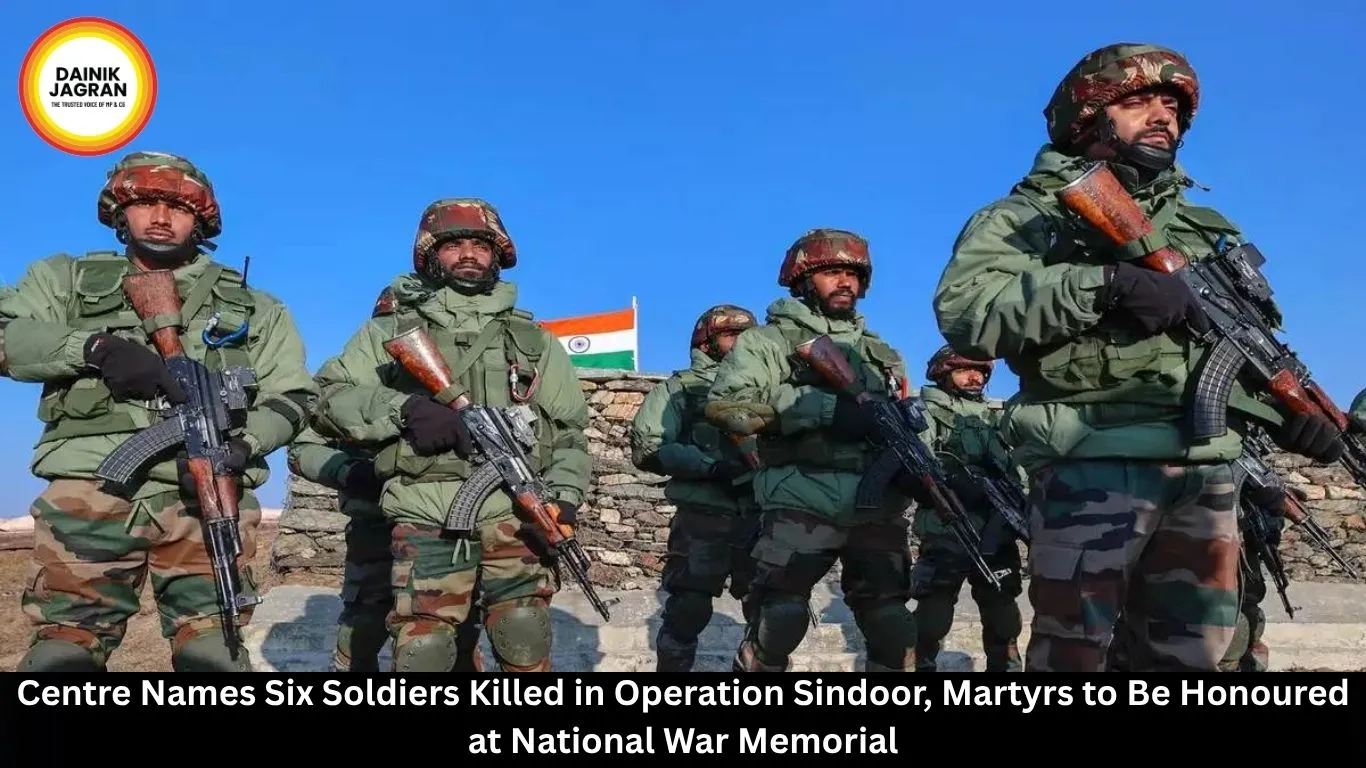
Centre Names 6 Soldiers Killed in Operation Sindoor
Digital Desk
The Indian government releases names of six Army and IAF personnel martyred in Operation Sindoor. Their names will be added to the National War Memorial in New Delhi.
More than a year after Indian forces struck terror infrastructure across Pakistan and Pakistan-Occupied Kashmir, the central government has officially released the names of six military personnel who lost their lives during Operation Sindoor. It is the first time the identities of the fallen have been made public.
The six martyrs are Subedar Major Pawan Kumar, Rifleman Sunil Kumar, Lance Naik Dinesh Kumar, Agniveer Mood Murli Naik, Havildar Sunil Kumar Singh, and Sergeant Surendra Kumar. Five belonged to the Army; Sergeant Surendra Kumar was from the Indian Air Force.
Operation Sindoor was launched on May 7, 2025, in direct response to the Pahalgam terror attack in which 26 civilians were killed. The Indian Armed Forces carried out precision strikes on nine terror facilities linked to Jaish-e-Mohammed and Lashkar-e-Taiba in Pakistan and PoK — the most significant cross-border military action India had undertaken in years.
The targets hit included the Sawai Nala training centre in Muzaffarabad, where terrorists responsible for the Sonamarg, Gulmarg, and Pahalgam attacks had trained; the Syedna Bilal Camp, also in Muzaffarabad, used for weapons and jungle survival training; and the Gulpur Camp in Kotli, linked to the 2023 Poonch pilgrim attack. Strikes also hit Abbas Camp in Kotli — a fidayeen training facility just 13 kilometres from the Line of Control — Barnala Camp in Bhimber, and Sarjal Camp in Sialkot, where personnel involved in the March 2025 killing of police officers had been trained.
Two high-profile targets were Markaz Taiba in Muridke, where Ajmal Kasab and David Coleman Headley had received training before the 2008 Mumbai attacks, and the Subhan Allah Mosque complex in Bahawalpur, which served as Jaish-e-Mohammed's headquarters and was regularly used by senior leadership for recruitment. The Mehmuna Joya Camp of Hizbul Mujahideen in Sialkot, where the Pathankot attack was planned, was also among the nine sites struck.
Military action was halted on May 10, 2025, following talks between the Directors General of Military Operations of India and Pakistan.
The names of the six personnel will now be inscribed at the National War Memorial near India Gate in New Delhi — the memorial inaugurated in 2019 that records the names of all soldiers who have died in service to the nation since independence. With this, Operation Sindoor formally enters the roll of military operations honoured at the memorial.
For the families of the six, the public acknowledgment closes a long period of quiet grief. The government's decision to release names and ensure memorial recognition signals that the sacrifices made during the operation will be part of the official record of India's military history.

--------
🚨 Beat the News Rush – Join Now!
Get breaking alerts, hot exclusives, and game-changing stories instantly on your phone. No delays, no fluff – just the edge you need. ⚡
Tap to join:
🟢 WhatsApp Channel: Dainik Jagran MP CG
Crave more?
🅕 Facebook: Dainik Jagran MP CG English
🅧 Twitter (X): Dainik Jagran MP CG
🅘 Instagram: Dainik Jagran MP CG
Share the fire – keep your crew ahead! 🗞️🔥
Centre Names 6 Soldiers Killed in Operation Sindoor
Digital Desk
More than a year after Indian forces struck terror infrastructure across Pakistan and Pakistan-Occupied Kashmir, the central government has officially released the names of six military personnel who lost their lives during Operation Sindoor. It is the first time the identities of the fallen have been made public.
The six martyrs are Subedar Major Pawan Kumar, Rifleman Sunil Kumar, Lance Naik Dinesh Kumar, Agniveer Mood Murli Naik, Havildar Sunil Kumar Singh, and Sergeant Surendra Kumar. Five belonged to the Army; Sergeant Surendra Kumar was from the Indian Air Force.
Operation Sindoor was launched on May 7, 2025, in direct response to the Pahalgam terror attack in which 26 civilians were killed. The Indian Armed Forces carried out precision strikes on nine terror facilities linked to Jaish-e-Mohammed and Lashkar-e-Taiba in Pakistan and PoK — the most significant cross-border military action India had undertaken in years.
The targets hit included the Sawai Nala training centre in Muzaffarabad, where terrorists responsible for the Sonamarg, Gulmarg, and Pahalgam attacks had trained; the Syedna Bilal Camp, also in Muzaffarabad, used for weapons and jungle survival training; and the Gulpur Camp in Kotli, linked to the 2023 Poonch pilgrim attack. Strikes also hit Abbas Camp in Kotli — a fidayeen training facility just 13 kilometres from the Line of Control — Barnala Camp in Bhimber, and Sarjal Camp in Sialkot, where personnel involved in the March 2025 killing of police officers had been trained.
Two high-profile targets were Markaz Taiba in Muridke, where Ajmal Kasab and David Coleman Headley had received training before the 2008 Mumbai attacks, and the Subhan Allah Mosque complex in Bahawalpur, which served as Jaish-e-Mohammed's headquarters and was regularly used by senior leadership for recruitment. The Mehmuna Joya Camp of Hizbul Mujahideen in Sialkot, where the Pathankot attack was planned, was also among the nine sites struck.
Military action was halted on May 10, 2025, following talks between the Directors General of Military Operations of India and Pakistan.
The names of the six personnel will now be inscribed at the National War Memorial near India Gate in New Delhi — the memorial inaugurated in 2019 that records the names of all soldiers who have died in service to the nation since independence. With this, Operation Sindoor formally enters the roll of military operations honoured at the memorial.
For the families of the six, the public acknowledgment closes a long period of quiet grief. The government's decision to release names and ensure memorial recognition signals that the sacrifices made during the operation will be part of the official record of India's military history.