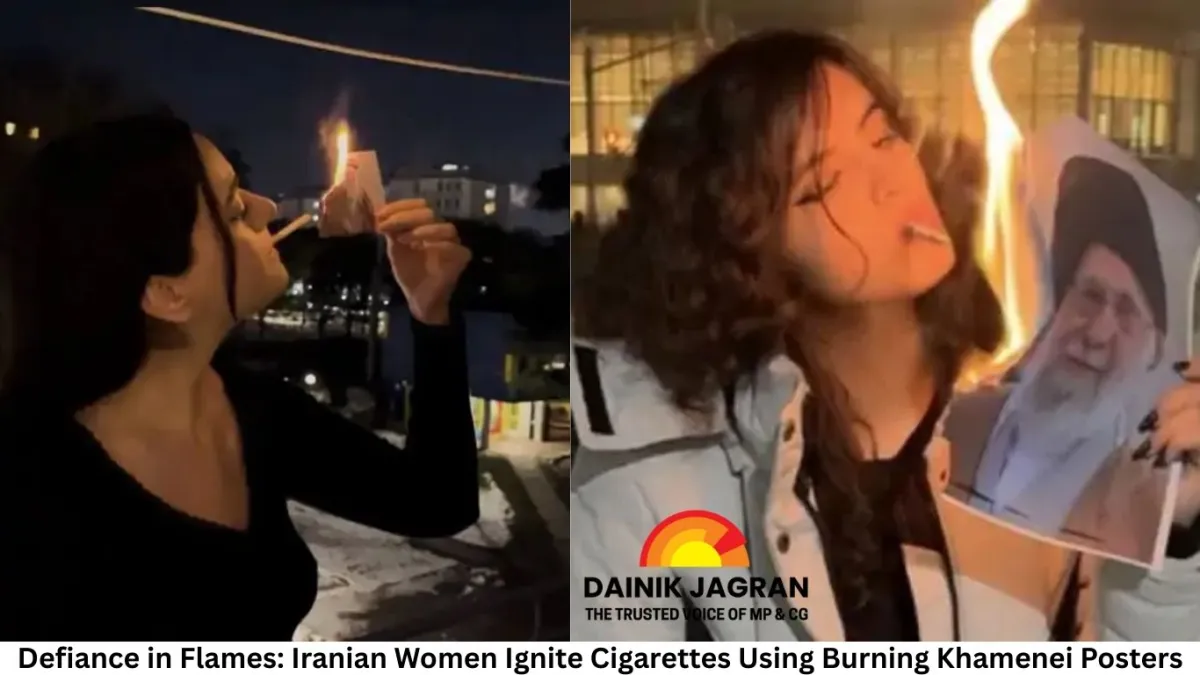

Defiance in Flames: Iranian Women Ignite Cigarettes Using Burning Khamenei Posters
Digital Desk
A striking act of defiance by Iranian women has surfaced amid Iran’s ongoing unrest, as images and videos circulated online showing women lighting cigarettes using posters of Supreme Leader Ayatollah Ali Khamenei set ablaze. The symbolic gesture, widely shared on social media platforms, has drawn sharp attention for its open challenge to the authority of Iran’s highest political and religious figure.
The incident, believed to have occurred in recent days in an urban neighborhood of Tehran, reflects a growing pattern of protest that blends everyday acts with powerful political symbolism. In the footage, women are seen calmly holding cigarettes to the flames consuming Khamenei’s image, transforming a routine action into a deliberate political statement.
While Iranian authorities have not officially commented on the specific incident, state media has historically treated such acts as serious offenses, often framing them as insults to the Islamic Republic and threats to national security. Under Iranian law, defacing or burning images of the Supreme Leader can carry severe legal consequences, including long prison sentences.
Analysts say the act underscores a shift in protest culture within Iran, where women, in particular, have adopted subtle but provocative forms of resistance. “This is not just vandalism or shock value,” said a Tehran-based political observer who requested anonymity. “It is a calculated message—rejecting fear and reclaiming personal autonomy in a system built on strict control.”
Women have been at the forefront of Iran’s protest movements over the past few years, especially following the death of Mahsa Amini in 2022, which triggered nationwide demonstrations against mandatory hijab laws and broader state repression. Since then, public dissent has increasingly moved into symbolic spaces—graffiti, clothing choices, street performances, and now acts like this—designed to evade immediate detection while resonating widely online.
The use of fire in the act carries particular weight in Iranian political culture, where burning a leader’s image has long been considered a taboo line rarely crossed in public. By pairing it with an ordinary, almost casual act such as smoking, protesters appear to be deliberately stripping the Supreme Leader’s image of its imposed sanctity.
Human rights groups note that the circulation of such images, even if staged briefly before being removed, reflects deep frustration among segments of Iranian society, particularly women and youth, who feel excluded from political participation and personal freedoms.
As Iran continues to face economic pressure, international isolation, and internal dissent, acts like these—small in scale but heavy in symbolism—highlight the persistence of resistance beneath the surface. Whether authorities respond with crackdowns or silence, the message embedded in the flames has already traveled far beyond the street where it began.

--------
🚨 Beat the News Rush – Join Now!
Get breaking alerts, hot exclusives, and game-changing stories instantly on your phone. No delays, no fluff – just the edge you need. ⚡
Tap to join:
🟢 WhatsApp Channel: Dainik Jagran MP CG
Crave more?
🅕 Facebook: Dainik Jagran MP CG English
🅧 Twitter (X): Dainik Jagran MP CG
🅘 Instagram: Dainik Jagran MP CG
Share the fire – keep your crew ahead! 🗞️🔥
Defiance in Flames: Iranian Women Ignite Cigarettes Using Burning Khamenei Posters
Digital Desk
The incident, believed to have occurred in recent days in an urban neighborhood of Tehran, reflects a growing pattern of protest that blends everyday acts with powerful political symbolism. In the footage, women are seen calmly holding cigarettes to the flames consuming Khamenei’s image, transforming a routine action into a deliberate political statement.
While Iranian authorities have not officially commented on the specific incident, state media has historically treated such acts as serious offenses, often framing them as insults to the Islamic Republic and threats to national security. Under Iranian law, defacing or burning images of the Supreme Leader can carry severe legal consequences, including long prison sentences.
Analysts say the act underscores a shift in protest culture within Iran, where women, in particular, have adopted subtle but provocative forms of resistance. “This is not just vandalism or shock value,” said a Tehran-based political observer who requested anonymity. “It is a calculated message—rejecting fear and reclaiming personal autonomy in a system built on strict control.”
Women have been at the forefront of Iran’s protest movements over the past few years, especially following the death of Mahsa Amini in 2022, which triggered nationwide demonstrations against mandatory hijab laws and broader state repression. Since then, public dissent has increasingly moved into symbolic spaces—graffiti, clothing choices, street performances, and now acts like this—designed to evade immediate detection while resonating widely online.
The use of fire in the act carries particular weight in Iranian political culture, where burning a leader’s image has long been considered a taboo line rarely crossed in public. By pairing it with an ordinary, almost casual act such as smoking, protesters appear to be deliberately stripping the Supreme Leader’s image of its imposed sanctity.
Human rights groups note that the circulation of such images, even if staged briefly before being removed, reflects deep frustration among segments of Iranian society, particularly women and youth, who feel excluded from political participation and personal freedoms.
As Iran continues to face economic pressure, international isolation, and internal dissent, acts like these—small in scale but heavy in symbolism—highlight the persistence of resistance beneath the surface. Whether authorities respond with crackdowns or silence, the message embedded in the flames has already traveled far beyond the street where it began.