G7 Backs US-Iran Deal Amid Rising Israel-Lebanon Tension
Digital Desk
G7 leaders at the France summit vow to back Trump's US-Iran deal and secure the Strait of Hormuz, as Trump criticizes Israel's actions in Lebanon.
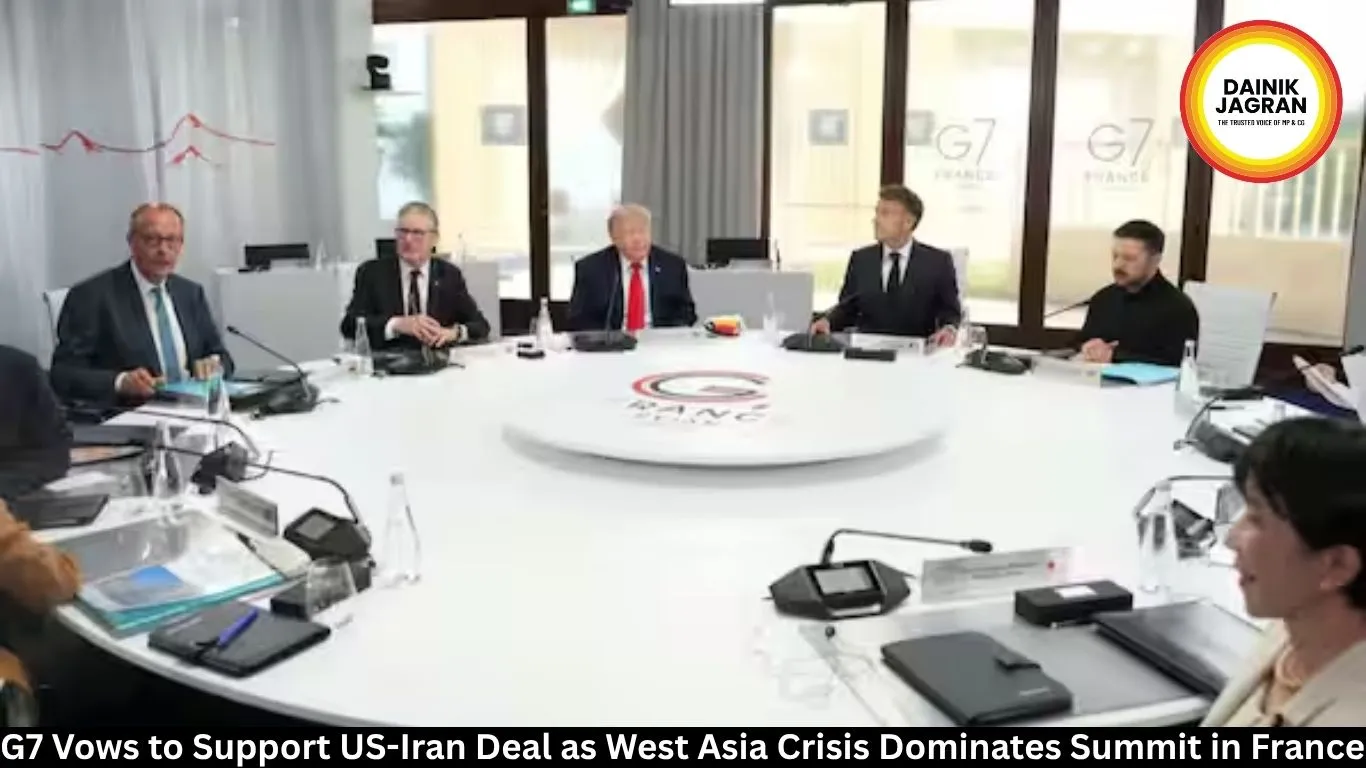
Seeking to salvage stability in the oil-rich West Asia region, leaders of the Group of Seven (G7) nations on Wednesday pledged to actively contribute to the implementation of US President Donald Trump’s newly announced deal with Iran.
The declaration came via a joint statement on geopolitical issues at the ongoing annual G7 summit in the French resort town of Évian-les-Bains.
A primary focus of the G7's commitment involves a multinational maritime initiative spearheaded by France and the United Kingdom. According to the joint statement, this coalition aims to facilitate the immediate resumption of commercial shipping traffic through the highly sensitive Strait of Hormuz.
Officials indicated that the initiative will deploy assets to protect merchant vessels, reassure commercial ship operators, and assist in verification operations to ensure the vital shipping lane is entirely cleared of sea mines.
The annual summit of the wealthy nations' club—comprising the US, UK, France, Germany, Italy, Canada, Japan, and the European Union—has been heavily overshadowed this year by the severe economic and geopolitical fallout of the recent, widely criticized American military campaign against Iran.
The Ballistic Blindspot and Regional Escalation
While the G7 leaders officially welcomed the US-Iran deal as a "historic opportunity" to permanently block Tehran's nuclear ambitions, the joint statement papered over glaring diplomatic vulnerabilities.
The 14-point Memorandum of Understanding (MoU) previously published by Iran explicitly excludes any restrictions on Tehran’s ballistic missile programme. It also completely omits Iran's funding and logistics support for armed proxy groups across the region.
Despite these gaps, the G7 communique maintained a firm line on the nuclear issue.
"We underline the need for the negotiation to this end to address the threats posed by Iran in the region and beyond and ensure that they never obtain a nuclear weapon," the statement read, adding that verification would require deep involvement from international partners, including the International Atomic Energy Agency (IAEA).
Netanyahu’s Lebanon Offensive Draws Trump’s Ire
The fragile peace process faces immediate collapse, not from Tehran, but due to escalating friction between Washington and Tel Aviv. The G7 leaders issued a sharp call for an immediate ceasefire in Lebanon, demanding the disarmament of Hezbollah and the protection of Lebanese territorial integrity.
The issue has become the biggest roadblock to the US-Iran accord. The Islamic Republic has directly pegged the survival of the deal to regional peace, warning that any further Israeli strikes inside Lebanon will be treated as an outright violation of the agreement.
On the sidelines of the summit in Évian-les-Bains, President Trump explicitly broke ranks with Israeli Prime Minister Benjamin Netanyahu.
Speaking to reporters, Trump admitted that the ongoing Israeli operations in Lebanon cast a "negative light" on his diplomatic breakthrough with Iran. Slamming Netanyahu for what he termed the indiscriminate bombardment of Lebanese territory, Trump stated bluntly that he was "not satisfied" with Israel's current military trajectory.
Despite the diplomatic pressure, Israeli airstrikes have continued, killing at least five people in Lebanon since the announcement of the US-Iran deal.
The crisis has also crippled wider humanitarian efforts. While G7 leaders called for a massive acceleration of reconstruction in the Gaza Strip and an immediate end to Jewish settler violence against Palestinians in the West Bank, sources admit the wider peace process remains entirely stalled by Tel Aviv’s refusal to halt its campaign.
With the West Asia conflict triggering a prolonged global energy crisis, the G7 energy ministers used the summit to pledge an accelerated diversification of global supply routes. As part of this transition, the bloc welcomed projections from Canada to significantly scale up its oil and gas delivery capacity to international markets in the coming years.
--------
🚨 Beat the News Rush – Join Now!
Get breaking alerts, hot exclusives, and game-changing stories instantly on your phone. No delays, no fluff – just the edge you need. ⚡
Tap to join:
🟢 WhatsApp Channel: Dainik Jagran MP CG
Crave more?
🅕 Facebook: Dainik Jagran MP CG English
🅧 Twitter (X): Dainik Jagran MP CG
🅘 Instagram: Dainik Jagran MP CG
Share the fire – keep your crew ahead! 🗞️🔥
G7 Backs US-Iran Deal Amid Rising Israel-Lebanon Tension
Digital Desk
Seeking to salvage stability in the oil-rich West Asia region, leaders of the Group of Seven (G7) nations on Wednesday pledged to actively contribute to the implementation of US President Donald Trump’s newly announced deal with Iran.
The declaration came via a joint statement on geopolitical issues at the ongoing annual G7 summit in the French resort town of Évian-les-Bains.
A primary focus of the G7's commitment involves a multinational maritime initiative spearheaded by France and the United Kingdom. According to the joint statement, this coalition aims to facilitate the immediate resumption of commercial shipping traffic through the highly sensitive Strait of Hormuz.
Officials indicated that the initiative will deploy assets to protect merchant vessels, reassure commercial ship operators, and assist in verification operations to ensure the vital shipping lane is entirely cleared of sea mines.
The annual summit of the wealthy nations' club—comprising the US, UK, France, Germany, Italy, Canada, Japan, and the European Union—has been heavily overshadowed this year by the severe economic and geopolitical fallout of the recent, widely criticized American military campaign against Iran.
The Ballistic Blindspot and Regional Escalation
While the G7 leaders officially welcomed the US-Iran deal as a "historic opportunity" to permanently block Tehran's nuclear ambitions, the joint statement papered over glaring diplomatic vulnerabilities.
The 14-point Memorandum of Understanding (MoU) previously published by Iran explicitly excludes any restrictions on Tehran’s ballistic missile programme. It also completely omits Iran's funding and logistics support for armed proxy groups across the region.
Despite these gaps, the G7 communique maintained a firm line on the nuclear issue.
"We underline the need for the negotiation to this end to address the threats posed by Iran in the region and beyond and ensure that they never obtain a nuclear weapon," the statement read, adding that verification would require deep involvement from international partners, including the International Atomic Energy Agency (IAEA).
Netanyahu’s Lebanon Offensive Draws Trump’s Ire
The fragile peace process faces immediate collapse, not from Tehran, but due to escalating friction between Washington and Tel Aviv. The G7 leaders issued a sharp call for an immediate ceasefire in Lebanon, demanding the disarmament of Hezbollah and the protection of Lebanese territorial integrity.
The issue has become the biggest roadblock to the US-Iran accord. The Islamic Republic has directly pegged the survival of the deal to regional peace, warning that any further Israeli strikes inside Lebanon will be treated as an outright violation of the agreement.
On the sidelines of the summit in Évian-les-Bains, President Trump explicitly broke ranks with Israeli Prime Minister Benjamin Netanyahu.
Speaking to reporters, Trump admitted that the ongoing Israeli operations in Lebanon cast a "negative light" on his diplomatic breakthrough with Iran. Slamming Netanyahu for what he termed the indiscriminate bombardment of Lebanese territory, Trump stated bluntly that he was "not satisfied" with Israel's current military trajectory.
Despite the diplomatic pressure, Israeli airstrikes have continued, killing at least five people in Lebanon since the announcement of the US-Iran deal.
The crisis has also crippled wider humanitarian efforts. While G7 leaders called for a massive acceleration of reconstruction in the Gaza Strip and an immediate end to Jewish settler violence against Palestinians in the West Bank, sources admit the wider peace process remains entirely stalled by Tel Aviv’s refusal to halt its campaign.
With the West Asia conflict triggering a prolonged global energy crisis, the G7 energy ministers used the summit to pledge an accelerated diversification of global supply routes. As part of this transition, the bloc welcomed projections from Canada to significantly scale up its oil and gas delivery capacity to international markets in the coming years.