India shines at Met Gala 2026

Digital Desk

India shines at Met Gala 2026

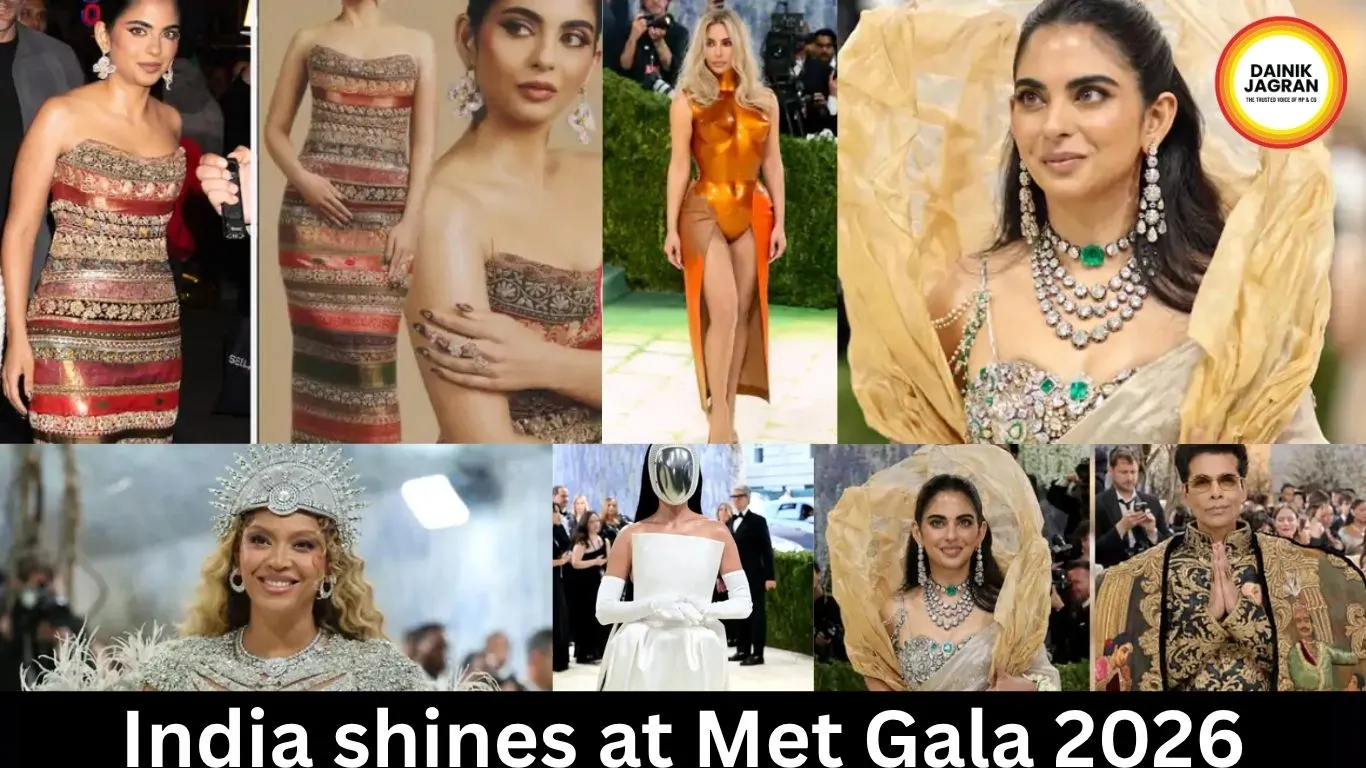
India shines at Met Gala 2026 as Isha Ambani stuns in gold‑thread saree and Karan Johar debuts Raja Ravi Varma‑inspired look on the global fashion stage.


India stains red carpet gold at Met Gala 2026

Isha Ambani stuns in diamond‑studded saree with 1800‑carat jewellery, Karan Johar debuts Raja Ravi Varma‑inspired look

India’s presence at the Met Gala 2026 lit up New York’s First Avenue, as Isha Ambani and Karan Johar turned the “Fashion Is Art” dress code into a high‑profile showcase of Indian artistry. On an evening dominated by global superstars, Ambani’s gem‑heavy Gaurav Gupta saree and Johar’s Manish Malhotra‑crafted Raja Ravi Varma‑themed ensemble stood out as deliberate statements of heritage, not just haute couture.

Ambani in gold and diamonds

Isha Ambani arrived at the Metropolitan Museum of Art in a custom‑made Gaurav Gupta saree woven with pure gold threads, a piece that took weeks of handwork by artisans associated with Swadesh, a retail brand focused on Indian craft preservation. The highlight of the look was her blouse, which Gupta’s atelier hand‑stitched with an estimated 1,800 carats of diamonds, emeralds, polki and kundan, drawing from both her own collection and her mother Nita Ambani’s jewellery vault.

According to Vogue India–level coverage, the ensemble also carried subtle personal touches, including pieces that were gifts received when Ambani’s twins were born, blending family sentiment with global spectacle. The saree, finished with a sculptural Gupta cape and Pichwai‑inspired motifs, anchored the evening’s “Fashion Is Art” theme while foregrounding Swadeshi craftsmanship.

The mango that wasn’t a mango

One of the most talked‑about images from the night was a photograph of Ambani carrying what appeared to be a mango in a small bag. Initial social‑media chatter assumed it was a literal fruit, but the truth quickly emerged. In subsequent interviews with fashion outlets, Ambani clarified that the piece was actually a 20‑year‑old sculpture by contemporary Indian artist Subodh Gupta, whose work often transforms everyday objects into conceptual art.

According to reporters on the ground, the mango sculpture became a shorthand symbol of how the evening’s “Fashion Is Art” dress code played out in practice: something ordinary, even playful, turned into a deliberate art object. The look also drew attention to her hair, which featured a gajra‑inspired sculpture made of paper, copper and brass by Brooklyn‑based artist Sourabh Gupta, adding another layer of Indian‑inspired modern craft.

Pre‑Met power move

Even before the main gala, Ambani had set the tone at Vogue’s Met Gala pre‑party in New York, wearing a custom bandage‑style dress by Manish Malhotra that mapped India’s geography through 26 distinct borders, each representing a different regional craft. Local fashion editors noted that the piece, stitched over more than 450 hours, effectively turned the Indian map into a walking canvas of textile traditions.

Those who have followed Ambani’s Met‑Gala appearances since 2024—when she wore a Rahul Mishra floral gown—point out that 2026 was her most overtly “India‑first” outing yet, consolidating a pattern of backing Indian designers on one of the world’s most visible fashion stages.

Johar’s Raja Ravi Varma moment

Karan Johar’s Met Gala debut was framed by organisers and Indian media alike as a pivot point for Indian art on the red carpet. Dressed in a black bandhgala and trousers by Manish Malhotra, the filmmaker’s real statement piece was a cape inspired by the nineteenth‑century painter Raja Ravi Varma, whose mythological oils have long shaped Indian visual culture.

According to India‑focused coverage, the cape drew on specific paintings such as “Hamsa Damayanti”, “Kadambari” and “Arjuna and Subhadra”, translating Varma’s palette and figures into hand‑painted gold detailing, 3D sculpting, quilting and traditional zardozi embroidery. Johar later told fashion reporters that he wanted the appearance to feel personal and “unapologetically Indian”, calling it a way to put Indian art, culture and storytelling before a global audience.

Glamour and craft elsewhere

Beyond the Ambani‑Johar axis, other Indian‑linked looks kept the spotlight on craft. Diya Mehta Jatia, sister of Shloka Mehta, appeared in a West Bengal‑inspired outfit by designer Mayyur Girotra that foregrounded Shola work, a traditional lightweight material used in Bengali festive headdresses.

Designer Manish Malhotra also dressed American actor Camila Mendes in a custom mahogany gown whose corseted base and French‑chiffon trails were inspired by the paintings of Amrita Sher‑Gil, further tying the evening’s art theme to Indian‑centric references.

Global stars and the “art” theme

On the broader carpet, the Met Gala’s “Costume Art” framework brought out a mix of sculptural and theatrical interpretative looks. Beyoncé, making her first Met appearance in a decade, wore a sheer, bone‑inspired gown topped with a two‑tone fringe cape and a crystal‑studded crown, while Kim Kardashian and Rihanna leaned into highly worked, almost architectural pieces.

Still, several fashion editors writing from the scene noted that when the dust settled, a disproportionate share of conversation centred on Ambani’s mango sculpture and Johar’s Raja Ravi Varma cape—two instances where Indian art, heritage and craft moved from the background to the foreground of fashion’s biggest night.

 

--------

🚨 Beat the News Rush – Join Now!

Get breaking alerts, hot exclusives, and game-changing stories instantly on your phone. No delays, no fluff – just the edge you need. ⚡

Tap to join: 

🟢 WhatsApp Channel: Dainik Jagran MP CG

Crave more?

🅕 Facebook: Dainik Jagran MP CG English

🅧 Twitter (X): Dainik Jagran MP CG

🅘 Instagram: Dainik Jagran MP CG

Share the fire – keep your crew ahead! 🗞️🔥

english.dainikjagranmpcg.com
05 May 2026 By Abhishek Joshi

India shines at Met Gala 2026

Digital Desk

India stains red carpet gold at Met Gala 2026

Isha Ambani stuns in diamond‑studded saree with 1800‑carat jewellery, Karan Johar debuts Raja Ravi Varma‑inspired look

India’s presence at the Met Gala 2026 lit up New York’s First Avenue, as Isha Ambani and Karan Johar turned the “Fashion Is Art” dress code into a high‑profile showcase of Indian artistry. On an evening dominated by global superstars, Ambani’s gem‑heavy Gaurav Gupta saree and Johar’s Manish Malhotra‑crafted Raja Ravi Varma‑themed ensemble stood out as deliberate statements of heritage, not just haute couture.

Ambani in gold and diamonds

Isha Ambani arrived at the Metropolitan Museum of Art in a custom‑made Gaurav Gupta saree woven with pure gold threads, a piece that took weeks of handwork by artisans associated with Swadesh, a retail brand focused on Indian craft preservation. The highlight of the look was her blouse, which Gupta’s atelier hand‑stitched with an estimated 1,800 carats of diamonds, emeralds, polki and kundan, drawing from both her own collection and her mother Nita Ambani’s jewellery vault.

According to Vogue India–level coverage, the ensemble also carried subtle personal touches, including pieces that were gifts received when Ambani’s twins were born, blending family sentiment with global spectacle. The saree, finished with a sculptural Gupta cape and Pichwai‑inspired motifs, anchored the evening’s “Fashion Is Art” theme while foregrounding Swadeshi craftsmanship.

The mango that wasn’t a mango

One of the most talked‑about images from the night was a photograph of Ambani carrying what appeared to be a mango in a small bag. Initial social‑media chatter assumed it was a literal fruit, but the truth quickly emerged. In subsequent interviews with fashion outlets, Ambani clarified that the piece was actually a 20‑year‑old sculpture by contemporary Indian artist Subodh Gupta, whose work often transforms everyday objects into conceptual art.

According to reporters on the ground, the mango sculpture became a shorthand symbol of how the evening’s “Fashion Is Art” dress code played out in practice: something ordinary, even playful, turned into a deliberate art object. The look also drew attention to her hair, which featured a gajra‑inspired sculpture made of paper, copper and brass by Brooklyn‑based artist Sourabh Gupta, adding another layer of Indian‑inspired modern craft.

Pre‑Met power move

Even before the main gala, Ambani had set the tone at Vogue’s Met Gala pre‑party in New York, wearing a custom bandage‑style dress by Manish Malhotra that mapped India’s geography through 26 distinct borders, each representing a different regional craft. Local fashion editors noted that the piece, stitched over more than 450 hours, effectively turned the Indian map into a walking canvas of textile traditions.

Those who have followed Ambani’s Met‑Gala appearances since 2024—when she wore a Rahul Mishra floral gown—point out that 2026 was her most overtly “India‑first” outing yet, consolidating a pattern of backing Indian designers on one of the world’s most visible fashion stages.

Johar’s Raja Ravi Varma moment

Karan Johar’s Met Gala debut was framed by organisers and Indian media alike as a pivot point for Indian art on the red carpet. Dressed in a black bandhgala and trousers by Manish Malhotra, the filmmaker’s real statement piece was a cape inspired by the nineteenth‑century painter Raja Ravi Varma, whose mythological oils have long shaped Indian visual culture.

According to India‑focused coverage, the cape drew on specific paintings such as “Hamsa Damayanti”, “Kadambari” and “Arjuna and Subhadra”, translating Varma’s palette and figures into hand‑painted gold detailing, 3D sculpting, quilting and traditional zardozi embroidery. Johar later told fashion reporters that he wanted the appearance to feel personal and “unapologetically Indian”, calling it a way to put Indian art, culture and storytelling before a global audience.

Glamour and craft elsewhere

Beyond the Ambani‑Johar axis, other Indian‑linked looks kept the spotlight on craft. Diya Mehta Jatia, sister of Shloka Mehta, appeared in a West Bengal‑inspired outfit by designer Mayyur Girotra that foregrounded Shola work, a traditional lightweight material used in Bengali festive headdresses.

Designer Manish Malhotra also dressed American actor Camila Mendes in a custom mahogany gown whose corseted base and French‑chiffon trails were inspired by the paintings of Amrita Sher‑Gil, further tying the evening’s art theme to Indian‑centric references.

Global stars and the “art” theme

On the broader carpet, the Met Gala’s “Costume Art” framework brought out a mix of sculptural and theatrical interpretative looks. Beyoncé, making her first Met appearance in a decade, wore a sheer, bone‑inspired gown topped with a two‑tone fringe cape and a crystal‑studded crown, while Kim Kardashian and Rihanna leaned into highly worked, almost architectural pieces.

Still, several fashion editors writing from the scene noted that when the dust settled, a disproportionate share of conversation centred on Ambani’s mango sculpture and Johar’s Raja Ravi Varma cape—two instances where Indian art, heritage and craft moved from the background to the foreground of fashion’s biggest night.


https://english.dainikjagranmpcg.com/special-news/india-shines-at-met-gala-2026/article-17808

Related Posts

Latest News