NCERT Adds Emergency Chapter to Class 9 Textbook

Digital Desk

NCERT Adds Emergency Chapter to Class 9 Textbook

NCERT has introduced a chapter on the 1975–77 Emergency in the Class 9 Social Science curriculum under NEP 2020 reforms.


For the first time, the National Council of Educational Research and Training (NCERT) has included a dedicated section on the 1975–77 Emergency in a Class 9 Social Science textbook, marking a significant change in the school curriculum under the National Education Policy (NEP) 2020 framework.

The new textbook, titled Understanding Society: India and Beyond, describes the Emergency as one of the most significant challenges faced by Indian democracy. The addition comes as the country recently marked 50 years since the imposition of the Emergency, a period that continues to be debated in India’s political and historical discourse.

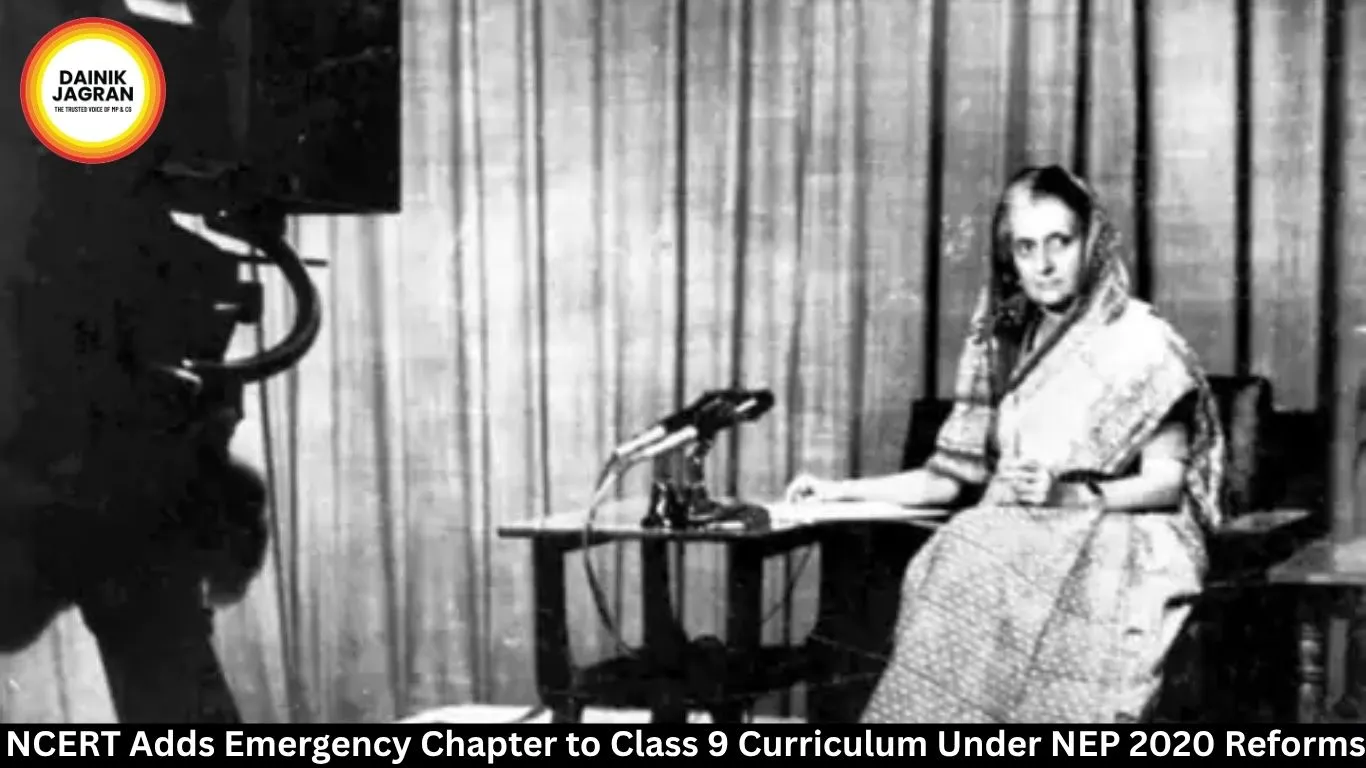
According to NCERT officials, the chapter has been introduced to help students understand key events that shaped democratic institutions and constitutional governance in independent India. The Emergency was declared in June 1975 by the government led by then Prime Minister Indira Gandhi and remained in force until 1977.

The textbook explains that public dissatisfaction with the government had been increasing during the early 1970s amid concerns over unemployment, inflation and administrative challenges. It notes that protests and political movements emerged in several parts of the country before the Emergency was proclaimed on grounds of internal disturbance.

According to the text, the Emergency period saw the suspension of several fundamental rights, restrictions on press freedom and the arrest of political leaders and activists. It states that democratic institutions came under pressure during the period and civil liberties were significantly curtailed.

The chapter also highlights the role played by Jayaprakash Narayan, widely known as Loknayak, in mobilising students and citizens against the government. The book refers to mass movements in Bihar and Gujarat, which became important developments in the political climate leading up to the Emergency.

NCERT has further noted that the 1977 general elections became a defining moment in Indian democracy. Following the withdrawal of the Emergency, voters participated in elections that resulted in the defeat of the ruling government. The textbook presents the outcome as an illustration of democratic accountability and the electorate’s ability to influence political change through constitutional means.

Beyond the Emergency, the revised curriculum discusses several contemporary challenges facing democratic systems. These include misinformation, fake news, poverty, regionalism, social discrimination, gender inequality and damage to public property. The objective, according to the textbook, is to encourage students to examine both historical and present-day issues affecting democratic governance.

A new section titled “Democracy and You” has also been introduced. It focuses on civic participation and aims to help students understand their responsibilities and role within a democratic framework.

The revised content places considerable emphasis on India’s democratic traditions and institutions. It argues that democratic practices and participatory decision-making have deep roots in the country’s historical development. The textbook also includes a dedicated discussion on the role of media, describing it as the fourth pillar of democracy and highlighting its importance in ensuring accountability and amplifying public voices.

To provide context on the scale of democratic participation in India, the book includes recent electoral data. It notes that the country had more than 96.8 crore registered voters during the 2024 elections and references the extensive network of polling stations that facilitate voting across urban and rural regions.

Examples from local governance have also been incorporated, including references to panchayats in Gujarat and women-led initiatives in Tripura. The curriculum additionally discusses women’s voting rights and reservation policies in local self-government institutions.

The inclusion of the Emergency chapter is part of broader curriculum revisions being undertaken under NEP 2020 and reflects an effort to expand students’ understanding of democratic institutions, constitutional values and key moments in India’s political history.

 

--------

🚨 Beat the News Rush – Join Now!

Get breaking alerts, hot exclusives, and game-changing stories instantly on your phone. No delays, no fluff – just the edge you need. ⚡

Tap to join: 

🟢 WhatsApp Channel: Dainik Jagran MP CG

Crave more?

🅕 Facebook: Dainik Jagran MP CG English

🅧 Twitter (X): Dainik Jagran MP CG

🅘 Instagram: Dainik Jagran MP CG

Share the fire – keep your crew ahead! 🗞️🔥

english.dainikjagranmpcg.com
25 Jun 2026 By Abhishek Joshi

NCERT Adds Emergency Chapter to Class 9 Textbook

Digital Desk

For the first time, the National Council of Educational Research and Training (NCERT) has included a dedicated section on the 1975–77 Emergency in a Class 9 Social Science textbook, marking a significant change in the school curriculum under the National Education Policy (NEP) 2020 framework.

The new textbook, titled Understanding Society: India and Beyond, describes the Emergency as one of the most significant challenges faced by Indian democracy. The addition comes as the country recently marked 50 years since the imposition of the Emergency, a period that continues to be debated in India’s political and historical discourse.

According to NCERT officials, the chapter has been introduced to help students understand key events that shaped democratic institutions and constitutional governance in independent India. The Emergency was declared in June 1975 by the government led by then Prime Minister Indira Gandhi and remained in force until 1977.

The textbook explains that public dissatisfaction with the government had been increasing during the early 1970s amid concerns over unemployment, inflation and administrative challenges. It notes that protests and political movements emerged in several parts of the country before the Emergency was proclaimed on grounds of internal disturbance.

According to the text, the Emergency period saw the suspension of several fundamental rights, restrictions on press freedom and the arrest of political leaders and activists. It states that democratic institutions came under pressure during the period and civil liberties were significantly curtailed.

The chapter also highlights the role played by Jayaprakash Narayan, widely known as Loknayak, in mobilising students and citizens against the government. The book refers to mass movements in Bihar and Gujarat, which became important developments in the political climate leading up to the Emergency.

NCERT has further noted that the 1977 general elections became a defining moment in Indian democracy. Following the withdrawal of the Emergency, voters participated in elections that resulted in the defeat of the ruling government. The textbook presents the outcome as an illustration of democratic accountability and the electorate’s ability to influence political change through constitutional means.

Beyond the Emergency, the revised curriculum discusses several contemporary challenges facing democratic systems. These include misinformation, fake news, poverty, regionalism, social discrimination, gender inequality and damage to public property. The objective, according to the textbook, is to encourage students to examine both historical and present-day issues affecting democratic governance.

A new section titled “Democracy and You” has also been introduced. It focuses on civic participation and aims to help students understand their responsibilities and role within a democratic framework.

The revised content places considerable emphasis on India’s democratic traditions and institutions. It argues that democratic practices and participatory decision-making have deep roots in the country’s historical development. The textbook also includes a dedicated discussion on the role of media, describing it as the fourth pillar of democracy and highlighting its importance in ensuring accountability and amplifying public voices.

To provide context on the scale of democratic participation in India, the book includes recent electoral data. It notes that the country had more than 96.8 crore registered voters during the 2024 elections and references the extensive network of polling stations that facilitate voting across urban and rural regions.

Examples from local governance have also been incorporated, including references to panchayats in Gujarat and women-led initiatives in Tripura. The curriculum additionally discusses women’s voting rights and reservation policies in local self-government institutions.

The inclusion of the Emergency chapter is part of broader curriculum revisions being undertaken under NEP 2020 and reflects an effort to expand students’ understanding of democratic institutions, constitutional values and key moments in India’s political history.


https://english.dainikjagranmpcg.com/special-news/ncert-adds-emergency-chapter-to-class-9-textbook/article-20617

Related Posts

Latest News