Operation Sindoor drives India's defence exports to ₹38,424 cr

Digital Desk

Operation Sindoor drives India's defence exports to ₹38,424 cr

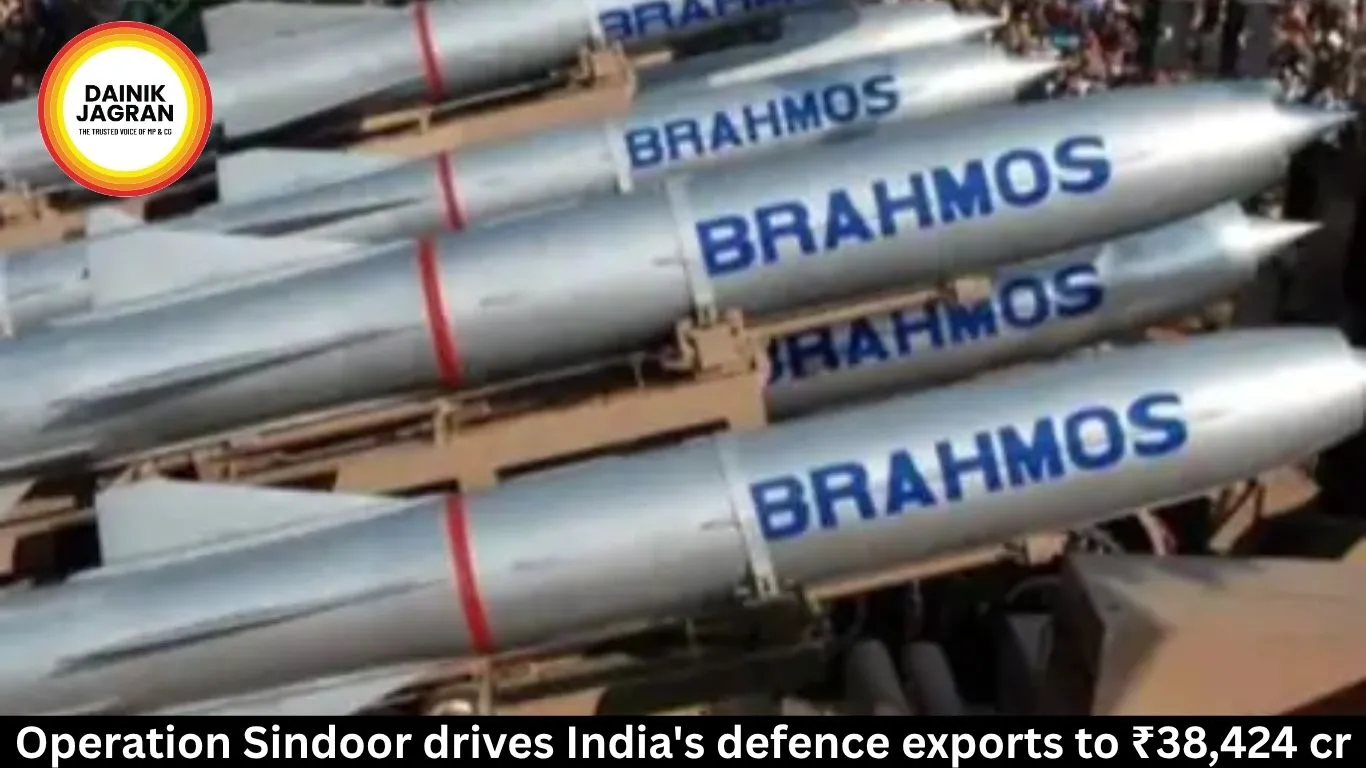
India's defence exports hit a record ₹38,424 crore in FY26 as Operation Sindoor sparks global demand for BrahMos and Akash systems with ₹21,000 cr pipeline.


Driven by the field performance of indigenous platforms during Operation Sindoor, India’s defence industry is experiencing an unprecedented export boom, with a pipeline of fresh orders exceeding ₹21,000 crore. Data compiled by the Ministry of Defence reveals that India's defence exports touched an all-time high of ₹38,424 crore during the 2025–26 financial year, marking a massive 62.66% surge from the previous fiscal.

Senior defence officials confirmed that the live deployment of indigenous weapon systems—including the BrahMos supersonic cruise missile, the Akash air defence system, and advanced loitering munitions—fundamentally transformed global perceptions. Weapon platforms previously viewed by foreign buyers as cost-effective but untested alternatives are now being recognized as elite, battle-proven systems, triggering intense acquisition interest from Southeast Asia, Europe, and Africa.

Global interest peaks after operation

South Block sources stated that the precision and operational readiness demonstrated during the 96-hour conflict significantly accelerated pending export negotiations. The BrahMos missile system, in particular, drew international attention after successfully bypassing sophisticated foreign-origin air defence networks during the operations.

Following this combat evaluation, new export orders worth billions have materialised rapidly. Well-placed sources familiar with the developments indicated that multiple military delegations have visited New Delhi over the last month to inspect production lines at various Defence Public Sector Undertakings (DPSUs) and private assembly units.

Huge pipeline of missile deals

A breakdown of the current order book highlights a substantial export footprint for India's premium missile segments. Fresh contracts worth approximately ₹12,500 crore for the shoreline and air-launched variants of the BrahMos missile have been locked in with the Philippines, Vietnam, and two other undisclosed nations.

Meanwhile, a separate multi-million dollar missile contract with Indonesia, valued at nearly ₹3,600 crore, has progressed past technical evaluation and is currently sitting in the final government approval stage. In the air defence vertical, Armenia remains a major partner, adding to its previous orders by finalizing a fresh ₹6,100 crore contract for the indigenous Akash surface-to-air missile systems to secure its contested airspace.

Major shift in export basket

The composition of India's military shipments reveals a two-tier strategy dividing complete systems and component integration. Currently, India exports military hardware to more than 100 countries globally.


|                      INDIA'S DEFENCE EXPORT PROFILE                      |

| Tier 1: Major Systems    | Akash Air Defence, BrahMos Missiles, Pinaka   |

| (e.g., Armenia, SE Asia) | Rockets, ATAGS Artillery, Swathi Radars       |

| Tier 2: Components       | Fuselages, Wings, Stabilizers, Sub-assemblies |

The United States has emerged as the single largest destination by value, though its imports focus heavily on structural sub-systems. Indian facilities, such as the Tata Boeing Aerospace venture in Hyderabad, are actively manufacturing fuselages for Apache attack helicopters, alongside aircraft wings and empennages for global aerospace giants. Conversely, nations like Armenia and partners in Southeast Asia are primarily absorbing full-scale, integrated weapon systems.

Private sector drives manufacturing surge

The internal mechanics of this manufacturing surge point to a healthily balanced local ecosystem. According to the MoD, DPSUs contributed 54.84% of the exports in FY26, while private sector enterprises accounted for a competitive 45.16%.

Sustained policy interventions—including digital, streamlined single-window export clearances and relaxed Foreign Direct Investment (FDI) rules—have allowed private players to scale up production under deadline pressure. This collaborative network now comprises over 145 registered exporters, backed by more than 16,000 MSMEs and over 1,000 defense startups operating within the domestic corridors.

Chasing the fifty thousand milestone

Reflecting on the 25-fold export jump since 2016–17, when outbound shipments stood at a meager ₹1,522 crore, the government has revised its near-term projections upwards. The Ministry of Defence has set a firm defense export target of ₹50,000 crore by the 2029–30 financial year.

With the combat validation from Operation Sindoor addressing historical skepticism regarding operational reliability, industrial experts believe the momentum is self-sustaining. The focus is now shifting toward establishing international maintenance, repair, and overhaul (MRO) hubs to support Indian platforms operating overseas.

 

--------

🚨 Beat the News Rush – Join Now!

Get breaking alerts, hot exclusives, and game-changing stories instantly on your phone. No delays, no fluff – just the edge you need. ⚡

Tap to join: 

🟢 WhatsApp Channel: Dainik Jagran MP CG

Crave more?

🅕 Facebook: Dainik Jagran MP CG English

🅧 Twitter (X): Dainik Jagran MP CG

🅘 Instagram: Dainik Jagran MP CG

Share the fire – keep your crew ahead! 🗞️🔥

english.dainikjagranmpcg.com
01 Jun 2026 By Abhishek Joshi

Operation Sindoor drives India's defence exports to ₹38,424 cr

Digital Desk

Driven by the field performance of indigenous platforms during Operation Sindoor, India’s defence industry is experiencing an unprecedented export boom, with a pipeline of fresh orders exceeding ₹21,000 crore. Data compiled by the Ministry of Defence reveals that India's defence exports touched an all-time high of ₹38,424 crore during the 2025–26 financial year, marking a massive 62.66% surge from the previous fiscal.

Senior defence officials confirmed that the live deployment of indigenous weapon systems—including the BrahMos supersonic cruise missile, the Akash air defence system, and advanced loitering munitions—fundamentally transformed global perceptions. Weapon platforms previously viewed by foreign buyers as cost-effective but untested alternatives are now being recognized as elite, battle-proven systems, triggering intense acquisition interest from Southeast Asia, Europe, and Africa.

Global interest peaks after operation

South Block sources stated that the precision and operational readiness demonstrated during the 96-hour conflict significantly accelerated pending export negotiations. The BrahMos missile system, in particular, drew international attention after successfully bypassing sophisticated foreign-origin air defence networks during the operations.

Following this combat evaluation, new export orders worth billions have materialised rapidly. Well-placed sources familiar with the developments indicated that multiple military delegations have visited New Delhi over the last month to inspect production lines at various Defence Public Sector Undertakings (DPSUs) and private assembly units.

Huge pipeline of missile deals

A breakdown of the current order book highlights a substantial export footprint for India's premium missile segments. Fresh contracts worth approximately ₹12,500 crore for the shoreline and air-launched variants of the BrahMos missile have been locked in with the Philippines, Vietnam, and two other undisclosed nations.

Meanwhile, a separate multi-million dollar missile contract with Indonesia, valued at nearly ₹3,600 crore, has progressed past technical evaluation and is currently sitting in the final government approval stage. In the air defence vertical, Armenia remains a major partner, adding to its previous orders by finalizing a fresh ₹6,100 crore contract for the indigenous Akash surface-to-air missile systems to secure its contested airspace.

Major shift in export basket

The composition of India's military shipments reveals a two-tier strategy dividing complete systems and component integration. Currently, India exports military hardware to more than 100 countries globally.


|                      INDIA'S DEFENCE EXPORT PROFILE                      |

| Tier 1: Major Systems    | Akash Air Defence, BrahMos Missiles, Pinaka   |

| (e.g., Armenia, SE Asia) | Rockets, ATAGS Artillery, Swathi Radars       |

| Tier 2: Components       | Fuselages, Wings, Stabilizers, Sub-assemblies |

The United States has emerged as the single largest destination by value, though its imports focus heavily on structural sub-systems. Indian facilities, such as the Tata Boeing Aerospace venture in Hyderabad, are actively manufacturing fuselages for Apache attack helicopters, alongside aircraft wings and empennages for global aerospace giants. Conversely, nations like Armenia and partners in Southeast Asia are primarily absorbing full-scale, integrated weapon systems.

Private sector drives manufacturing surge

The internal mechanics of this manufacturing surge point to a healthily balanced local ecosystem. According to the MoD, DPSUs contributed 54.84% of the exports in FY26, while private sector enterprises accounted for a competitive 45.16%.

Sustained policy interventions—including digital, streamlined single-window export clearances and relaxed Foreign Direct Investment (FDI) rules—have allowed private players to scale up production under deadline pressure. This collaborative network now comprises over 145 registered exporters, backed by more than 16,000 MSMEs and over 1,000 defense startups operating within the domestic corridors.

Chasing the fifty thousand milestone

Reflecting on the 25-fold export jump since 2016–17, when outbound shipments stood at a meager ₹1,522 crore, the government has revised its near-term projections upwards. The Ministry of Defence has set a firm defense export target of ₹50,000 crore by the 2029–30 financial year.

With the combat validation from Operation Sindoor addressing historical skepticism regarding operational reliability, industrial experts believe the momentum is self-sustaining. The focus is now shifting toward establishing international maintenance, repair, and overhaul (MRO) hubs to support Indian platforms operating overseas.

 

https://english.dainikjagranmpcg.com/special-news/operation-sindoor-drives-indias-defence-exports-to-%E2%82%B938424-cr/article-19520

Related Posts

Latest News