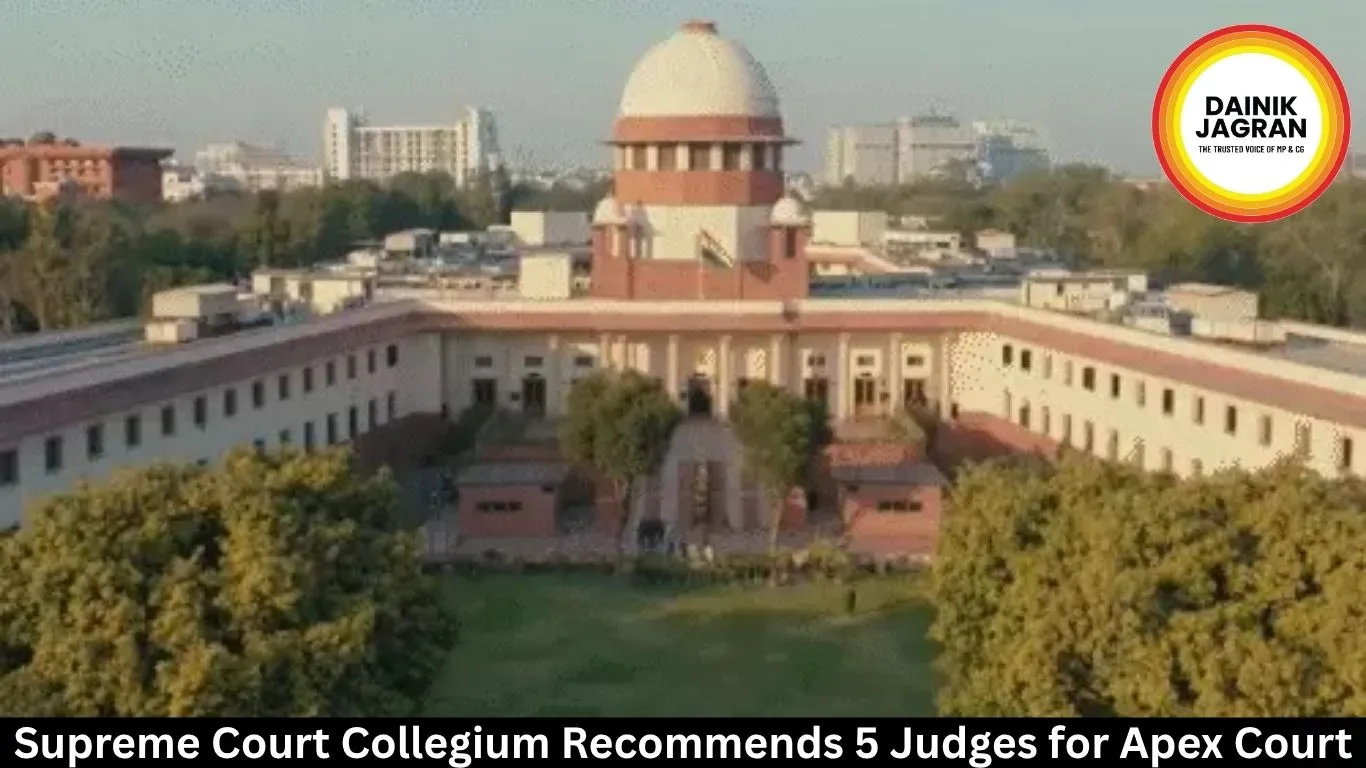
SC Collegium Recommends 5 Judges for Supreme Court Appointment

Digital Desk

SC Collegium Recommends 5 Judges for Supreme Court Appointment

Supreme Court Collegium recommends five names including High Court chief justices and senior advocate V Mohana for Supreme Court appointments to address case backlog.

Five names—including three High Court chief justices and prominent senior advocate V Mohana—have been recommended by the Supreme Court Collegium for appointment as judges to India's top court. The recommendations emerged from meetings held on May 22 and May 27, marking a significant step toward addressing the persistent case backlog plaguing the Indian judiciary.

Who's in the Lineup

The Collegium has recommended Chief Justice Sheel Nagu of the Punjab and Haryana High Court, Chief Justice Shri Chandrashekhar of the Bombay High Court, and Chief Justice Sanjeev Sachdeva of the Madhya Pradesh High Court. Rounding out the quartet of chief justices is Chief Justice Arun Palli of the Jammu and Kashmir and Ladakh High Court. The fifth name belongs to Senior Advocate V Mohana, whose elevation would break new ground for the country's judiciary.

The recommendations now move to the Centre for formal approval, a process that typically follows established protocols within the collegial system. Currently, the Supreme Court operates with 32 judges—a number that has remained static even as the volume of pending cases has spiralled.

Breaking Ground on Gender Representation

Mohana's appointment carries particular significance. She would become only the second woman judge to be elevated to the Supreme Court in over five years. Justice BV Nagarathna remains the sole woman judge on the current bench, and no woman has been appointed since August 2021—a gap that has drawn scrutiny from legal experts and civil society observers.

The timing is notable. Nagarathna is set to become the country's first woman Chief Justice of India in September 2027, a historic milestone. Mohana's elevation would ensure the court does not slip back to zero female representation during the interim period and would strengthen the presence of women in India's highest judicial body.

Addressing a Mounting Crisis

The push for fresh appointments reflects an urgent reality. The Supreme Court's docket now carries 92,385 pending cases—a figure that underscores the institutional strain across India's judicial system. High Courts grapple with over 63 lakh pending matters, while courts nationwide are burdened with more than 5.49 crore cases awaiting resolution.

The surge in pending matters accelerated following the Covid-19 pandemic, which spurred a shift to e-filing across courts. What was meant to streamline the system has instead exposed structural limitations in judicial capacity. For litigants, the delays translate into years of uncertainty. For the system itself, they represent a crisis threatening the very promise of timely justice.

Two additional vacancies are set to emerge in June with the retirement of Justices JK Maheshwari and Pankaj Mithal, further tightening the bench's already stretched resources.

Expanding the Bench

The government has already moved to address capacity constraints. On May 5, the Union Cabinet approved a proposal to increase the sanctioned strength of Supreme Court judges from 33 to 37—an expansion of four additional positions. A corresponding bill is expected to be introduced in Parliament's next session.

The amendment, if passed, would modify the 1956 law governing Supreme Court composition. Under Article 124(1) of the Constitution, Parliament holds the authority to alter the number of judges, a power that has been exercised sparingly in India's judicial history. This expansion represents one of the more significant increases in recent decades.

What Happens Next

The Centre's approval of the Collegium's recommendations will be closely watched by legal practitioners, court watchers, and those awaiting justice in the system. If greenlit, the appointments could add up to five judges to the bench within a reasonable timeframe, though the formal appointment process and oath-taking ceremonies typically unfold over weeks.

Beyond individual appointments, the expansion of the Supreme Court's sanctioned strength offers a structural response to the caseload crisis. Once the parliamentary amendment takes effect, the Collegium will gain headroom to recommend further appointments as vacancies arise, potentially establishing a more sustainable judicial capacity.

The recommendations underscore a recognition within the collegium—comprising senior judges—that the current configuration is untenable. Whether these moves sufficiently address the backlog remains an open question, but they represent the judiciary's attempt to right-size itself for the volume of disputes now reaching its doors.


 

--------

๐Ÿšจ Beat the News Rush โ€“ Join Now!

Get breaking alerts, hot exclusives, and game-changing stories instantly on your phone. No delays, no fluff โ€“ just the edge you need. โšก

Tap to join:ย 

๐ŸŸข WhatsApp Channel: Dainik Jagran MP CG

Crave more?

๐Ÿ…• Facebook: Dainik Jagran MP CG English

๐Ÿ…ง Twitter (X): Dainik Jagran MP CG

๐Ÿ…˜ Instagram: Dainik Jagran MP CG

Share the fire โ€“ keep your crew ahead! ๐Ÿ—ž๏ธ๐Ÿ”ฅ

english.dainikjagranmpcg.com
28 May 2026 By Abhishek Joshi

SC Collegium Recommends 5 Judges for Supreme Court Appointment

Digital Desk

Five names—including three High Court chief justices and prominent senior advocate V Mohana—have been recommended by the Supreme Court Collegium for appointment as judges to India's top court. The recommendations emerged from meetings held on May 22 and May 27, marking a significant step toward addressing the persistent case backlog plaguing the Indian judiciary.

Who's in the Lineup

The Collegium has recommended Chief Justice Sheel Nagu of the Punjab and Haryana High Court, Chief Justice Shri Chandrashekhar of the Bombay High Court, and Chief Justice Sanjeev Sachdeva of the Madhya Pradesh High Court. Rounding out the quartet of chief justices is Chief Justice Arun Palli of the Jammu and Kashmir and Ladakh High Court. The fifth name belongs to Senior Advocate V Mohana, whose elevation would break new ground for the country's judiciary.

The recommendations now move to the Centre for formal approval, a process that typically follows established protocols within the collegial system. Currently, the Supreme Court operates with 32 judges—a number that has remained static even as the volume of pending cases has spiralled.

Breaking Ground on Gender Representation

Mohana's appointment carries particular significance. She would become only the second woman judge to be elevated to the Supreme Court in over five years. Justice BV Nagarathna remains the sole woman judge on the current bench, and no woman has been appointed since August 2021—a gap that has drawn scrutiny from legal experts and civil society observers.

The timing is notable. Nagarathna is set to become the country's first woman Chief Justice of India in September 2027, a historic milestone. Mohana's elevation would ensure the court does not slip back to zero female representation during the interim period and would strengthen the presence of women in India's highest judicial body.

Addressing a Mounting Crisis

The push for fresh appointments reflects an urgent reality. The Supreme Court's docket now carries 92,385 pending cases—a figure that underscores the institutional strain across India's judicial system. High Courts grapple with over 63 lakh pending matters, while courts nationwide are burdened with more than 5.49 crore cases awaiting resolution.

The surge in pending matters accelerated following the Covid-19 pandemic, which spurred a shift to e-filing across courts. What was meant to streamline the system has instead exposed structural limitations in judicial capacity. For litigants, the delays translate into years of uncertainty. For the system itself, they represent a crisis threatening the very promise of timely justice.

Two additional vacancies are set to emerge in June with the retirement of Justices JK Maheshwari and Pankaj Mithal, further tightening the bench's already stretched resources.

Expanding the Bench

The government has already moved to address capacity constraints. On May 5, the Union Cabinet approved a proposal to increase the sanctioned strength of Supreme Court judges from 33 to 37—an expansion of four additional positions. A corresponding bill is expected to be introduced in Parliament's next session.

The amendment, if passed, would modify the 1956 law governing Supreme Court composition. Under Article 124(1) of the Constitution, Parliament holds the authority to alter the number of judges, a power that has been exercised sparingly in India's judicial history. This expansion represents one of the more significant increases in recent decades.

What Happens Next

The Centre's approval of the Collegium's recommendations will be closely watched by legal practitioners, court watchers, and those awaiting justice in the system. If greenlit, the appointments could add up to five judges to the bench within a reasonable timeframe, though the formal appointment process and oath-taking ceremonies typically unfold over weeks.

Beyond individual appointments, the expansion of the Supreme Court's sanctioned strength offers a structural response to the caseload crisis. Once the parliamentary amendment takes effect, the Collegium will gain headroom to recommend further appointments as vacancies arise, potentially establishing a more sustainable judicial capacity.

The recommendations underscore a recognition within the collegium—comprising senior judges—that the current configuration is untenable. Whether these moves sufficiently address the backlog remains an open question, but they represent the judiciary's attempt to right-size itself for the volume of disputes now reaching its doors.


https://english.dainikjagranmpcg.com/special-news/sc-collegium-recommends-5-judges-for-supreme-court-appointment/article-19362

Related Posts

Latest News