

Vande Mataram Gets National Anthem Status Under New Law
Digital Desk
Government grants Vande Mataram equal legal status to Jana Gana Mana. Amendment to Prevention of Insults Act brings jail term for disruption. New singing guidelines for state ceremonies
Vande Mataram Granted National Anthem Status; Legal Protections Now Match 'Jana Gana Mana'
Government amends Prevention of Insults Act; insult or disruption of singing to invite jail term
Government elevates Vande Mataram to anthem status
The central government has placed Vande Mataram on equal legal footing with the national anthem 'Jana Gana Mana', a move that extends constitutional protections to the 150-year-old composition by Bankim Chandra Chatterjee. The Cabinet decision, taken during Prime Minister Narendra Modi's first meeting following the BJP's victory in the West Bengal Assembly elections, brings the beloved patriotic song under the Prevention of Insults to National Honour Act.
The amendment to Section 3 of the law means that anyone deliberately obstructing or preventing the singing of Vande Mataram now faces imprisonment of up to three years, a fine, or both. For repeat offences, the minimum sentence rises to one year. These provisions mirror existing legal safeguards for the national anthem.
When and how Vande Mataram will be sung
Government guidelines issued on May 6 set out the official protocol for performing Vande Mataram at state functions. The complete six-stanza version—lasting approximately three minutes and ten seconds—must be presented during major ceremonial occasions. This includes national flag hoisting ceremonies, official arrival and departure functions involving the President and Governors, and formal state events.
Where both compositions feature at the same gathering, Vande Mataram precedes the national anthem. Both require audiences to stand as a mark of respect. However, cinema halls received exemption from this requirement. The Home Ministry clarified that mandatory standing in entertainment venues could disrupt the viewing experience and confuse audiences.
Schools to promote singing; drums signal performance
Schools, colleges, and institutional programmes have been urged to include Vande Mataram in their events. The Home Ministry framed this as a measure to strengthen awareness and respect for national symbols among students and the public. When performed by bands, the composition should be formally preceded by drum or bugle sounds to signal the beginning.
The guidelines stop short of making Vande Mataram compulsory in private or informal settings. The focus remains on government ceremonies, educational institutions, and formal state functions.
The political backdrop
The elevation arrives at a politically charged moment. During the West Bengal elections, the BJP positioned Vande Mataram as a marker of Bengali identity and nationalism, organising mass singing and foot marches to commemorate its 150 years. The party highlighted the legacy of Bankim Chandra Chatterjee throughout its campaign messaging.
Congress opposition figures alleged the government was weaponising the national song for electoral purposes. The party had previously resisted expanding Vande Mataram's prominence, pointing to historical concerns about select verses causing communal tensions. During the December parliamentary debate, PM Modi responded sharply, accusing Congress of "fragmenting" the song and bowing to "appeasement politics."
History of the six stanzas
Bankim Chandra Chatterjee composed Vande Mataram on November 7, 1875, first publishing it in 1882 within his novel Anandamath. Fourteen years later, Rabindranath Tagore performed the composition at the Indian National Congress session—the first public rendition at national level. Eyewitnesses recorded thousands in tears.
The Sanskrit phrase translates to "O Mother, I bow to you." During India's freedom struggle, it evolved into a rallying cry for independence fighters challenging colonial rule.
The controversy over missing stanzas
Not all six original stanzas have enjoyed equal prominence. In October 1937, Congress leadership—including Mahatma Gandhi, Jawaharlal Nehru, Sardar Patel, and others—voted to remove four paragraphs from the composition. Nehru, in correspondence with Subhas Chandra Bose, had flagged that the song's language and imagery made some Muslim citizens uncomfortable, and its archaic Sanskrit proved difficult without reference texts.
Communal tensions surrounding Vande Mataram had escalated at that time. Nehru viewed the controversy as potentially orchestrated and sought guidance from Tagore before the Congress Working Committee made its decision.
Prime Minister Modi invoked this episode in his December speech, stating Nehru "felt this could hurt Muslims" and suggesting external pressure influenced the choice. The BJP has used the historical removal to argue for full restoration and equal status.
Republic Day tableau and cultural marking
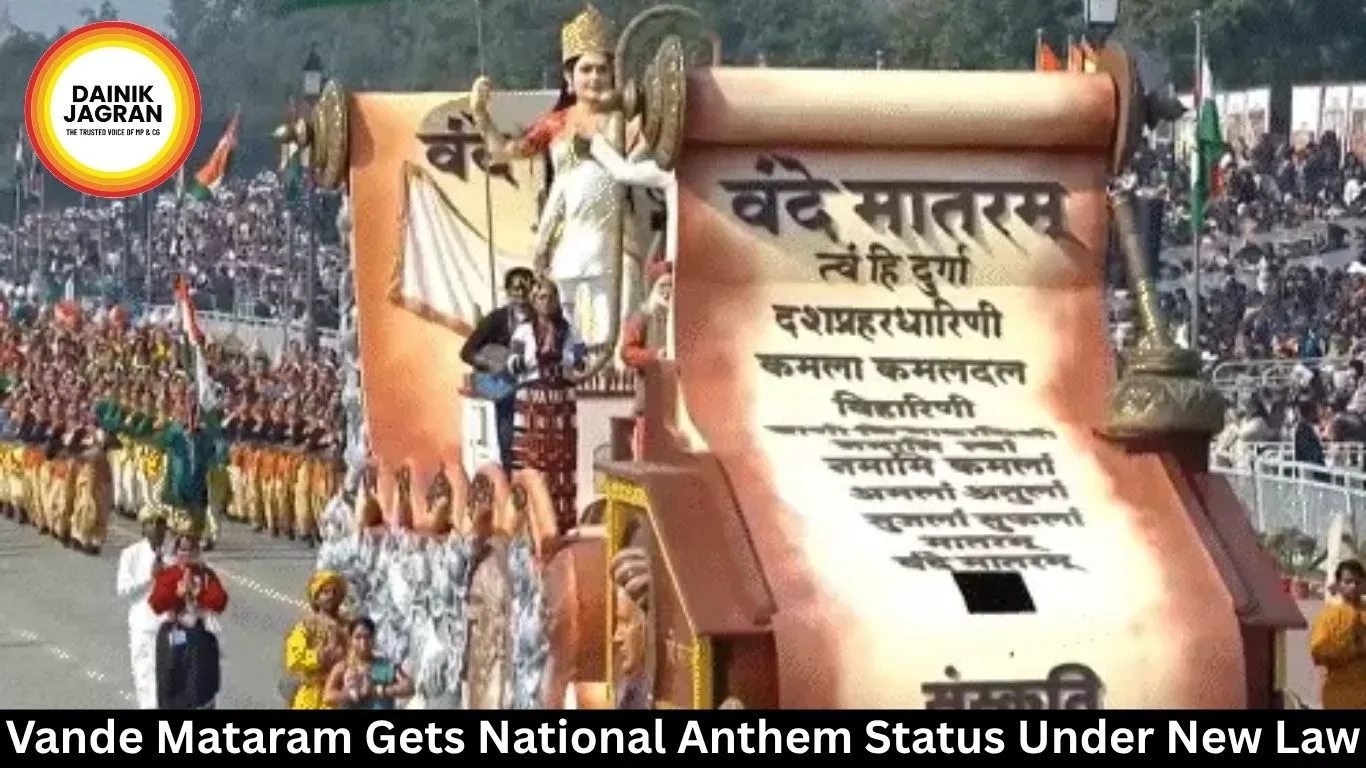
The 77th Republic Day parade on January 26 centred on the Vande Mataram theme. The Ministry of Culture's winning tableau depicted the composition's creation by Chatterjee, its colonial-era recording by a Marathi vocalist, and contemporary rendition by Gen Z performers. Manuscripts, traditional dancers, and folk representations highlighted India's cultural continuity.
This placement marked official recognition of the song's centennial milestone and set the stage for the subsequent legislative and administrative actions.
--------
π¨ Beat the News Rush β Join Now!
Get breaking alerts, hot exclusives, and game-changing stories instantly on your phone. No delays, no fluff β just the edge you need. β‘
Tap to join:Β
π’ WhatsApp Channel: Dainik Jagran MP CG
Crave more?
π Facebook: Dainik Jagran MP CG English
π § Twitter (X): Dainik Jagran MP CG
π Instagram: Dainik Jagran MP CG
Share the fire β keep your crew ahead! ποΈπ₯
Vande Mataram Gets National Anthem Status Under New Law
Digital Desk
Vande Mataram Granted National Anthem Status; Legal Protections Now Match 'Jana Gana Mana'
Government amends Prevention of Insults Act; insult or disruption of singing to invite jail term
Government elevates Vande Mataram to anthem status
The central government has placed Vande Mataram on equal legal footing with the national anthem 'Jana Gana Mana', a move that extends constitutional protections to the 150-year-old composition by Bankim Chandra Chatterjee. The Cabinet decision, taken during Prime Minister Narendra Modi's first meeting following the BJP's victory in the West Bengal Assembly elections, brings the beloved patriotic song under the Prevention of Insults to National Honour Act.
The amendment to Section 3 of the law means that anyone deliberately obstructing or preventing the singing of Vande Mataram now faces imprisonment of up to three years, a fine, or both. For repeat offences, the minimum sentence rises to one year. These provisions mirror existing legal safeguards for the national anthem.
When and how Vande Mataram will be sung
Government guidelines issued on May 6 set out the official protocol for performing Vande Mataram at state functions. The complete six-stanza version—lasting approximately three minutes and ten seconds—must be presented during major ceremonial occasions. This includes national flag hoisting ceremonies, official arrival and departure functions involving the President and Governors, and formal state events.
Where both compositions feature at the same gathering, Vande Mataram precedes the national anthem. Both require audiences to stand as a mark of respect. However, cinema halls received exemption from this requirement. The Home Ministry clarified that mandatory standing in entertainment venues could disrupt the viewing experience and confuse audiences.
Schools to promote singing; drums signal performance
Schools, colleges, and institutional programmes have been urged to include Vande Mataram in their events. The Home Ministry framed this as a measure to strengthen awareness and respect for national symbols among students and the public. When performed by bands, the composition should be formally preceded by drum or bugle sounds to signal the beginning.
The guidelines stop short of making Vande Mataram compulsory in private or informal settings. The focus remains on government ceremonies, educational institutions, and formal state functions.
The political backdrop
The elevation arrives at a politically charged moment. During the West Bengal elections, the BJP positioned Vande Mataram as a marker of Bengali identity and nationalism, organising mass singing and foot marches to commemorate its 150 years. The party highlighted the legacy of Bankim Chandra Chatterjee throughout its campaign messaging.
Congress opposition figures alleged the government was weaponising the national song for electoral purposes. The party had previously resisted expanding Vande Mataram's prominence, pointing to historical concerns about select verses causing communal tensions. During the December parliamentary debate, PM Modi responded sharply, accusing Congress of "fragmenting" the song and bowing to "appeasement politics."
History of the six stanzas
Bankim Chandra Chatterjee composed Vande Mataram on November 7, 1875, first publishing it in 1882 within his novel Anandamath. Fourteen years later, Rabindranath Tagore performed the composition at the Indian National Congress session—the first public rendition at national level. Eyewitnesses recorded thousands in tears.
The Sanskrit phrase translates to "O Mother, I bow to you." During India's freedom struggle, it evolved into a rallying cry for independence fighters challenging colonial rule.
The controversy over missing stanzas
Not all six original stanzas have enjoyed equal prominence. In October 1937, Congress leadership—including Mahatma Gandhi, Jawaharlal Nehru, Sardar Patel, and others—voted to remove four paragraphs from the composition. Nehru, in correspondence with Subhas Chandra Bose, had flagged that the song's language and imagery made some Muslim citizens uncomfortable, and its archaic Sanskrit proved difficult without reference texts.
Communal tensions surrounding Vande Mataram had escalated at that time. Nehru viewed the controversy as potentially orchestrated and sought guidance from Tagore before the Congress Working Committee made its decision.
Prime Minister Modi invoked this episode in his December speech, stating Nehru "felt this could hurt Muslims" and suggesting external pressure influenced the choice. The BJP has used the historical removal to argue for full restoration and equal status.
Republic Day tableau and cultural marking
The 77th Republic Day parade on January 26 centred on the Vande Mataram theme. The Ministry of Culture's winning tableau depicted the composition's creation by Chatterjee, its colonial-era recording by a Marathi vocalist, and contemporary rendition by Gen Z performers. Manuscripts, traditional dancers, and folk representations highlighted India's cultural continuity.
This placement marked official recognition of the song's centennial milestone and set the stage for the subsequent legislative and administrative actions.


