


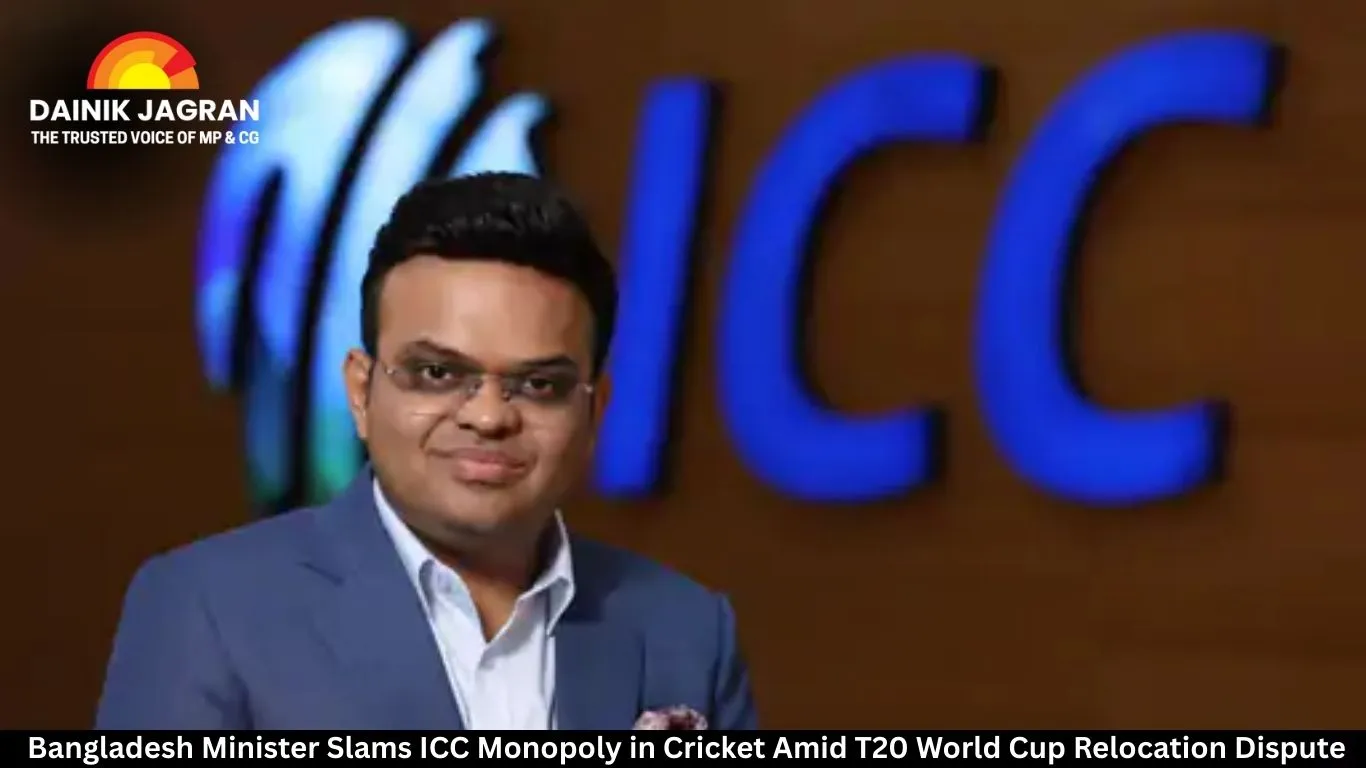
Bangladesh Minister Slams ICC Monopoly in Cricket Amid T20 World Cup Relocation Dispute
Digital Desk
In a bold stand against what it perceives as unfair dominance in global cricket, Bangladesh's Sports Minister Asif Nazrul has accused the International Cricket Council (ICC) of monopolizing the sport. This comes amid escalating tensions over the T20 World Cup relocation, with the Bangladesh Cricket Board (BCB) refusing to send its team to India citing severe security threats. As the tournament approaches on February 7, 2026, this dispute highlights growing concerns about player safety and geopolitical influences in sports.
The controversy intensified following a recent video conference between BCB officials and the ICC. Key BCB figures, including President Aminul Islam and CEO Nizam Uddin Chowdhury, reiterated their demand to shift Bangladesh's matches outside India. The ICC, however, remains firm, emphasizing the already-announced itinerary and urging reconsideration. Both sides agreed to ongoing talks, but BCB vows to prioritize the well-being of players and staff.
Security Risks at the Heart of the Dispute
The BCB's stance stems from a security assessment outlining three major risks: heightened threats if star bowler Mustafizur Rahman is included, dangers to fans wearing national jerseys, and escalating risks as India's national elections near. Minister Nazrul slammed the ICC's expectations as "bizarre and unreasonable," arguing that no team should compromise its safety or national pride for cricket.
This isn't isolated. The fallout traces back to Mustafizur Rahman's IPL saga. Bought by Kolkata Knight Riders for ₹9.20 crore in December 2025, he faced protests in India over alleged anti-Hindu violence in Bangladesh, where six Hindus were reportedly killed. The BCCI barred him from the IPL, leading KKR to release him on January 3, 2026. In retaliation, Bangladesh banned IPL broadcasts and escalated demands for T20 World Cup relocation.
Minister Nazrul's Call for Fair Play
Speaking at the Bangladesh Football Federation on Monday, Nazrul emphasized, "No one should've a monopoly in cricket." He urged the ICC to act as a truly global body by relocating matches to neutral venues like Sri Lanka, rejecting any concessions. This opinion resonates in a sport often criticized for market-driven decisions favoring powerhouses like India.
Expert perspectives simulate broader views: Cricket analyst Dr. Rajiv Gupta notes, "This dispute exposes vulnerabilities in international scheduling. Relocating could set a precedent for prioritizing safety over commercial interests." Similarly, former player Sarah Ahmed adds, "Players deserve assurance; ignoring threats erodes trust in governing bodies."
Why This Matters Now in Global Cricket
As T20 World Cup 2026 looms, Bangladesh's Group C fixtures—starting against West Indies at Kolkata's Eden Gardens—hang in balance. This row underscores trends in sports geopolitics, where national tensions spill into arenas. For fans, it means potential disruptions, but it also pushes for equitable governance.
Practical takeaways:
- Monitor ICC updates for venue changes.
- Support player welfare campaigns to influence policy.
- Engage in discussions on platforms like X to amplify voices against monopoly.
In conclusion, while the ICC holds its ground, Bangladesh's resolve could reshape cricket's future. True globalization demands inclusivity, not dominance—will the ICC listen? This unfolding drama keeps the cricketing world on edge, demanding solutions before February's kickoff.



.jpg)




