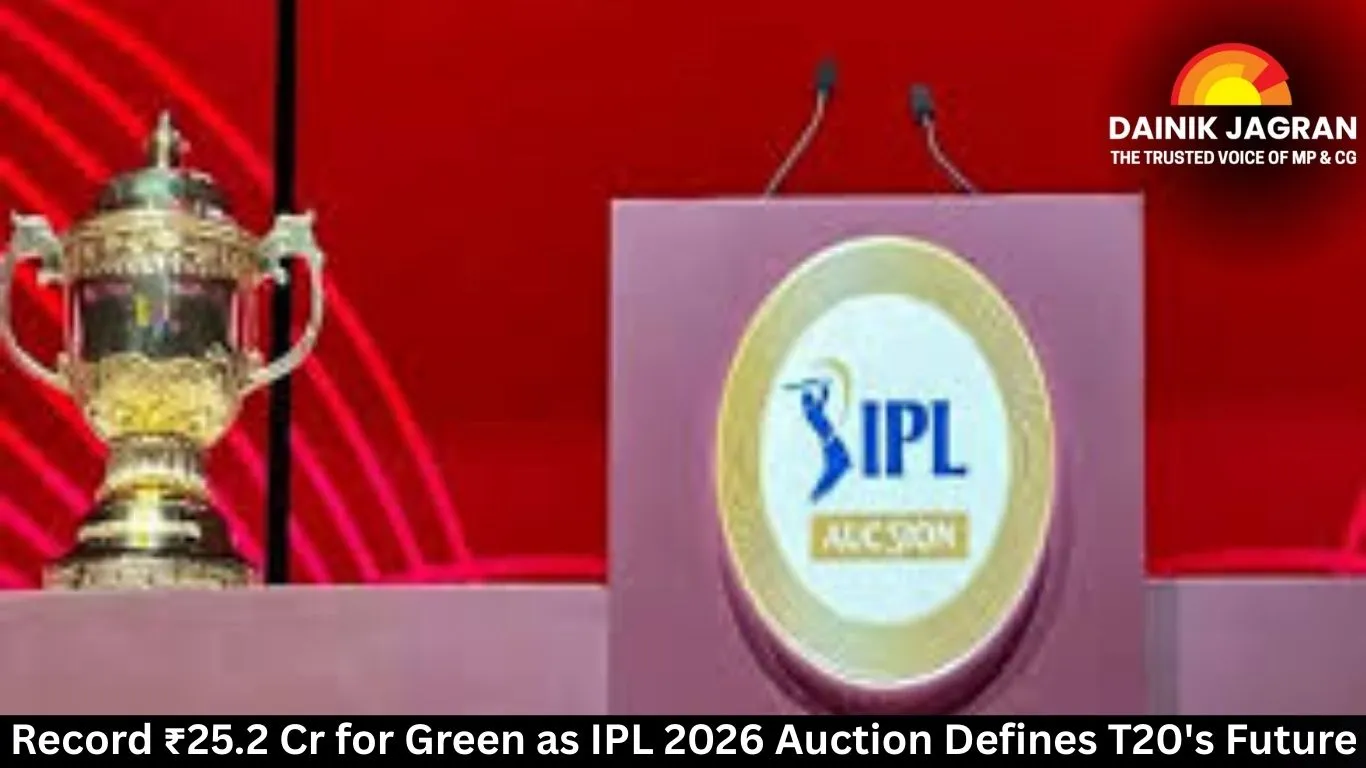
Record ₹25.2 Cr for Green as IPL 2026 Auction Defines T20's Future
Digital Desk
In a historic spending spree at the Etihad Arena in Abu Dhabi, the IPL 2026 mini-auction shattered valuation norms, revealing a franchise cricket economy where explosive potential now trumps established pedigree.
The event, which saw ₹215.45 crore spent on 77 players, was headlined by two seismic shifts: Australian all-rounder Cameron Green becoming the most expensive overseas buy ever and teenage Indian rookies commanding superstar money.
The bidding wars have exposed a new blueprint for team building. Franchises are aggressively investing in youth, multi-skilled players, and raw power, signaling a definitive pivot in the multi-billion dollar T20 marketplace.
The Mega-Deals: Redefining Player Value
Two records were obliterated on December 16, setting a new financial frontier for players worldwide.
The Overseas Benchmark: In a fierce bidding war, the Kolkata Knight Riders (KKR) secured Australian all-rounder Cameron Green for a staggering ₹25.20 crore, eclipsing the previous overseas record. KKR's aggressive strategy didn't stop there; they also invested ₹18 crore in Sri Lankan slinger Matheesha Pathirana, making him the most expensive Sri Lankan cricketer in history.
The Uncapped Revolution: In the most telling trend, Chennai Super Kings (CSK) shattered the ceiling for domestic talent, acquiring uncapped teenagers Prashant Veer and Kartik Sharma for ₹14.20 crore each. This sum, over 47 times their base price, comfortably broke the previous uncapped record and signaled a historic "generational wealth transfer" in cricket.
Decoding the Auction: Five Defining Trends
The frenetic bidding revealed clear priorities for the ten franchises, outlining what skills are now in supreme demand.
1. The All-Rounder Premium: Versatility is king. Beyond Green, England's Liam Livingstone sparked a late bidding war, landing at Sunrisers Hyderabad for ₹13 crore. Teams paid a premium for players who offer batting depth and bowling options, viewing them as strategic assets that solve multiple roster problems.
2. Betting Big on Indian Youth: The auction's standout narrative was the monumental faith in unproven domestic players. Beyond the two record-breakers, Jammu & Kashmir pacer Auqib Nabi (₹8.4 crore to DC) and Madhya Pradesh all-rounder Mangesh Yadav (₹5.2 crore to RCB) became overnight crorepatis. Franchises are valuing long-term availability and a 12-15 year career runway over shorter-term international star power.
3. Power Hitting as Primary Currency: Pure strike rate dominated batting valuations. Analysis shows that the only four batters to cross the ₹10 crore mark—Green, Livingstone, Veer, and Sharma—all boast T20 strike rates above 150. This underscores a league-wide chase for game-changing, boundary-clearing ability.
4. The Harsh Reality for Veterans: The flip side of the youth obsession was a cold market for established names. Proven internationals like Steve Smith, Devon Conway, and Jonny Bairstow found no takers. Data reveals a brutal "age cliff," with players under 25 enjoying an 81% sell rate compared to just 48.9% for those over 30.
5. The Australian & Sri Lankan Passport Premium: Australian players reinforced their status as the IPL's most coveted overseas commodity, with six players fetching a combined ₹45.70 crore. Meanwhile, Sri Lanka emerged as the most expensive "passport" per player, averaging ₹8 crore per sale, driven by specialist skills like Pathirana's death bowling.
The Other Side: Steepest Pay Cuts
The auction's ruthless meritocracy was also evident in dramatic salary reductions for released players who underperformed their previous contracts.
| Player | IPL 2025 Salary (₹ Cr) | IPL 2026 Salary (₹ Cr) | Team (2026) | Pay Cut (₹ Cr) |
| Venkatesh Iyer | 23.75 | 7.00 | RCB | 16.75 |
| Akash Deep | 8.00 | 1.00 | KKR | 7.00 |
| David Miller | 7.50 | 2.00 | DC | 5.50 |
| Anrich Nortje | 6.50 | 2.00 | LSG | 4.50 |
| Wanindu Hasaranga | 5.25 | 2.00 | LSG | 3.25 |
The Future is Now
The 2026 IPL auction was more than a player market; it was a declaration of intent for the next decade of T20 cricket. Franchises are no longer just buying runs and wickets—they are investing in high-ceiling potential, long-term athletic assets, and specific, game-breaking skills. As one analyst noted, "the T20 babies are coming to the fore".
The message for players is clear: explosive power, versatile skill sets, and youth are the new currencies. For fans, it promises an IPL season built on fearless, next-generation cricket, where yesterday's records are merely benchmarks for tomorrow's teenagers to smash.
--------
🚨 Beat the News Rush – Join Now!
Get breaking alerts, hot exclusives, and game-changing stories instantly on your phone. No delays, no fluff – just the edge you need. ⚡
Tap to join:
🟢 WhatsApp Channel: Dainik Jagran MP CG
Crave more?
🅕 Facebook: Dainik Jagran MP CG English
🅧 Twitter (X): Dainik Jagran MP CG
🅘 Instagram: Dainik Jagran MP CG
Share the fire – keep your crew ahead! 🗞️🔥
Record ₹25.2 Cr for Green as IPL 2026 Auction Defines T20's Future
Digital Desk
The event, which saw ₹215.45 crore spent on 77 players, was headlined by two seismic shifts: Australian all-rounder Cameron Green becoming the most expensive overseas buy ever and teenage Indian rookies commanding superstar money.
The bidding wars have exposed a new blueprint for team building. Franchises are aggressively investing in youth, multi-skilled players, and raw power, signaling a definitive pivot in the multi-billion dollar T20 marketplace.
The Mega-Deals: Redefining Player Value
Two records were obliterated on December 16, setting a new financial frontier for players worldwide.
The Overseas Benchmark: In a fierce bidding war, the Kolkata Knight Riders (KKR) secured Australian all-rounder Cameron Green for a staggering ₹25.20 crore, eclipsing the previous overseas record. KKR's aggressive strategy didn't stop there; they also invested ₹18 crore in Sri Lankan slinger Matheesha Pathirana, making him the most expensive Sri Lankan cricketer in history.
The Uncapped Revolution: In the most telling trend, Chennai Super Kings (CSK) shattered the ceiling for domestic talent, acquiring uncapped teenagers Prashant Veer and Kartik Sharma for ₹14.20 crore each. This sum, over 47 times their base price, comfortably broke the previous uncapped record and signaled a historic "generational wealth transfer" in cricket.
Decoding the Auction: Five Defining Trends
The frenetic bidding revealed clear priorities for the ten franchises, outlining what skills are now in supreme demand.
1. The All-Rounder Premium: Versatility is king. Beyond Green, England's Liam Livingstone sparked a late bidding war, landing at Sunrisers Hyderabad for ₹13 crore. Teams paid a premium for players who offer batting depth and bowling options, viewing them as strategic assets that solve multiple roster problems.
2. Betting Big on Indian Youth: The auction's standout narrative was the monumental faith in unproven domestic players. Beyond the two record-breakers, Jammu & Kashmir pacer Auqib Nabi (₹8.4 crore to DC) and Madhya Pradesh all-rounder Mangesh Yadav (₹5.2 crore to RCB) became overnight crorepatis. Franchises are valuing long-term availability and a 12-15 year career runway over shorter-term international star power.
3. Power Hitting as Primary Currency: Pure strike rate dominated batting valuations. Analysis shows that the only four batters to cross the ₹10 crore mark—Green, Livingstone, Veer, and Sharma—all boast T20 strike rates above 150. This underscores a league-wide chase for game-changing, boundary-clearing ability.
4. The Harsh Reality for Veterans: The flip side of the youth obsession was a cold market for established names. Proven internationals like Steve Smith, Devon Conway, and Jonny Bairstow found no takers. Data reveals a brutal "age cliff," with players under 25 enjoying an 81% sell rate compared to just 48.9% for those over 30.
5. The Australian & Sri Lankan Passport Premium: Australian players reinforced their status as the IPL's most coveted overseas commodity, with six players fetching a combined ₹45.70 crore. Meanwhile, Sri Lanka emerged as the most expensive "passport" per player, averaging ₹8 crore per sale, driven by specialist skills like Pathirana's death bowling.
The Other Side: Steepest Pay Cuts
The auction's ruthless meritocracy was also evident in dramatic salary reductions for released players who underperformed their previous contracts.
| Player | IPL 2025 Salary (₹ Cr) | IPL 2026 Salary (₹ Cr) | Team (2026) | Pay Cut (₹ Cr) |
| Venkatesh Iyer | 23.75 | 7.00 | RCB | 16.75 |
| Akash Deep | 8.00 | 1.00 | KKR | 7.00 |
| David Miller | 7.50 | 2.00 | DC | 5.50 |
| Anrich Nortje | 6.50 | 2.00 | LSG | 4.50 |
| Wanindu Hasaranga | 5.25 | 2.00 | LSG | 3.25 |
The Future is Now
The 2026 IPL auction was more than a player market; it was a declaration of intent for the next decade of T20 cricket. Franchises are no longer just buying runs and wickets—they are investing in high-ceiling potential, long-term athletic assets, and specific, game-breaking skills. As one analyst noted, "the T20 babies are coming to the fore".
The message for players is clear: explosive power, versatile skill sets, and youth are the new currencies. For fans, it promises an IPL season built on fearless, next-generation cricket, where yesterday's records are merely benchmarks for tomorrow's teenagers to smash.