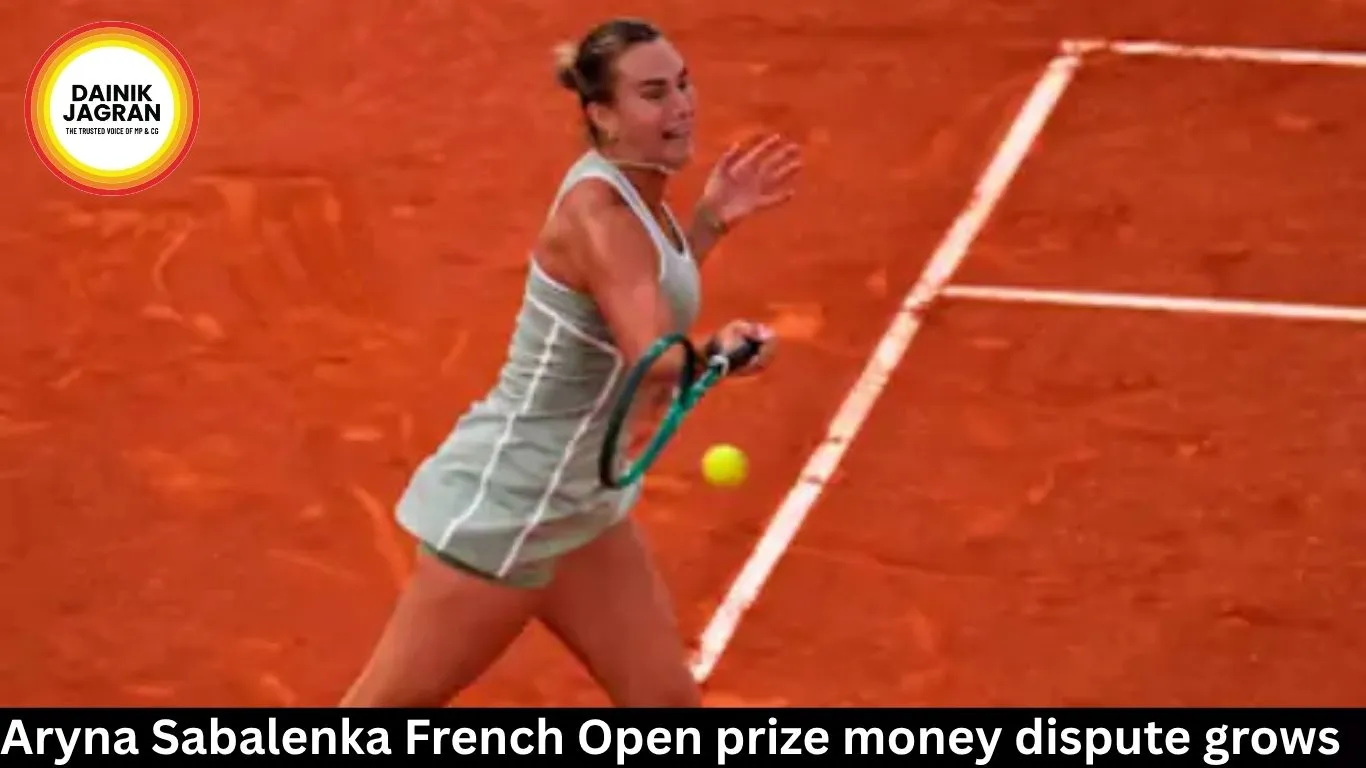
Aryna Sabalenka French Open prize money dispute grows

Digital Desk

Aryna Sabalenka French Open prize money dispute grows

Aryna Sabalenka French Open prize money dispute escalates as players demand a 22% revenue share and warn of boycott ahead of Roland Garros.

French Open prize row deepens as Sabalenka warns boycott

Aryna Sabalenka French Open prize money dispute intensifies, with top players pushing for a 22% revenue share and hinting at a possible boycott if demands remain unmet.

The simmering Aryna Sabalenka French Open prize money dispute took a sharper turn on Tuesday, with the world No. 1 openly warning that players could consider boycotting the tournament if revenue-sharing concerns are not addressed. The remarks come amid growing unease among top-ranked players over what they see as an imbalance between tournament earnings and athlete compensation.

Sabalenka’s comments, made during the ongoing Italian Open, reflect a broader sentiment across both the men’s and women’s tours. Several leading players have in recent days backed calls for a significant revision in how Grand Slam revenues are distributed.

Organisers of the French Open had earlier announced a 9.5% increase in the total prize pool for this year, taking it to €61.7 million (approximately ₹686 crore). While the figure marks a notable rise, players argue it falls short of expectations, particularly given the tournament’s growing commercial success.

According to estimates shared by player groups, the proportion of revenue allocated to athletes could decline from 15.5% in 2024 to 14.9% by 2026. Players are instead seeking a 22% share, aligning with compensation structures seen in ATP and WTA 1000-level events.

Speaking candidly, Aryna Sabalenka stressed the central role players play in the sport’s ecosystem. “Without us, there would be no tournament and no entertainment,” she said, adding that athletes deserve a larger portion of the revenues they help generate.

She went a step further, suggesting that a boycott may become inevitable if discussions fail to yield results. “There will come a time when we will boycott it. I think this is the only way left to fight for our rights,” she noted, signalling a hardening stance.

Sabalenka is not alone. American star Coco Gauff has publicly supported the demand for better revenue sharing, while men’s world No. 1 Jannik Sinner is among several top-10 players who have expressed dissatisfaction.

Sources familiar with the matter indicated that informal discussions among players have intensified over the past week, with a rare level of unity emerging across both tours. This alignment between leading male and female players could increase pressure on organisers ahead of the clay-court major.

The dispute is not limited to prize money alone. Players have also raised concerns about long-term welfare, including access to pensions, improved healthcare support, and greater representation in decision-making processes.

They argue that while Grand Slam events generate substantial profits, the benefits for players—especially those outside the top ranks—remain limited. The issue has been a recurring one in professional tennis, but the current push appears more coordinated.

So far, officials associated with the French Open have not issued a formal response to the latest statements. According to tournament insiders, discussions on financial structures are typically handled behind closed doors, though public pressure could accelerate engagement.

Past disagreements between players and organisers have usually been resolved without major disruption. However, the prospect of a boycott—even if remote—raises concerns about the tournament’s global image and scheduling.

With the French Open just weeks away, the coming days could prove crucial. Whether through formal negotiations or informal dialogue, both sides may be compelled to find common ground.

For now, the Aryna Sabalenka French Open prize money dispute underscores a broader shift in athlete expectations—one where players are increasingly willing to challenge established systems in pursuit of what they see as a fairer share.
 

--------

🚨 Beat the News Rush – Join Now!

Get breaking alerts, hot exclusives, and game-changing stories instantly on your phone. No delays, no fluff – just the edge you need. ⚡

Tap to join: 

🟢 WhatsApp Channel: Dainik Jagran MP CG

Crave more?

🅕 Facebook: Dainik Jagran MP CG English

🅧 Twitter (X): Dainik Jagran MP CG

🅘 Instagram: Dainik Jagran MP CG

Share the fire – keep your crew ahead! 🗞️🔥

english.dainikjagranmpcg.com
06 May 2026 By Abhishek Joshi

Aryna Sabalenka French Open prize money dispute grows

Digital Desk

French Open prize row deepens as Sabalenka warns boycott

Aryna Sabalenka French Open prize money dispute intensifies, with top players pushing for a 22% revenue share and hinting at a possible boycott if demands remain unmet.

The simmering Aryna Sabalenka French Open prize money dispute took a sharper turn on Tuesday, with the world No. 1 openly warning that players could consider boycotting the tournament if revenue-sharing concerns are not addressed. The remarks come amid growing unease among top-ranked players over what they see as an imbalance between tournament earnings and athlete compensation.

Sabalenka’s comments, made during the ongoing Italian Open, reflect a broader sentiment across both the men’s and women’s tours. Several leading players have in recent days backed calls for a significant revision in how Grand Slam revenues are distributed.

Organisers of the French Open had earlier announced a 9.5% increase in the total prize pool for this year, taking it to €61.7 million (approximately ₹686 crore). While the figure marks a notable rise, players argue it falls short of expectations, particularly given the tournament’s growing commercial success.

According to estimates shared by player groups, the proportion of revenue allocated to athletes could decline from 15.5% in 2024 to 14.9% by 2026. Players are instead seeking a 22% share, aligning with compensation structures seen in ATP and WTA 1000-level events.

Speaking candidly, Aryna Sabalenka stressed the central role players play in the sport’s ecosystem. “Without us, there would be no tournament and no entertainment,” she said, adding that athletes deserve a larger portion of the revenues they help generate.

She went a step further, suggesting that a boycott may become inevitable if discussions fail to yield results. “There will come a time when we will boycott it. I think this is the only way left to fight for our rights,” she noted, signalling a hardening stance.

Sabalenka is not alone. American star Coco Gauff has publicly supported the demand for better revenue sharing, while men’s world No. 1 Jannik Sinner is among several top-10 players who have expressed dissatisfaction.

Sources familiar with the matter indicated that informal discussions among players have intensified over the past week, with a rare level of unity emerging across both tours. This alignment between leading male and female players could increase pressure on organisers ahead of the clay-court major.

The dispute is not limited to prize money alone. Players have also raised concerns about long-term welfare, including access to pensions, improved healthcare support, and greater representation in decision-making processes.

They argue that while Grand Slam events generate substantial profits, the benefits for players—especially those outside the top ranks—remain limited. The issue has been a recurring one in professional tennis, but the current push appears more coordinated.

So far, officials associated with the French Open have not issued a formal response to the latest statements. According to tournament insiders, discussions on financial structures are typically handled behind closed doors, though public pressure could accelerate engagement.

Past disagreements between players and organisers have usually been resolved without major disruption. However, the prospect of a boycott—even if remote—raises concerns about the tournament’s global image and scheduling.

With the French Open just weeks away, the coming days could prove crucial. Whether through formal negotiations or informal dialogue, both sides may be compelled to find common ground.

For now, the Aryna Sabalenka French Open prize money dispute underscores a broader shift in athlete expectations—one where players are increasingly willing to challenge established systems in pursuit of what they see as a fairer share.


https://english.dainikjagranmpcg.com/sports/aryna-sabalenka-french-open-prize-money-dispute-grows/article-17853

Related Posts

Latest News