Amit Shah Chairs Key Regional Council Meet in Bastar
Digital Desk
Central Zonal Council meeting in Jagdalpur signals Centre’s push to project Bastar as a development and governance hub after years of Maoist violence.
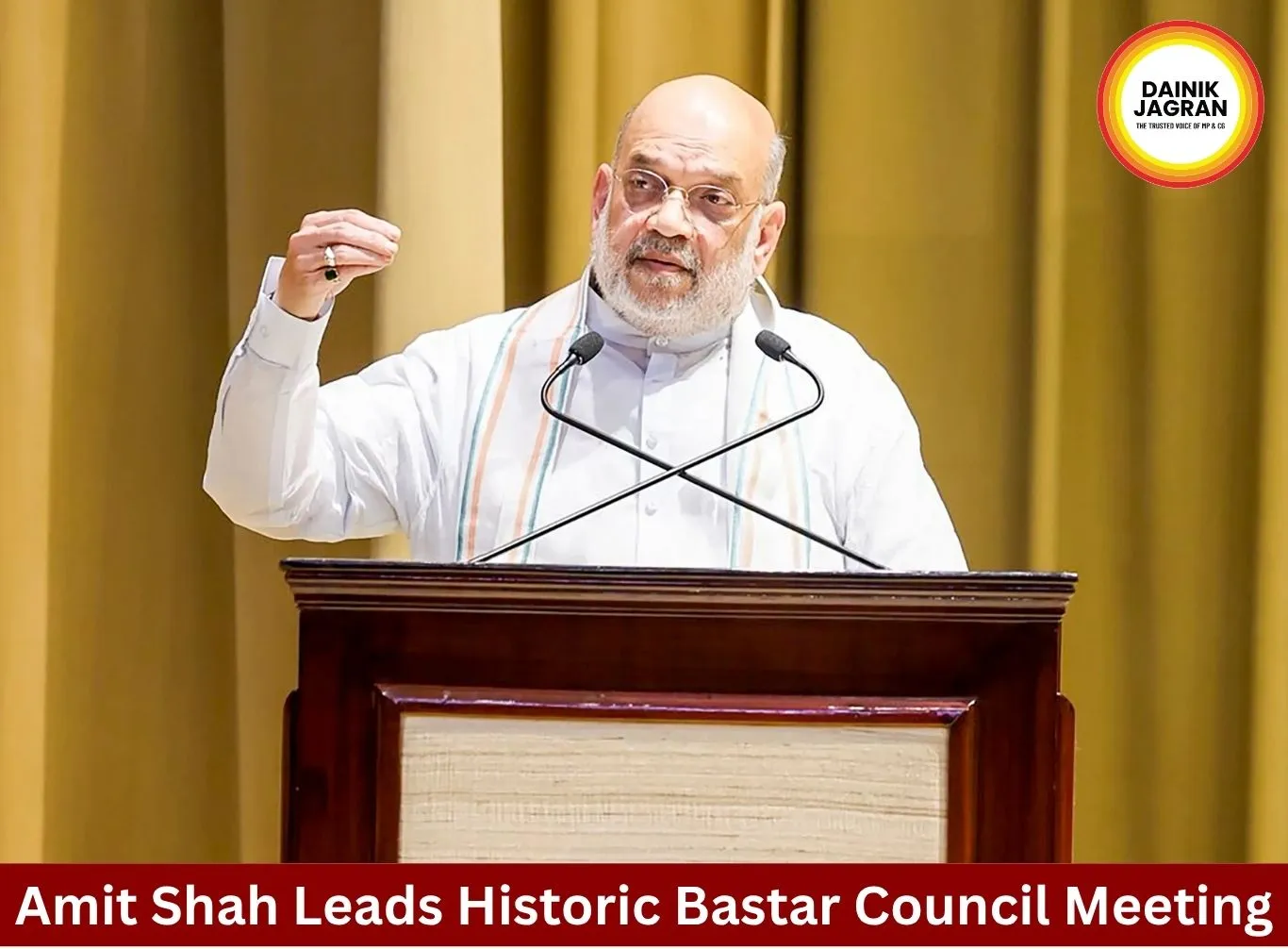
Union Home Minister Amit Shah on Tuesday chaired the 26th meeting of the Central Zonal Council in Jagdalpur, marking the first time that such a high-level inter-state meeting has been organised in Bastar. The meeting brought together the Chief Ministers of Chhattisgarh, Madhya Pradesh, Uttar Pradesh and Uttarakhand, along with senior administrative and security officials. The event has drawn national attention as the Centre attempts to showcase Bastar’s changing image from a Maoist-affected region to a developing administrative hub.
The high-profile gathering is being viewed as both an administrative exercise and a political message. For decades, Bastar remained associated with Naxal violence, security concerns and underdevelopment. The decision to hold the council meeting in Jagdalpur is being seen as an effort by the government to highlight improved security conditions and increasing state presence in the region. Officials said the meeting reflects growing confidence in the changing ground situation across Bastar division.
Focus On Security
Internal security and inter-state coordination remained among the key focus areas during the meeting. According to officials, discussions included law and order, intelligence sharing, border coordination and strategies to tackle Left Wing Extremism in affected regions. Bastar has historically been one of the worst-affected areas in the country due to Maoist violence, making the security aspect central to the discussions.
The Union Home Ministry has repeatedly stated that the government is committed to eliminating Naxalism through a combination of security operations and development initiatives. Over the past several months, security forces have intensified anti-Naxal operations in Bastar and nearby areas. Several senior Maoist leaders have reportedly been killed or arrested during these operations, while many cadres have surrendered before authorities. Government officials indicated that improved coordination between central forces and state police agencies has helped reduce Maoist influence in several districts. The Centre has also increased infrastructure support and administrative outreach in remote tribal regions to strengthen governance at the grassroots level.
Bastar’s Changing Image
The Jagdalpur meeting is also being projected as part of a broader effort to change Bastar’s national image. For years, the region remained in headlines due to violence, attacks on security personnel and disruption of development activities. The government now wants to position Bastar as a centre for tourism, investment and administrative growth.
Authorities believe that organising such a large-scale government event in the region sends a strong signal about improved conditions on the ground. Senior officials and political leaders travelling to Jagdalpur for the meeting are being seen as indicators of increasing confidence in the security environment. Local administration officials also undertook extensive preparations ahead of the event. Security arrangements were tightened across Jagdalpur, while roads, public spaces and meeting venues were upgraded in anticipation of the high-profile visit. Officials said the administration wanted to ensure that the event reflected the changing realities of Bastar.
Development Agenda Ahead
Apart from security, the Central Zonal Council meeting also focused on development-related issues involving participating states. Discussions reportedly covered transport connectivity, water sharing, electricity coordination and public welfare delivery. Sources indicated that tribal development and infrastructure expansion remained important agenda points during the meeting.
Officials stressed the need for better road networks, healthcare facilities, digital connectivity and educational institutions in remote districts. The Centre believes that sustained development is essential to ensure long-term peace and stability in regions previously affected by extremism. Government representatives also highlighted ongoing welfare schemes aimed at improving the living conditions of tribal communities. According to officials, the administration plans to increase investment in public services and economic activities across Bastar in the coming years.
Shah’s Strong Remarks
During the first day of his Bastar visit, Amit Shah addressed public gatherings and interacted with local residents and officials. He stated that the region had suffered losses for nearly five decades due to violence and instability, and the government was now determined to accelerate development in the area.
The Home Minister said Bastar’s progress remains an important part of the Centre’s broader development vision. He also referred to tribal freedom fighter Gundadhur and highlighted Bastar’s historical role in resistance against British rule. According to Shah, the government intends to develop the region associated with Gundadhur as a major cultural and historical destination.
Shah also recalled earlier years when schools were destroyed, welfare programmes disrupted and security personnel frequently targeted by Maoist groups. He stated that the government had taken decisive steps to weaken Maoist networks and restore administrative control in affected regions.
Political Significance Grows
Political observers believe the Jagdalpur meeting carries significant political importance beyond governance. The Centre has increasingly linked anti-Naxal operations with development narratives, presenting improved security as a foundation for economic and social progress. The participation of four Chief Ministers in the meeting reinforced the message of cooperative federalism and coordinated governance.
The event also comes at a time when the government is attempting to strengthen its outreach in tribal and rural regions. By holding the meeting in Bastar, the Centre appears keen to demonstrate that regions once considered inaccessible are now becoming part of mainstream administrative and development activities. Analysts said the meeting could influence future policy decisions related to security, infrastructure and tribal welfare in central India. The government is expected to continue focusing on integrated development strategies for areas previously affected by insurgency.
Officials expect more announcements related to infrastructure, tourism and welfare initiatives following the conclusion of the meeting. The Centre may also expand development projects in Bastar to further strengthen administrative presence and economic opportunities in tribal areas.
--------
🚨 Beat the News Rush – Join Now!
Get breaking alerts, hot exclusives, and game-changing stories instantly on your phone. No delays, no fluff – just the edge you need. ⚡
Tap to join:
🟢 WhatsApp Channel: Dainik Jagran MP CG
Crave more?
🅕 Facebook: Dainik Jagran MP CG English
🅧 Twitter (X): Dainik Jagran MP CG
🅘 Instagram: Dainik Jagran MP CG
Share the fire – keep your crew ahead! 🗞️🔥
Amit Shah Chairs Key Regional Council Meet in Bastar
Digital Desk
Union Home Minister Amit Shah on Tuesday chaired the 26th meeting of the Central Zonal Council in Jagdalpur, marking the first time that such a high-level inter-state meeting has been organised in Bastar. The meeting brought together the Chief Ministers of Chhattisgarh, Madhya Pradesh, Uttar Pradesh and Uttarakhand, along with senior administrative and security officials. The event has drawn national attention as the Centre attempts to showcase Bastar’s changing image from a Maoist-affected region to a developing administrative hub.
The high-profile gathering is being viewed as both an administrative exercise and a political message. For decades, Bastar remained associated with Naxal violence, security concerns and underdevelopment. The decision to hold the council meeting in Jagdalpur is being seen as an effort by the government to highlight improved security conditions and increasing state presence in the region. Officials said the meeting reflects growing confidence in the changing ground situation across Bastar division.
Focus On Security
Internal security and inter-state coordination remained among the key focus areas during the meeting. According to officials, discussions included law and order, intelligence sharing, border coordination and strategies to tackle Left Wing Extremism in affected regions. Bastar has historically been one of the worst-affected areas in the country due to Maoist violence, making the security aspect central to the discussions.
The Union Home Ministry has repeatedly stated that the government is committed to eliminating Naxalism through a combination of security operations and development initiatives. Over the past several months, security forces have intensified anti-Naxal operations in Bastar and nearby areas. Several senior Maoist leaders have reportedly been killed or arrested during these operations, while many cadres have surrendered before authorities. Government officials indicated that improved coordination between central forces and state police agencies has helped reduce Maoist influence in several districts. The Centre has also increased infrastructure support and administrative outreach in remote tribal regions to strengthen governance at the grassroots level.
Bastar’s Changing Image
The Jagdalpur meeting is also being projected as part of a broader effort to change Bastar’s national image. For years, the region remained in headlines due to violence, attacks on security personnel and disruption of development activities. The government now wants to position Bastar as a centre for tourism, investment and administrative growth.
Authorities believe that organising such a large-scale government event in the region sends a strong signal about improved conditions on the ground. Senior officials and political leaders travelling to Jagdalpur for the meeting are being seen as indicators of increasing confidence in the security environment. Local administration officials also undertook extensive preparations ahead of the event. Security arrangements were tightened across Jagdalpur, while roads, public spaces and meeting venues were upgraded in anticipation of the high-profile visit. Officials said the administration wanted to ensure that the event reflected the changing realities of Bastar.
Development Agenda Ahead
Apart from security, the Central Zonal Council meeting also focused on development-related issues involving participating states. Discussions reportedly covered transport connectivity, water sharing, electricity coordination and public welfare delivery. Sources indicated that tribal development and infrastructure expansion remained important agenda points during the meeting.
Officials stressed the need for better road networks, healthcare facilities, digital connectivity and educational institutions in remote districts. The Centre believes that sustained development is essential to ensure long-term peace and stability in regions previously affected by extremism. Government representatives also highlighted ongoing welfare schemes aimed at improving the living conditions of tribal communities. According to officials, the administration plans to increase investment in public services and economic activities across Bastar in the coming years.
Shah’s Strong Remarks
During the first day of his Bastar visit, Amit Shah addressed public gatherings and interacted with local residents and officials. He stated that the region had suffered losses for nearly five decades due to violence and instability, and the government was now determined to accelerate development in the area.
The Home Minister said Bastar’s progress remains an important part of the Centre’s broader development vision. He also referred to tribal freedom fighter Gundadhur and highlighted Bastar’s historical role in resistance against British rule. According to Shah, the government intends to develop the region associated with Gundadhur as a major cultural and historical destination.
Shah also recalled earlier years when schools were destroyed, welfare programmes disrupted and security personnel frequently targeted by Maoist groups. He stated that the government had taken decisive steps to weaken Maoist networks and restore administrative control in affected regions.
Political Significance Grows
Political observers believe the Jagdalpur meeting carries significant political importance beyond governance. The Centre has increasingly linked anti-Naxal operations with development narratives, presenting improved security as a foundation for economic and social progress. The participation of four Chief Ministers in the meeting reinforced the message of cooperative federalism and coordinated governance.
The event also comes at a time when the government is attempting to strengthen its outreach in tribal and rural regions. By holding the meeting in Bastar, the Centre appears keen to demonstrate that regions once considered inaccessible are now becoming part of mainstream administrative and development activities. Analysts said the meeting could influence future policy decisions related to security, infrastructure and tribal welfare in central India. The government is expected to continue focusing on integrated development strategies for areas previously affected by insurgency.
Officials expect more announcements related to infrastructure, tourism and welfare initiatives following the conclusion of the meeting. The Centre may also expand development projects in Bastar to further strengthen administrative presence and economic opportunities in tribal areas.