Sumit Chawda, known for earlier experiments in grafting-based vegetable cultivation, has now shifted to polyhouse farming using cocopeat as a growth medium instead of soil. “Bastar has immense potential for vegetable production. With the right experiments and modern technology, farmers can achieve better yields and profitability,” he said.
The current crop is ready for harvest, with initial produce being sold in Jagdalpur markets. Plans are underway to supply major cities like Mumbai, Hyderabad, and Raipur in the coming weeks. Chawda highlighted that demand for colored capsicum is rising steadily in urban markets, hotels, and shopping malls, offering good returns even on small plots of land.
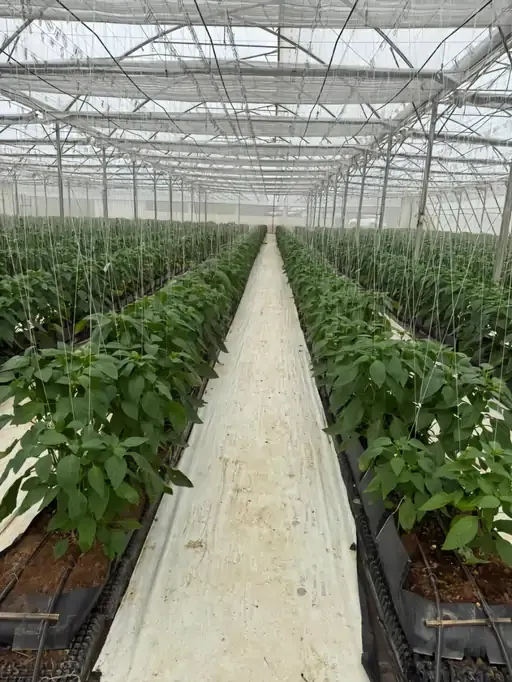
The polyhouse spans 50 decimal areas and involved an investment of approximately Rs 10 lakh. A drip irrigation system has been installed to ensure efficient water usage. According to Chawda, expanding this cultivation to a one-acre plot would cost around Rs 12–15 lakh, but high market prices make the investment viable.
The polyhouse method also offers several advantages. Capsicum plants take 60–65 days to mature, and each plant can yield produce for up to nine months. Growing inside a polyhouse reduces susceptibility to diseases and simplifies crop maintenance, making it a low-risk and high-profit option for farmers.
Local agricultural experts have lauded the initiative, noting that such ventures could significantly boost Bastar’s agricultural profile and encourage the adoption of commercial vegetable farming. Chawda is also mentoring other farmers in the region to replicate his success, aiming to move the district away from traditional farming towards more profitable and sustainable practices.
With innovative cultivation techniques, efficient resource management, and growing urban demand for colored vegetables, Bastar is poised to emerge as a hub for modern horticulture, setting an example for neighboring districts.

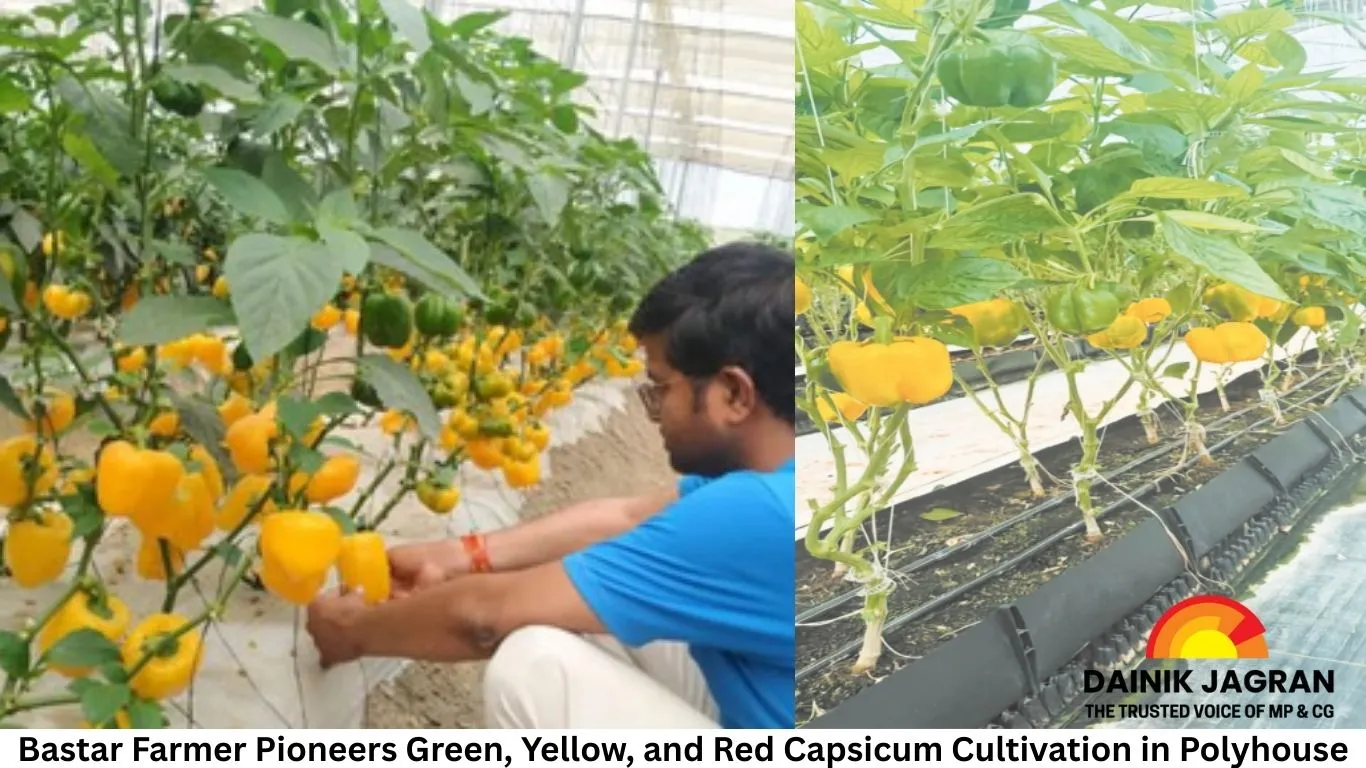
Bastar Farmer Pioneers Green, Yellow, and Red Capsicum Cultivation in Polyhouse
Digital Desk
Sumit Chawda, known for earlier experiments in grafting-based vegetable cultivation, has now shifted to polyhouse farming using cocopeat as a growth medium instead of soil. “Bastar has immense potential for vegetable production. With the right experiments and modern technology, farmers can achieve better yields and profitability,” he said.
The current crop is ready for harvest, with initial produce being sold in Jagdalpur markets. Plans are underway to supply major cities like Mumbai, Hyderabad, and Raipur in the coming weeks. Chawda highlighted that demand for colored capsicum is rising steadily in urban markets, hotels, and shopping malls, offering good returns even on small plots of land.
The polyhouse spans 50 decimal areas and involved an investment of approximately Rs 10 lakh. A drip irrigation system has been installed to ensure efficient water usage. According to Chawda, expanding this cultivation to a one-acre plot would cost around Rs 12–15 lakh, but high market prices make the investment viable.
The polyhouse method also offers several advantages. Capsicum plants take 60–65 days to mature, and each plant can yield produce for up to nine months. Growing inside a polyhouse reduces susceptibility to diseases and simplifies crop maintenance, making it a low-risk and high-profit option for farmers.
Local agricultural experts have lauded the initiative, noting that such ventures could significantly boost Bastar’s agricultural profile and encourage the adoption of commercial vegetable farming. Chawda is also mentoring other farmers in the region to replicate his success, aiming to move the district away from traditional farming towards more profitable and sustainable practices.
With innovative cultivation techniques, efficient resource management, and growing urban demand for colored vegetables, Bastar is poised to emerge as a hub for modern horticulture, setting an example for neighboring districts.