

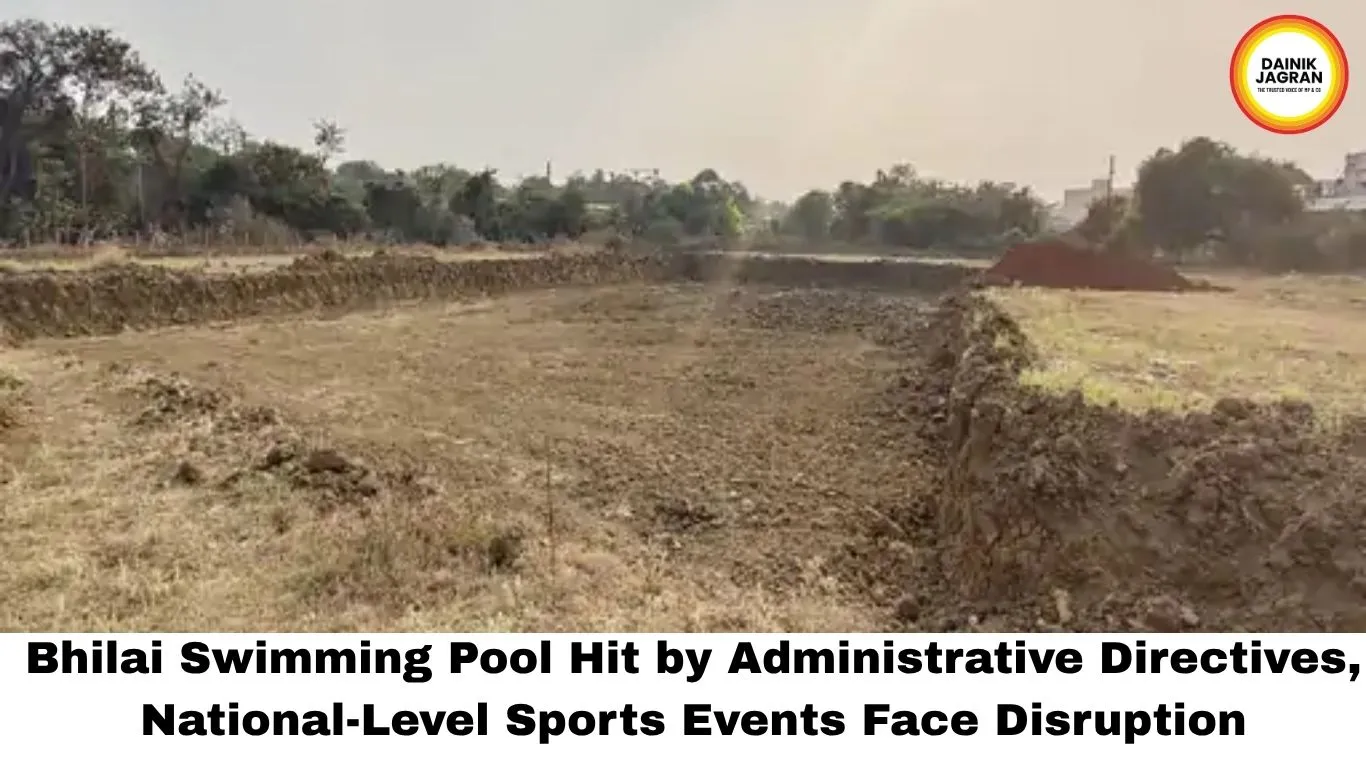
Bhilai Swimming Pool Hit by Administrative Directives, National-Level Sports Events Face Disruption
Digital Desk
Bhilai swimming pool faces administrative direction hurdles, threatening national sports events. Chhattisgarh's aquatic sports infrastructure under spotlight.
Bhilai Swimming Pool Directive Row: National Sports Events Thrown Into Uncertainty
In a development that has left the local sporting community in a state of concern, administrative directives surrounding a prominent swimming pool facility in Bhilai have emerged as a serious obstacle to the smooth conduct of national-level aquatic events. The issue has reignited a long-standing debate about sports infrastructure gaps in Chhattisgarh and the bureaucratic bottlenecks that continue to undermine athletic ambitions in the region.
The matter is being closely watched by sports administrators, coaches, and athletes across the state, as any disruption to national event hosting could have cascading effects on Chhattisgarh's standing in the national sports calendar.
What Is the Issue?
At the heart of the controversy are official directions — believed to be related to compliance requirements, safety norms, or operational guidelines — that have placed restrictions on the use of the swimming pool in question for large-scale competitive events. While authorities cite procedural and safety obligations, sportspersons and event organizers argue that the directives are poorly timed and have created unnecessary confusion ahead of scheduled national competitions.
Key concerns raised by those affected include:
- Uncertainty over event hosting — national competitions planned at the venue now face possible cancellation or relocation.
- Compliance vs. sports continuity — organizers argue that the directives lack a clear transition period, leaving no room for preparation.
- Impact on athletes — local swimmers who have been training specifically for these national events now face disruption to their preparation schedules.
- Reputational risk — failing to host a confirmed national event could affect the region's ability to secure future sporting events.
Bhilai's Longstanding Infrastructure Challenge
This controversy did not emerge in a vacuum. Bhilai and the wider Durg district have long struggled with the lack of a world-class, fully equipped aquatic sports facility. For decades, competitive swimmers from the region have been forced to rely on private pools or travel to other cities for proper training and competition.
Earlier in 2025, Vaishali Nagar MLA Rikesh Sen secured an administrative approval of approximately ₹5 crore for the construction of a modern swimming pool at Priyadarshini Complex in Supela, Bhilai — a facility also intended to support competitive aquatic events. However, until that facility becomes operational, the region's existing pools remain the only viable venues for hosting competitive meets, making the current directive controversy all the more consequential.
Why This Matters for Chhattisgarh Sports
The timing of this issue is significant. India's sports ecosystem is witnessing a major push under initiatives like Khelo India, with states competing to establish themselves as credible hosts for national and eventually international events. Chhattisgarh, despite producing talented athletes across multiple disciplines, continues to lag behind in sports infrastructure — and incidents like this risk reinforcing that image.
Experts and sports administrators point out that:
- Swimming is one of the most medal-rich disciplines at national multi-sport games, making pool access critical for states wanting to improve their overall tally.
- Disruption to national events affects athlete rankings, selection cycles, and eligibility for higher competitions.
- Repeated administrative hurdles send a discouraging message to young athletes and their families who are considering careers in aquatic sports.
What Needs to Change?
The resolution of this issue requires immediate coordination between sports authorities, local administration, and facility managers. Stakeholders are calling for:
- A clear, time-bound compliance roadmap that does not disrupt confirmed event schedules.
- Expedited construction and handover of the newly approved Supela swimming pool.
- Dedicated sports authority oversight to ensure that administrative directives are implemented in a manner that protects athletic interests.
- Transparent communication with national sports federations to safeguard Chhattisgarh's event-hosting reputation.
Sports Policy Expert View: "Administrative compliance is non-negotiable, but the manner and timing of enforcement matters deeply. When directives are issued without considering the sporting calendar, it is the athletes — not the administrators — who pay the price."
The Bhilai swimming pool directive controversy is more than a local administrative dispute — it is a symptom of a deeper structural challenge facing sports governance in Chhattisgarh. With national-level events at stake and a generation of young swimmers watching closely, authorities must act swiftly to resolve the standoff, protect the sporting calendar, and accelerate the delivery of the infrastructure that the region's athletes have long deserved.
Bhilai Swimming Pool Hit by Administrative Directives, National-Level Sports Events Face Disruption
Digital Desk
Bhilai Swimming Pool Directive Row: National Sports Events Thrown Into Uncertainty
In a development that has left the local sporting community in a state of concern, administrative directives surrounding a prominent swimming pool facility in Bhilai have emerged as a serious obstacle to the smooth conduct of national-level aquatic events. The issue has reignited a long-standing debate about sports infrastructure gaps in Chhattisgarh and the bureaucratic bottlenecks that continue to undermine athletic ambitions in the region.
The matter is being closely watched by sports administrators, coaches, and athletes across the state, as any disruption to national event hosting could have cascading effects on Chhattisgarh's standing in the national sports calendar.
What Is the Issue?
At the heart of the controversy are official directions — believed to be related to compliance requirements, safety norms, or operational guidelines — that have placed restrictions on the use of the swimming pool in question for large-scale competitive events. While authorities cite procedural and safety obligations, sportspersons and event organizers argue that the directives are poorly timed and have created unnecessary confusion ahead of scheduled national competitions.
Key concerns raised by those affected include:
- Uncertainty over event hosting — national competitions planned at the venue now face possible cancellation or relocation.
- Compliance vs. sports continuity — organizers argue that the directives lack a clear transition period, leaving no room for preparation.
- Impact on athletes — local swimmers who have been training specifically for these national events now face disruption to their preparation schedules.
- Reputational risk — failing to host a confirmed national event could affect the region's ability to secure future sporting events.
Bhilai's Longstanding Infrastructure Challenge
This controversy did not emerge in a vacuum. Bhilai and the wider Durg district have long struggled with the lack of a world-class, fully equipped aquatic sports facility. For decades, competitive swimmers from the region have been forced to rely on private pools or travel to other cities for proper training and competition.
Earlier in 2025, Vaishali Nagar MLA Rikesh Sen secured an administrative approval of approximately ₹5 crore for the construction of a modern swimming pool at Priyadarshini Complex in Supela, Bhilai — a facility also intended to support competitive aquatic events. However, until that facility becomes operational, the region's existing pools remain the only viable venues for hosting competitive meets, making the current directive controversy all the more consequential.
Why This Matters for Chhattisgarh Sports
The timing of this issue is significant. India's sports ecosystem is witnessing a major push under initiatives like Khelo India, with states competing to establish themselves as credible hosts for national and eventually international events. Chhattisgarh, despite producing talented athletes across multiple disciplines, continues to lag behind in sports infrastructure — and incidents like this risk reinforcing that image.
Experts and sports administrators point out that:
- Swimming is one of the most medal-rich disciplines at national multi-sport games, making pool access critical for states wanting to improve their overall tally.
- Disruption to national events affects athlete rankings, selection cycles, and eligibility for higher competitions.
- Repeated administrative hurdles send a discouraging message to young athletes and their families who are considering careers in aquatic sports.
What Needs to Change?
The resolution of this issue requires immediate coordination between sports authorities, local administration, and facility managers. Stakeholders are calling for:
- A clear, time-bound compliance roadmap that does not disrupt confirmed event schedules.
- Expedited construction and handover of the newly approved Supela swimming pool.
- Dedicated sports authority oversight to ensure that administrative directives are implemented in a manner that protects athletic interests.
- Transparent communication with national sports federations to safeguard Chhattisgarh's event-hosting reputation.
Sports Policy Expert View: "Administrative compliance is non-negotiable, but the manner and timing of enforcement matters deeply. When directives are issued without considering the sporting calendar, it is the athletes — not the administrators — who pay the price."
The Bhilai swimming pool directive controversy is more than a local administrative dispute — it is a symptom of a deeper structural challenge facing sports governance in Chhattisgarh. With national-level events at stake and a generation of young swimmers watching closely, authorities must act swiftly to resolve the standoff, protect the sporting calendar, and accelerate the delivery of the infrastructure that the region's athletes have long deserved.


