Chhattisgarh Census 2026 Phase 1 Begins from May 1, Self-Enumeration Option Open
Raipur (CG)
Chhattisgarh Census 2026 Phase 1 starts May 1 with digital survey, self-enumeration and housing data collection across the state.
The first phase of the Chhattisgarh Census 2026 is scheduled to begin on May 1 and will continue until May 30. This phase, known as the House Listing and Housing Census, will focus on collecting detailed information about households, residential structures, and basic amenities across the state. Officials will visit homes to gather accurate data within a fixed timeline.
Digital Transformation of the Census Process
For the first time, the census process in the state has been significantly digitized. Citizens will have the option to fill in their household details online between April 16 and April 30 through a self-enumeration portal. Those who complete this process will receive a unique identification number, which must be presented to enumerators during verification. This initiative aims to improve efficiency, accuracy, and participation.
Details Covered Under the Survey
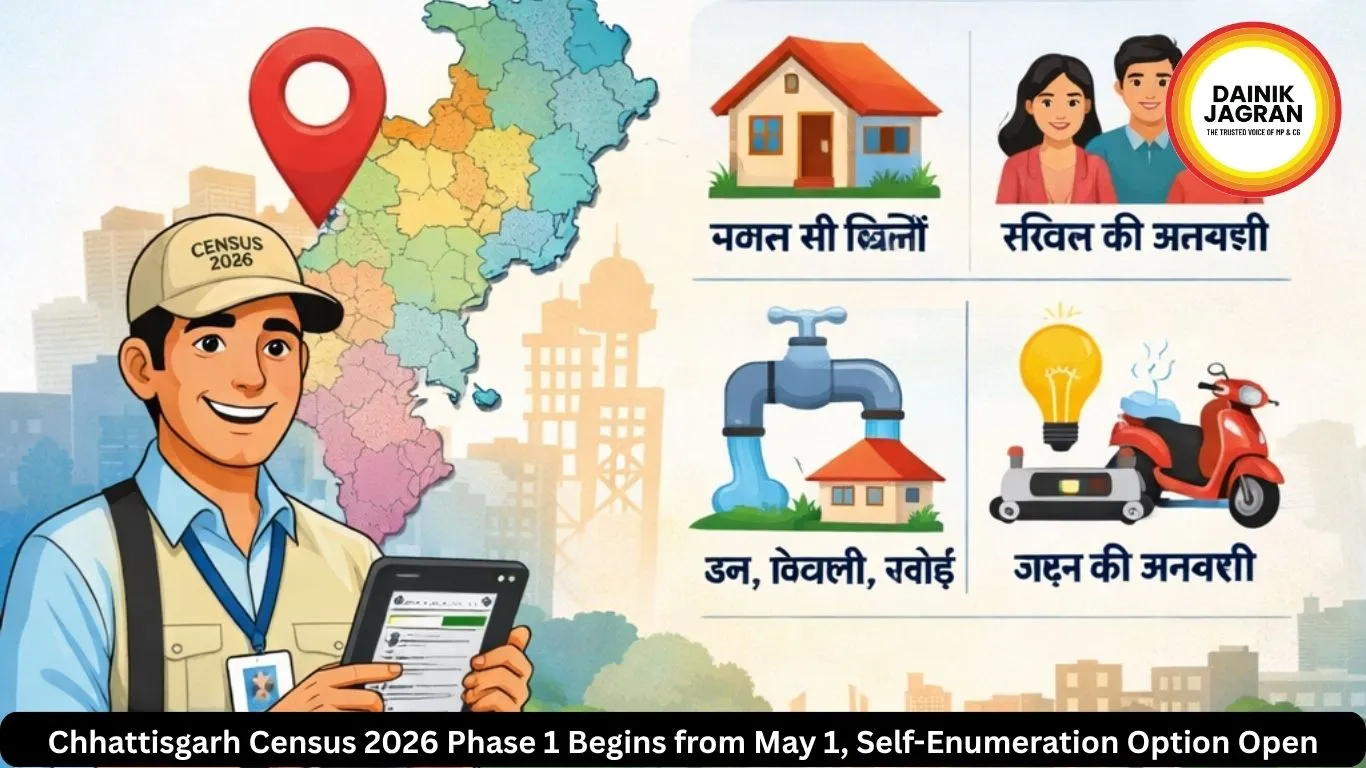
During this phase, around 33 questions will be asked related to housing conditions and household facilities. Information will include the type of house, whether it is used for residential or commercial purposes, construction quality, number of families living in the house, and availability of essential services. Authorities will also collect data on drinking water, sanitation, electricity, cooking fuel, internet access, and ownership of devices such as televisions and radios.
Household and Asset Information
Enumerators will record the number of individuals residing in each household along with details of vehicles owned by family members. This data will help in understanding living standards and socio-economic conditions at a micro level.
Geo-Tagging and Digital Mapping Benefits
Each house will be geo-tagged and marked as a digital point on official maps. This feature is expected to bring multiple benefits. In case of disasters, authorities will be able to identify affected households quickly and coordinate relief operations more effectively. It will also provide accurate data for electoral boundary delimitation and urban planning. Infrastructure development such as roads, schools, hospitals, and parks will benefit from this precise mapping. Additionally, it will help track migration patterns and eliminate duplicate entries in voter lists.
Data Privacy and Confidentiality
The government has assured that all information collected during the census will remain strictly confidential. The data will be used only for policy formulation, planning, and administrative purposes, ensuring the privacy of citizens is maintained.
Monitoring and Support Mechanism
To ensure smooth execution, control rooms will be established at district, state, and national levels. Officials will continuously monitor the process, and a dedicated helpline will be available for public queries and complaints. Citizens have been advised to verify the identity of enumerators before sharing information and to provide accurate details.

--------
🚨 Beat the News Rush – Join Now!
Get breaking alerts, hot exclusives, and game-changing stories instantly on your phone. No delays, no fluff – just the edge you need. ⚡
Tap to join:
🟢 WhatsApp Channel: Dainik Jagran MP CG
Crave more?
🅕 Facebook: Dainik Jagran MP CG English
🅧 Twitter (X): Dainik Jagran MP CG
🅘 Instagram: Dainik Jagran MP CG
Share the fire – keep your crew ahead! 🗞️🔥
Chhattisgarh Census 2026 Phase 1 Begins from May 1, Self-Enumeration Option Open
Raipur (CG)
The first phase of the Chhattisgarh Census 2026 is scheduled to begin on May 1 and will continue until May 30. This phase, known as the House Listing and Housing Census, will focus on collecting detailed information about households, residential structures, and basic amenities across the state. Officials will visit homes to gather accurate data within a fixed timeline.
Digital Transformation of the Census Process
For the first time, the census process in the state has been significantly digitized. Citizens will have the option to fill in their household details online between April 16 and April 30 through a self-enumeration portal. Those who complete this process will receive a unique identification number, which must be presented to enumerators during verification. This initiative aims to improve efficiency, accuracy, and participation.
Details Covered Under the Survey
During this phase, around 33 questions will be asked related to housing conditions and household facilities. Information will include the type of house, whether it is used for residential or commercial purposes, construction quality, number of families living in the house, and availability of essential services. Authorities will also collect data on drinking water, sanitation, electricity, cooking fuel, internet access, and ownership of devices such as televisions and radios.
Household and Asset Information
Enumerators will record the number of individuals residing in each household along with details of vehicles owned by family members. This data will help in understanding living standards and socio-economic conditions at a micro level.
Geo-Tagging and Digital Mapping Benefits
Each house will be geo-tagged and marked as a digital point on official maps. This feature is expected to bring multiple benefits. In case of disasters, authorities will be able to identify affected households quickly and coordinate relief operations more effectively. It will also provide accurate data for electoral boundary delimitation and urban planning. Infrastructure development such as roads, schools, hospitals, and parks will benefit from this precise mapping. Additionally, it will help track migration patterns and eliminate duplicate entries in voter lists.
Data Privacy and Confidentiality
The government has assured that all information collected during the census will remain strictly confidential. The data will be used only for policy formulation, planning, and administrative purposes, ensuring the privacy of citizens is maintained.
Monitoring and Support Mechanism
To ensure smooth execution, control rooms will be established at district, state, and national levels. Officials will continuously monitor the process, and a dedicated helpline will be available for public queries and complaints. Citizens have been advised to verify the identity of enumerators before sharing information and to provide accurate details.