


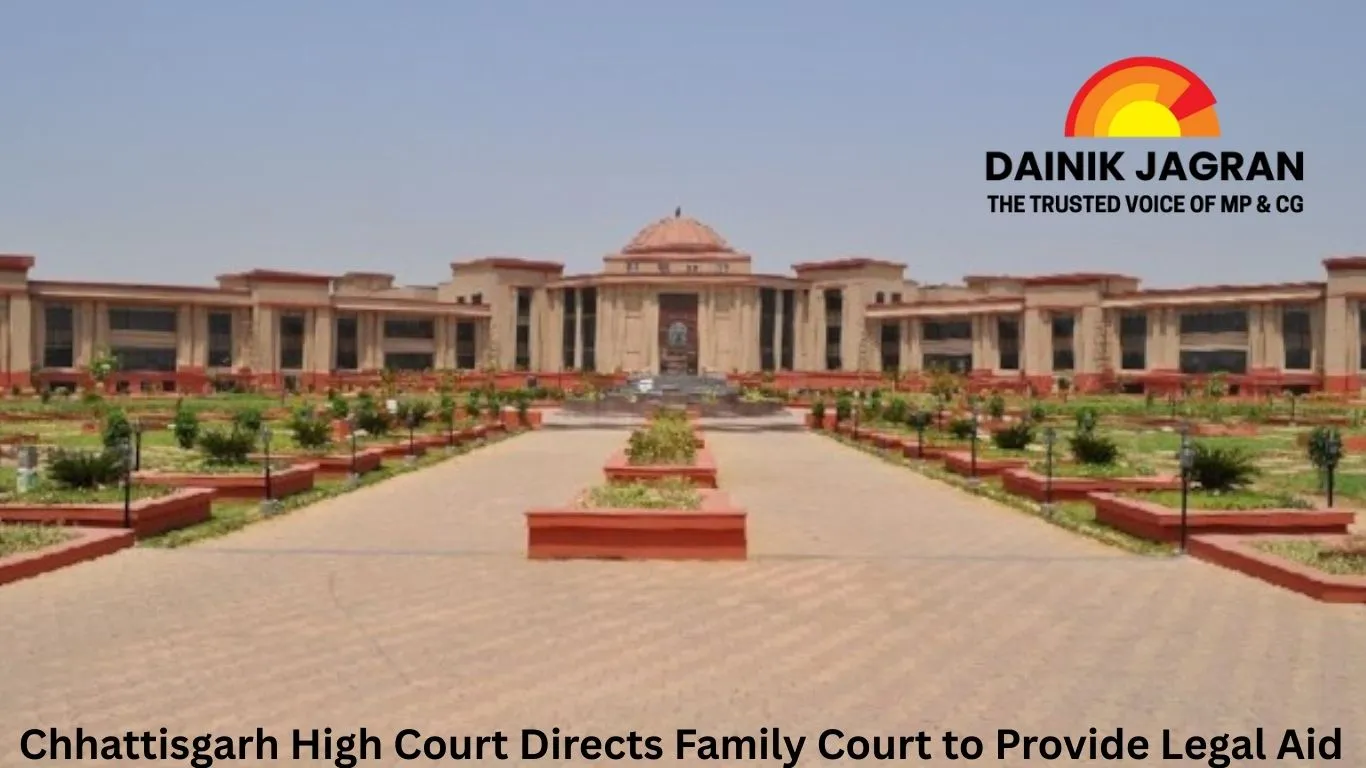
Chhattisgarh High Court Directs Family Court to Provide Legal Aid, Stresses Justice for Women Over Case Disposal
Digital Desk
The case involved a wife who approached the family court seeking divorce but could not afford legal representation due to financial constraints. She also faced logistical difficulties traveling repeatedly from Odisha to Janjgir for hearings. Despite her oral plea, the family court directed her to seek assistance from the District Legal Services Authority (DLSA). When she failed to appear at the DLSA, the court declared her an ex-parte defendant and granted the divorce in favor of her husband.
High Court intervention
Challenging this decision, the wife appealed to the Chhattisgarh High Court, which set aside the ex-parte decree and ordered a fresh hearing of the case. The bench criticized the family court for failing to provide immediate legal aid, noting that merely referring parties to DLSA is insufficient. The judges underscored that oral requests for legal assistance are as valid as written applications, and denying a lawyer violates Article 21 of the Constitution, which guarantees the right to life and liberty.
Guidelines for all family courts
The High Court also issued statewide guidelines to prevent similar lapses. Under the Chhattisgarh Family Court Rules, 2007, Rule 14, each family court is required to maintain a panel of lawyers who can be appointed immediately to represent parties in need. The fees for these lawyers will be borne by the state government, ensuring prompt and effective legal assistance. Courts can no longer rely solely on DLSA referrals.
Impact and significance
This ruling reinforces the principle that access to justice is paramount, especially for vulnerable parties in family disputes. It sets a precedent for proactive legal support and accountability in family courts, ensuring that women facing economic or logistical barriers are not deprived of their rights. Legal experts believe this decision will strengthen confidence in the judicial process and improve the quality of justice delivery in domestic cases.
.jpg)




