


Chhattisgarh LPG Crackdown 2026: 1,013 Cylinders Seized, New Booking Numbers Issued — But With ₹4,500 Black Market Prices and 3.6 Crore Consumers Waiting, Is the State Winning the War on Hoarding?
Digital Desk
Raiding the Hoarders — While 3.6 Crore Consumers Wait for Their Cylinder
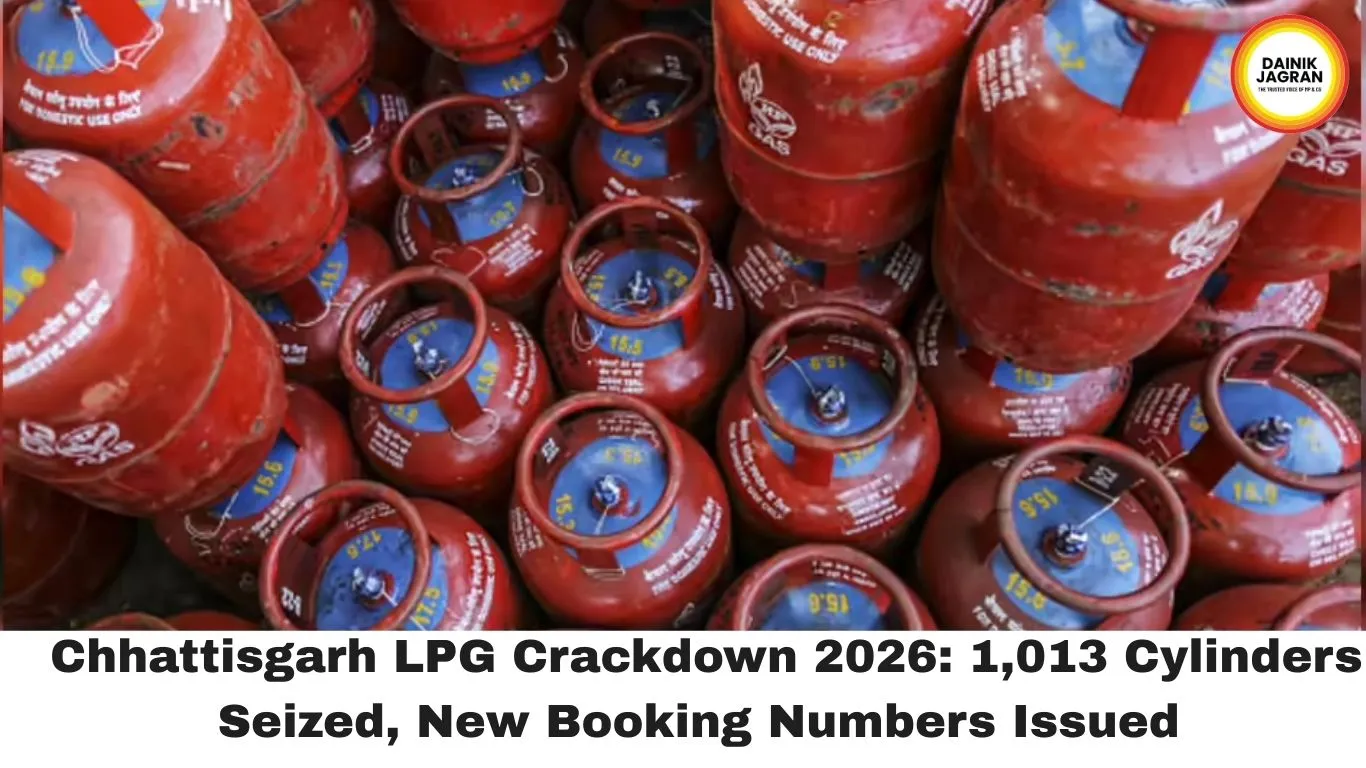
The numbers tell a story of a state in enforcement overdrive — and a crisis that is moving faster than any crackdown can contain. As of March 18, 2026, Chhattisgarh authorities have now seized over 1,013 LPG cylinders from suspected hoarders and black marketeers across the state — an escalation from the 741 cylinders seized across 102 locations in the first major round of raids that concluded on March 13, with fresh seizures continuing through subsequent days.
The raids are happening. New LPG booking helpline numbers have been issued to ease the strain on an overwhelmed digital booking infrastructure. And Chief Minister Vishnu Deo Sai has publicly committed to zero tolerance on hoarding and profiteering. Yet, in kitchens across Raipur, Bilaspur, Durg, and Jagdalpur, the blue flame is still missing — and the question every citizen is asking is the same: when does this end, and what exactly is being done to fix it?
The Raid Numbers: Where Chhattisgarh Stands District by District
The geography of the crackdown reveals exactly where the hoarding problem is most acute. Raipur, Chhattisgarh's capital and commercial centre, tops the seizure list by a significant margin — with 392 domestic LPG cylinders confiscated in targeted raids across warehouses, shops, and suspected storage locations in a single day on March 13 alone. Bilaspur comes in second with 130 cylinders seized, followed by other districts where enforcement teams have been conducting surprise inspections.
The raids have been jointly conducted by teams from the state Food Department and district administration — operating under the Essential Commodities Act, 1955, and the LPG Control Order, 2000, which together give state authorities the power to inspect, seize, and prosecute those engaged in illegal hoarding and black marketing of cooking gas. Officials have confirmed that inspections have been carried out at warehouses, retail shops, and other storage facilities where tip-offs or market intelligence suggested cylinders were being illegally stockpiled.
Those found hoarding face strict legal action. The administration has also opened public reporting channels, urging citizens to report any suspicious activity related to LPG diversion or illegal sales so that immediate enforcement response can follow.
New Booking Numbers: Fixing a System That Broke Under Pressure
Alongside the enforcement crackdown, the state administration has announced revised LPG booking procedures and new helpline numbers — a direct response to the digital booking chaos that struck when demand surged following the Hormuz disruption. Across India, LPG booking apps, IVRS numbers, WhatsApp channels, and web portals all buckled simultaneously as panicked consumers attempted to pre-book cylinders in bulk.
The booking interval has now been revised nationally to 25 days in urban areas and up to 45 days in rural areas, a change designed to ensure more equitable distribution and reduce the scope for panic-driven over-booking that was artificially inflating demand signals. PNG consumers connected to piped natural gas networks have been advised to surrender their LPG connections under the amended LPG Control Order dated March 14, 2026 — another measure to redirect available LPG supply toward households that have no alternative fuel source.
In Chhattisgarh specifically, five LPG bottling plants remain fully operational — two run by Indian Oil Corporation, two by Hindustan Petroleum Corporation, and one by Bharat Petroleum Corporation. Officials have confirmed that adequate stock is available at these plants and that bottling is being carried out at full capacity. The bottleneck, they insist, is not production. It is distribution — and the criminal diversion of cylinders from that distribution chain into black markets.
The Black Market: Brazen, Profitable, and Harder to Kill Than It Looks
This is where the government's narrative of adequate supply runs headlong into street-level reality. If supply is adequate and bottling plants are running at full capacity, why are commercial cylinders being sold for ₹4,500 in Raipur's grey markets — more than four times their official commercial rate? Why are hotels in Chhattisgarh's major cities still operating at 50 percent capacity or less? Why are families who registered under Ujjwala Yojana — specifically to escape the smoke and health costs of cooking on wood and coal — back at their old stoves?
The mechanics of the black market in this crisis are not subtle. Cylinders are being diverted before they reach legitimate customers — sometimes from inside the very agency networks entrusted with distribution. The profiteering is not being carried out exclusively by shadowy middlemen. It is occurring within the officially licensed supply chain, at the point where a delivery agent decides a cylinder is worth more sold to a black market trader at ₹2,500 than delivered to a registered household at the subsidised rate.
This is the harder problem. Seizing 1,013 cylinders from suspected hoarders is visible, photogenic enforcement. Rooting out the insider corruption within gas agency distribution networks — which requires longer investigations, willingness to take on politically connected licensees, and sustained regulatory pressure — is far more difficult and far less newsworthy. But it is the only intervention that will actually fix the distribution chain.
The Political Dimension: Opposition Keeps the Pressure On
The Congress opposition has not let the government breathe during this crisis. During Zero Hour on March 12, Leader of the Opposition Charan Das Mahant brought the full weight of 3.6 million affected domestic consumers to the floor of the Chhattisgarh Assembly — demanding transparency on current stockpiles, accountability for the failure of supply assurances, and concrete timelines for commercial supply restoration. Former Chief Minister Bhupesh Baghel added his voice, calling out the gap between the government's assurances and the lived experience of citizens across the state.
The Congress walkout from the assembly and the floor protests have kept the LPG crisis visible in political discourse — a function the opposition is performing effectively and legitimately. For the ruling BJP, with five state elections approaching in April, the LPG crisis is not just a supply management challenge. It is an electoral vulnerability that no amount of raid photography can fully neutralise if cylinders are still missing from kitchens on polling day.
Raids Are a Response — Not a Solution
Chhattisgarh's enforcement drive is real, it is ongoing, and it is necessary. Over 1,013 cylinders returned to legitimate supply chains are 1,013 cooking fires that can be relit. New booking numbers and revised distribution intervals are practical, immediate steps that ease consumer access. These matter.
But a crackdown on hoarding is a response to a symptom, not a cure for the disease. The structural vulnerabilities that made Chhattisgarh's LPG supply chain so easy to exploit — a distribution architecture built on trust in licensed agencies with minimal real-time oversight, a digital booking infrastructure never stress-tested at crisis scale, a regulatory framework that relies on citizens reporting violations rather than proactively monitoring supply chains — all remain entirely intact.
India imports over 60 percent of its LPG through a single geopolitical chokepoint. Chhattisgarh has 3.6 million domestic LPG consumers. The five bottling plants in the state are running at capacity. And yet, people are cooking on firewood in March 2026.
The raids must continue. The new booking systems must hold. The bottling plants must keep running. But the government — both in Raipur and in Delhi — owes the people of Chhattisgarh something more than enforcement optics. It owes them a plan for an energy supply system that does not collapse every time a strait on the other side of the world heats up.
Until that plan exists, every household that lights a wood fire instead of a gas stove is a reminder of how far India still has to go.
.jpg)




