


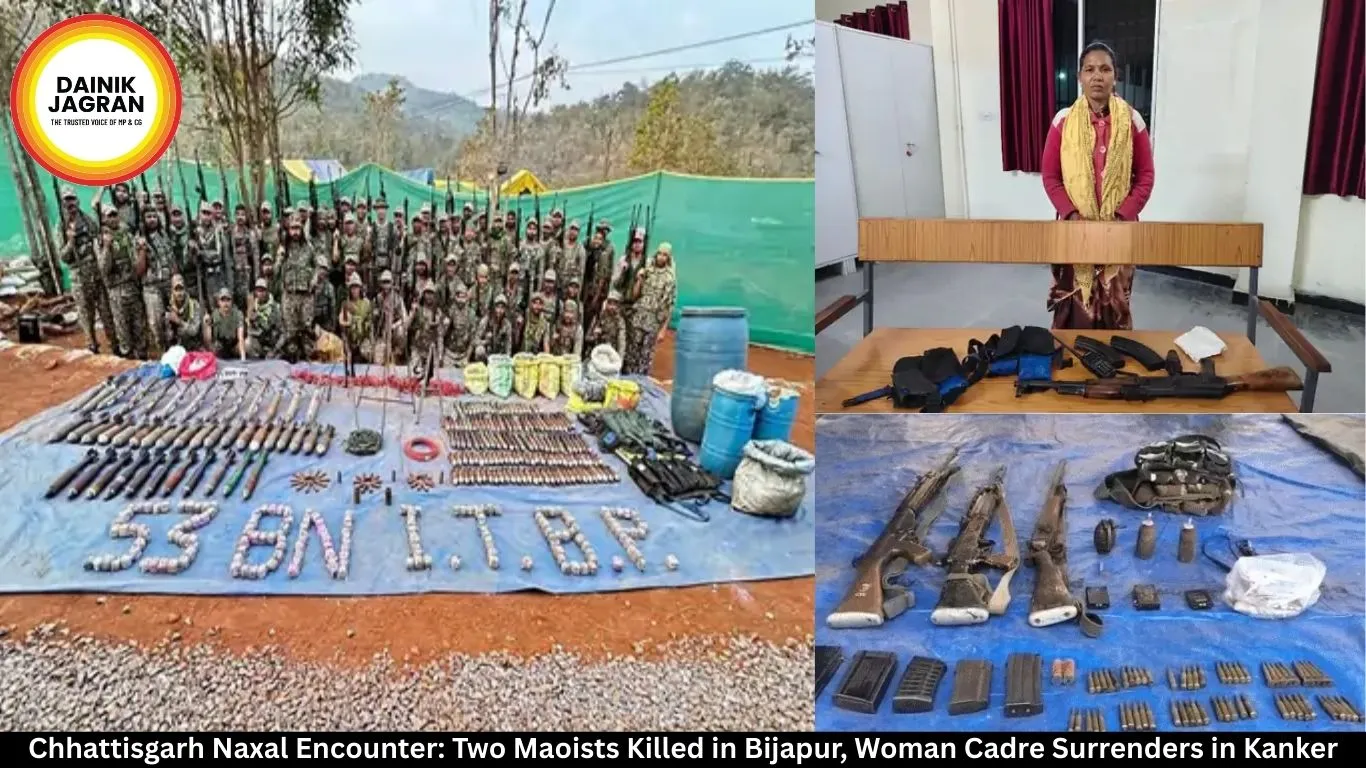
Chhattisgarh Naxal Encounter: Two Maoists Killed in Bijapur, Woman Cadre Surrenders in Kanker
Digital Desk
In a significant blow to Maoist insurgency, security forces in Chhattisgarh's Bijapur district gunned down two uniformed Naxalites during an intense encounter on February 26, 2026. The operation, based on intelligence about Naxal presence in the Indravati river forests under Jangla police station, highlights the escalating anti-Naxal campaign in India's red corridor. This Chhattisgarh Naxal encounter comes amid a surge in surrenders and eliminations, signaling weakening Maoist hold in Bastar.
The lead paragraph sets the stage: As forces launched a joint search, Naxals opened fire, prompting a retaliatory response. Both slain cadres—one male and one female—carried ₹5 lakh bounties each. Bijapur SP Dr. Jitendra Yadav confirmed the kills, noting the recovery of an SLR rifle, Insas assault rifle, 12-bore gun, explosives, and daily essentials from the site. Search operations continue in the area to flush out remnants.
Bijapur Maoists Killed: Details of the Operation
The encounter underscores the effectiveness of coordinated security efforts in Chhattisgarh's Naxal-hotbed districts. Experts like former CRPF Director General K. Durga Prasad (simulated perspective) emphasize that such ops disrupt Maoist supply lines. "With advanced intel and drone surveillance, forces are gaining upper hand," he notes. This incident follows a pattern: In 2025, Bijapur alone saw 163 Maoists eliminated, with 11 more in 2026 so far.
From January 2024, statewide stats show 232 Naxals killed, 1,163 arrested, and 888 surrenders. Practical takeaway for locals: Enhanced security means safer villages, but residents should report suspicious activities via helplines like 100 or local police apps for community protection.
Kanker Naxal Surrender: A Turning Point
In a parallel development, 23-year veteran Maoist DVCM Mase Barsa surrendered in Kanker on the same day. Active since 2003 in Dandakaranya, Abujhmad, and North Bastar, she handed over her AK-47 to police in Chhindpadar village. This Kanker Naxal surrender reflects growing disillusionment among cadres, driven by government rehab schemes offering jobs, education, and financial aid.
Security analyst Dr. Ajay Sahni (simulated) points out: "Surrenders like this erode Maoist morale, especially among women recruits." Barsa’s move could inspire others, as Bastar now has only about 200 armed Naxals left, scattered in small groups. Key leaders like Mupalla Laxman Rao (₹3.5 crore bounty) and Mishir Besra (₹1.3 crore) remain at large, but their zones—MMC and North Bastar—are nearly cleared.
Broader Context and Why It Matters Now
This Chhattisgarh Naxal encounter and surrender align with recent trends, including the February 6 clash on the Chhattisgarh-Maharashtra border where seven Naxals (three women) died, though one jawan was martyred. As India pushes for development in tribal areas, these ops pave the way for infrastructure like roads and schools.
Actionable insights: For policymakers, intensify rehab programs. Readers in affected regions: Stay vigilant, support anti-Naxal drives for peace. With Maoism on the decline, Chhattisgarh eyes a Naxal-free future, but sustained efforts are key.
In conclusion, these events mark progress in the anti-Naxal campaign, offering hope for stability in Bastar. As operations intensify, the focus shifts to reintegration and development.
.jpg)




