


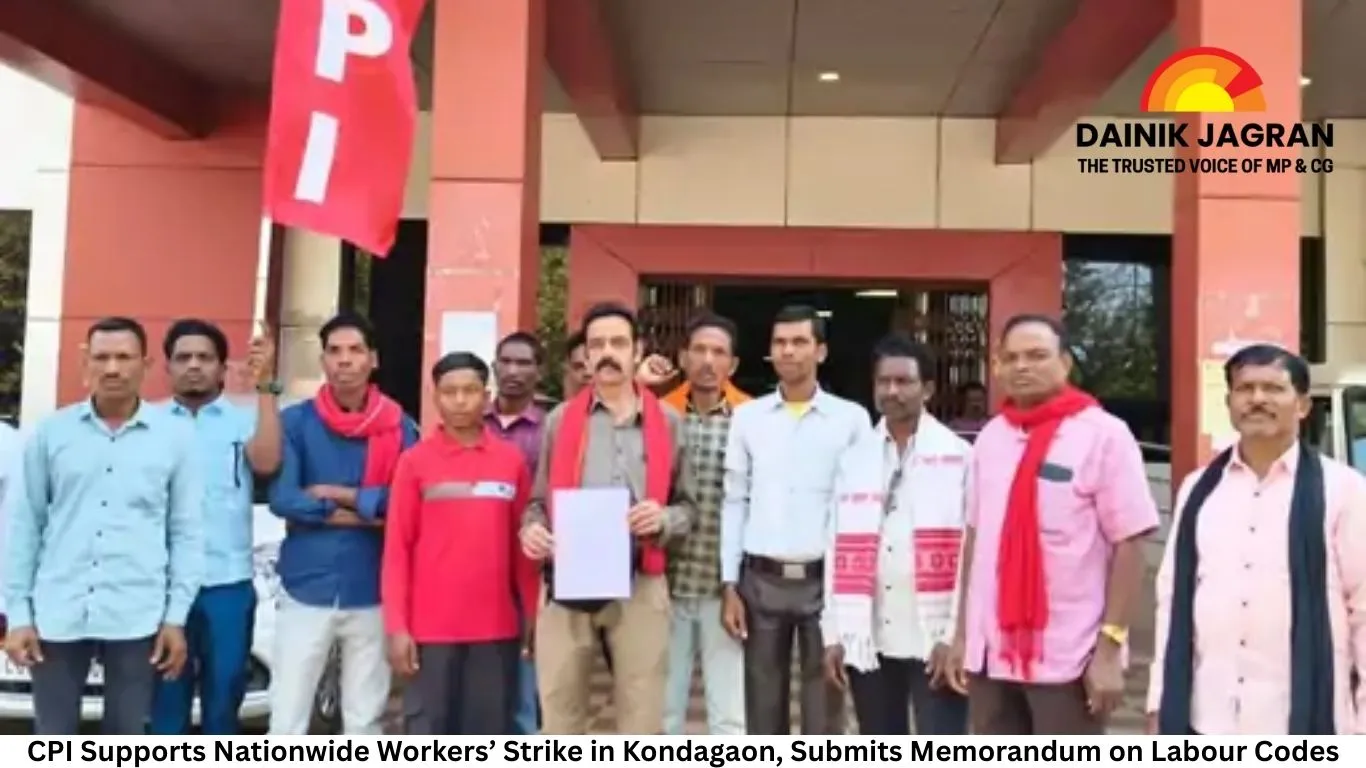
CPI Supports Nationwide Workers’ Strike in Kondagaon, Submits Memorandum on Labour Codes
Digital Desk
The memorandum was presented by members of the CPI district council, including key office bearers and local leaders, who assembled at the district collectorate to formally record their objections. In their submission, party representatives emphasized that the tribal-dominated Bastar division, where Kondagaon is located, faces longstanding educational, economic, and social challenges. They pointed out that a large proportion of residents in rural areas are either illiterate or semi-educated, making them especially vulnerable to exploitation in the labour market.
According to CPI leaders, workers in both organized and unorganized sectors are already struggling with issues such as job insecurity, low wages, lack of social protection, and limited access to legal support. They argued that consolidating numerous labour laws into four codes could weaken safeguards that currently exist for employees, potentially allowing employers greater flexibility at the expense of workers’ rights and welfare.
The party’s memorandum urged the President to take cognizance of the concerns raised by labour organizations across the country and to ensure that any legislative reforms prioritize worker protection, fair wages, and safe working conditions. CPI officials stressed that policies affecting labour should be framed only after extensive consultation with trade unions, worker representatives, and social stakeholders.
By publicly backing the strike, CPI leaders stated they aim to amplify the voices of workers who fear that the proposed labour framework may adversely impact job security and workplace protections. They reiterated that safeguarding labour rights is essential not only for workers’ dignity but also for equitable economic development and social justice.
.jpg)




