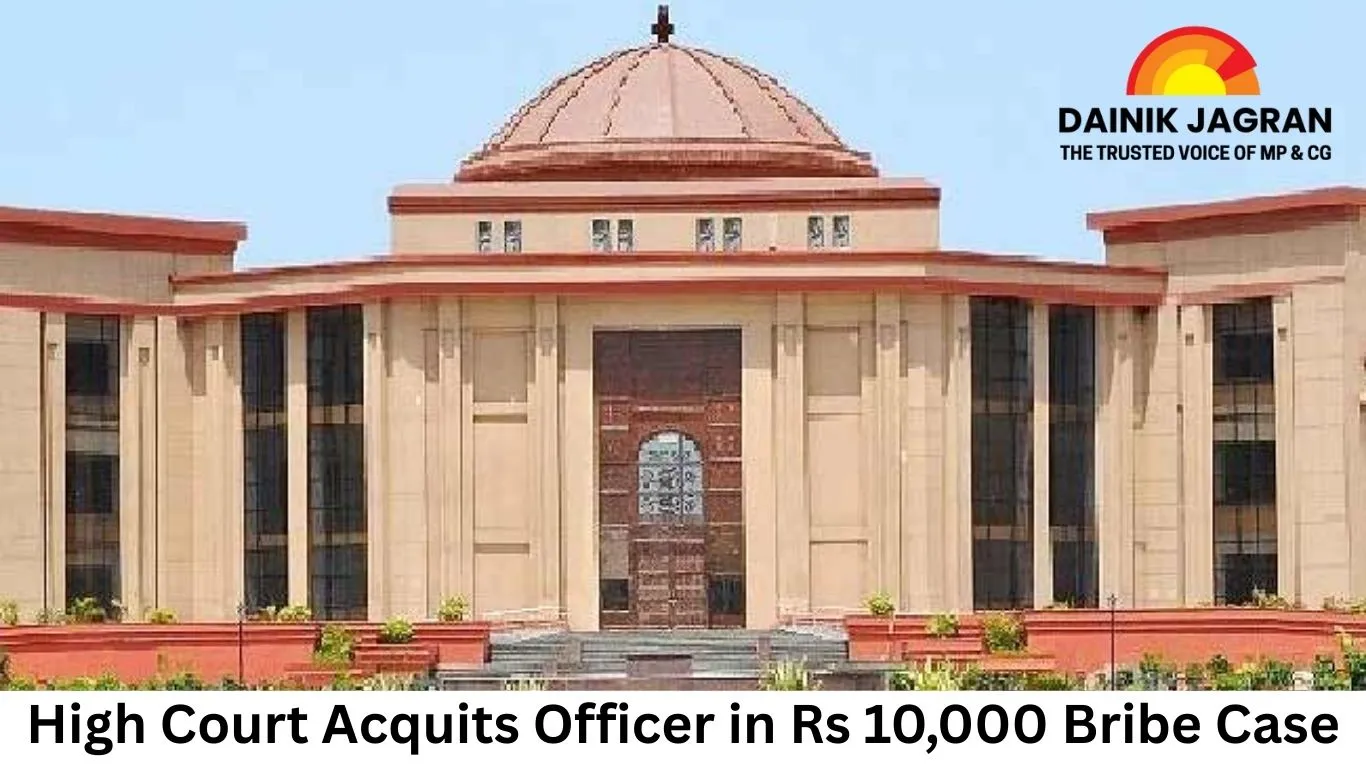
High Court Acquits Officer in Rs 10,000 Bribe Case, Rules Recovery Alone Insufficient
Digital Desk
The Chhattisgarh High Court has overturned the conviction of a former rural agriculture extension officer accused of accepting a Rs 10,000 bribe, holding that mere recovery of money does not prove corruption without solid evidence of demand and acceptance.
Justice B.D. Guru's single bench acquitted Basant Kumar Sikheria, who was posted in Bastar's Kokanpur area, citing procedural lapses and contradictions in the prosecution case.
The Anti-Corruption Bureau (ACB) trapped Sikheria on March 18, 2015, after farmer Maksudan complained he demanded the sum to process a tubewell subsidy. A special court in Kanker later sentenced him to four years under Section 7 of the Prevention of Corruption Act and five years under related provisions.
Sikheria appealed, arguing the subsidy file had already been forwarded to higher authorities, leaving him no pending work or approval power. Audio evidence lacked mandatory certification under Section 65B of the Evidence Act, rendering it inadmissible.
The High Court agreed, noting serious inconsistencies in the complainant's testimony, flaws in the trap procedure, and doubtful proof of demand. Citing Supreme Court precedents, it ruled that when demand itself is uncertain, conviction cannot stand.
The bench quashed the trial court's verdict, granting Sikheria the benefit of doubt.

--------
🚨 Beat the News Rush – Join Now!
Get breaking alerts, hot exclusives, and game-changing stories instantly on your phone. No delays, no fluff – just the edge you need. ⚡
Tap to join:
🟢 WhatsApp Channel: Dainik Jagran MP CG
Crave more?
🅕 Facebook: Dainik Jagran MP CG English
🅧 Twitter (X): Dainik Jagran MP CG
🅘 Instagram: Dainik Jagran MP CG
Share the fire – keep your crew ahead! 🗞️🔥
High Court Acquits Officer in Rs 10,000 Bribe Case, Rules Recovery Alone Insufficient
Digital Desk
Justice B.D. Guru's single bench acquitted Basant Kumar Sikheria, who was posted in Bastar's Kokanpur area, citing procedural lapses and contradictions in the prosecution case.
The Anti-Corruption Bureau (ACB) trapped Sikheria on March 18, 2015, after farmer Maksudan complained he demanded the sum to process a tubewell subsidy. A special court in Kanker later sentenced him to four years under Section 7 of the Prevention of Corruption Act and five years under related provisions.
Sikheria appealed, arguing the subsidy file had already been forwarded to higher authorities, leaving him no pending work or approval power. Audio evidence lacked mandatory certification under Section 65B of the Evidence Act, rendering it inadmissible.
The High Court agreed, noting serious inconsistencies in the complainant's testimony, flaws in the trap procedure, and doubtful proof of demand. Citing Supreme Court precedents, it ruled that when demand itself is uncertain, conviction cannot stand.
The bench quashed the trial court's verdict, granting Sikheria the benefit of doubt.