


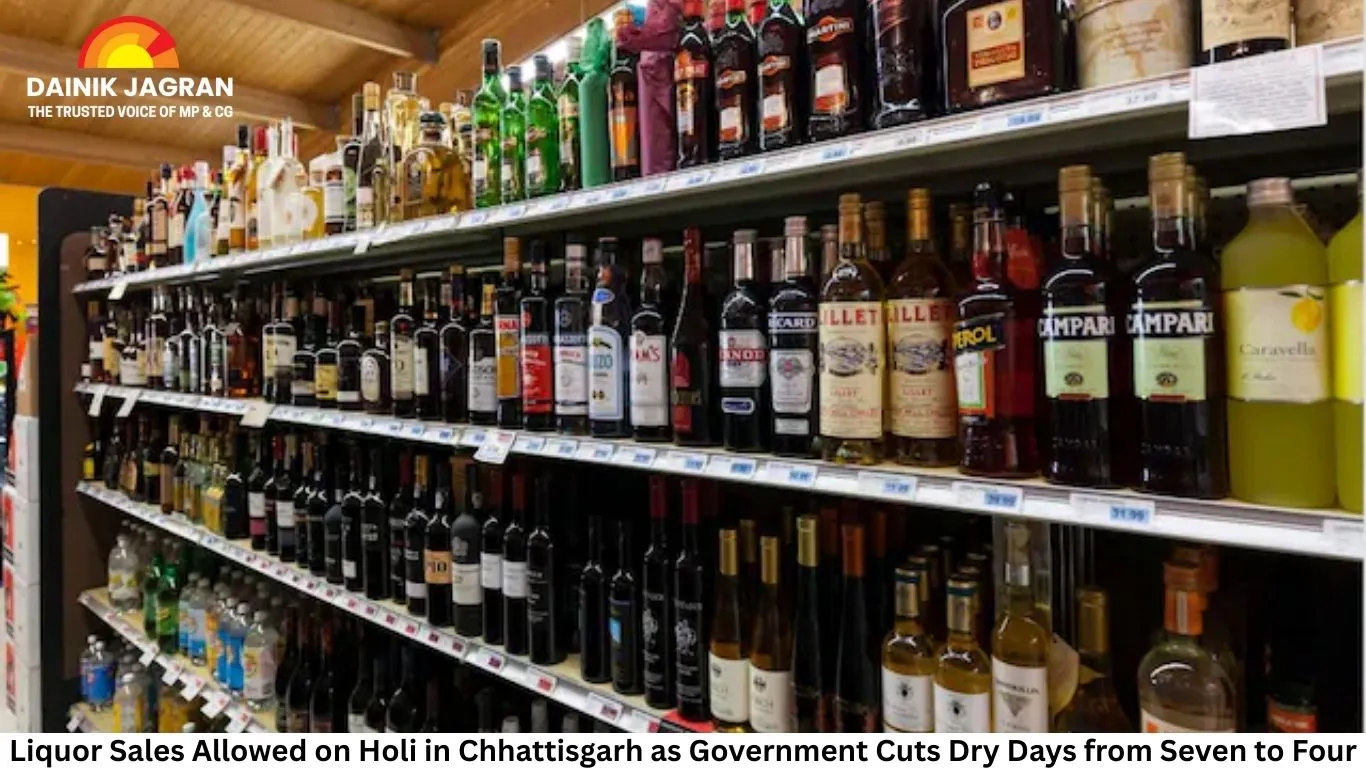
Liquor Sales Allowed on Holi in Chhattisgarh as Government Cuts Dry Days from Seven to Four
Digital Desk
Under the new rules for the 2026–27 financial year, liquor shops will now remain closed only on four nationally or culturally significant dates: Republic Day (January 26), Independence Day (August 15), Gandhi Jayanti (October 2), and the birth anniversary of Guru Ghasidas on December 18. Previously observed dry days that have been removed include Holi, Muharram, and the January 30 death anniversary of Mahatma Gandhi.
Officials familiar with the policy revision said the government believes regulated sales on festival days may reduce black-market activity, which often increases when shops are closed but demand remains high. Allowing licensed outlets to operate is expected to improve monitoring and tax compliance while preventing illicit distribution.
In previous years, liquor outlets across the state remained shut throughout Holi, with police conducting enforcement drives on the eve of the festival. Vehicles were frequently checked for stockpiling, and violations could lead to seizure or legal action. Authorities indicated such preventive measures may now be scaled back because retail sales will be legal during the festival.
The policy has drawn criticism in the past, particularly when shops remained open on January 30. Workers of the Indian National Congress had staged protests outside liquor outlets, accusing the state’s Bharatiya Janata Party government of disregarding public sentiment and the ideals associated with Gandhi. Demonstrators argued that alcohol sales on solemn commemorative days were insensitive and demanded immediate policy revisions.
State officials say the revised dry-day list is final for the coming fiscal year, though it could be reassessed depending on administrative experience and public response. Excise authorities have been instructed to ensure strict compliance with licensing rules and prevent unauthorized sales, especially during major festivals when demand typically rises.
The change signals a shift in the state’s regulatory approach—from blanket restrictions toward controlled availability—while balancing revenue considerations, enforcement practicality, and social sensitivities.
.jpg)




