

New Financial Year 2026: Toll Hike, Tax Changes & New Rules
Digital Desk
New Financial Year 2026 brings key changes from April 1: toll tax hikes, new income tax regime, cashless toll payments, and state-specific updates in Chhattisgarh. Full details here.
New Financial Year 2026: Toll Tax Hiked, Registration Cuts, & New Tax Regime Kicks In
Key changes from income tax to toll payments come into effect from April 1, impacting daily expenses and financial planning.
As the new financial year commenced on April 1, 2026, a slew of regulatory and financial changes have come into effect across the country, directly impacting the common man’s pocket. From a new income tax regime and stricter toll collection rules to state-specific relief measures in Chhattisgarh, the first day of the fiscal year marks a significant shift in governance and daily life.
New Tax Regime Begins
The most significant shift comes with the implementation of the new Income Tax Act 2025, replacing the six-decade-old Income Tax Act of 1961. According to officials, the new law aims to simplify the tax structure by introducing a single ‘Tax Year’ concept, eliminating the confusion between the previous financial year and assessment year. For non-audit taxpayers, the deadline for filing ITR-3 and ITR-4 has been extended to August 31, providing a longer window for compliance.
Cashless Highways Enforced
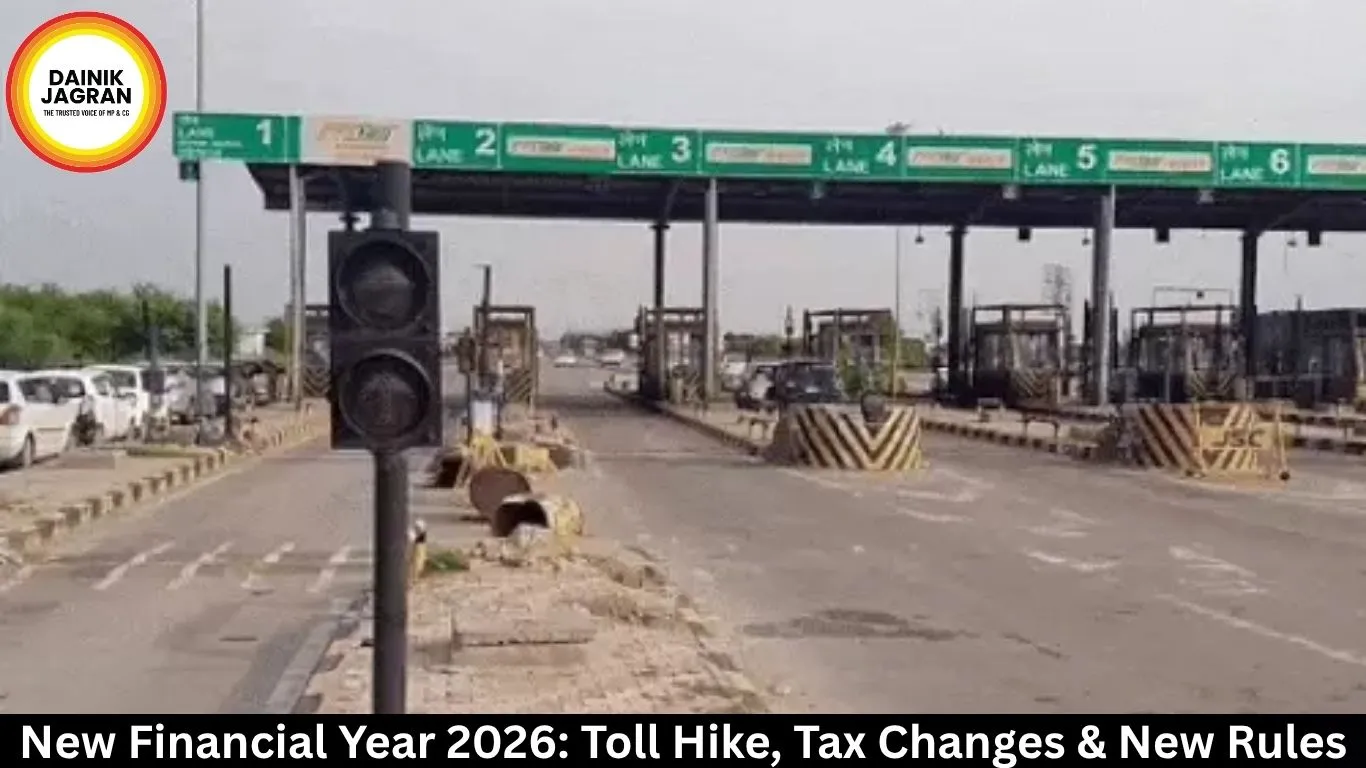
Starting today, the National Highways Authority of India (NHAI) has made cash transactions at toll plazas completely defunct. Commuters must now pay user fees exclusively through FASTag or UPI-based digital modes. This move towards a fully cashless toll system is aimed at reducing congestion. However, officials caution that travelers without a functional FASTag or sufficient balance may face inconvenience, with UPI remaining the only alternative for passage.
Toll Rates Across Chhattisgarh Rise
Simultaneously, toll rates have been revised upward on several national highways across Chhattisgarh. Sources indicate that the hike ranges from ₹5 to ₹20 at various plazas across the state. This increase is expected to marginally raise operational costs for transport and logistics, though authorities maintain the revision is standard annual practice based on the wholesale price index.
Relief in Property Registration
In a contrasting move offering relief to citizens, the Chhattisgarh government has reduced property registration fees effective April 1. This decision is expected to stimulate the real estate sector by lowering the cost of property transactions. Officials noted that the reduction is part of a broader initiative to ensure affordability and transparency in land and property dealings within the state.
New Rules for Ration, Liquor
The state has also introduced changes in the public distribution system and excise policy. Beneficiaries will now receive three months’ worth of rice allocation in a single go from ration shops, a move aimed at reducing frequent visits and logistical burdens. Additionally, under the new excise policy, liquor will now be sold in plastic bottles, a measure officials claim is designed to streamline supply and reduce breakage during transport.
PAN-KYC and Train Ticket Norms
Financial discipline has been tightened with stricter PAN-KYC norms. Financial transactions, including bank deposits and investments, will now require rigorous identity verification. Meanwhile, Indian Railways has altered its cancellation policy. Passengers must now cancel train tickets at least eight hours before departure to be eligible for a refund—double the previous window of four hours. However, the boarding station can now be changed up to 30 minutes before departure, offering some flexibility.
Commercial Gas Prices Surge
Adding to inflationary pressure, oil marketing companies have hiked the price of commercial LPG cylinders by up to ₹218. The price in Delhi now stands at ₹2,078.50. This increase is expected to have a cascading effect, potentially raising the cost of tea, snacks, and meals at hotels and eateries across the urban centers of the state.
With the government also mandating that basic salary must constitute at least 50% of an employee’s total CTC, the corporate sector is now recalibrating payroll structures, signaling a broader impact on take-home salaries and long-term retirement benefits as the nation steps into the new fiscal landscape.
--------
🚨 Beat the News Rush – Join Now!
Get breaking alerts, hot exclusives, and game-changing stories instantly on your phone. No delays, no fluff – just the edge you need. ⚡
Tap to join:
🟢 WhatsApp Channel: Dainik Jagran MP CG
Crave more?
🅕 Facebook: Dainik Jagran MP CG English
🅧 Twitter (X): Dainik Jagran MP CG
🅘 Instagram: Dainik Jagran MP CG
Share the fire – keep your crew ahead! 🗞️🔥
New Financial Year 2026: Toll Hike, Tax Changes & New Rules
Digital Desk
New Financial Year 2026: Toll Tax Hiked, Registration Cuts, & New Tax Regime Kicks In
Key changes from income tax to toll payments come into effect from April 1, impacting daily expenses and financial planning.
As the new financial year commenced on April 1, 2026, a slew of regulatory and financial changes have come into effect across the country, directly impacting the common man’s pocket. From a new income tax regime and stricter toll collection rules to state-specific relief measures in Chhattisgarh, the first day of the fiscal year marks a significant shift in governance and daily life.
New Tax Regime Begins
The most significant shift comes with the implementation of the new Income Tax Act 2025, replacing the six-decade-old Income Tax Act of 1961. According to officials, the new law aims to simplify the tax structure by introducing a single ‘Tax Year’ concept, eliminating the confusion between the previous financial year and assessment year. For non-audit taxpayers, the deadline for filing ITR-3 and ITR-4 has been extended to August 31, providing a longer window for compliance.
Cashless Highways Enforced
Starting today, the National Highways Authority of India (NHAI) has made cash transactions at toll plazas completely defunct. Commuters must now pay user fees exclusively through FASTag or UPI-based digital modes. This move towards a fully cashless toll system is aimed at reducing congestion. However, officials caution that travelers without a functional FASTag or sufficient balance may face inconvenience, with UPI remaining the only alternative for passage.
Toll Rates Across Chhattisgarh Rise
Simultaneously, toll rates have been revised upward on several national highways across Chhattisgarh. Sources indicate that the hike ranges from ₹5 to ₹20 at various plazas across the state. This increase is expected to marginally raise operational costs for transport and logistics, though authorities maintain the revision is standard annual practice based on the wholesale price index.
Relief in Property Registration
In a contrasting move offering relief to citizens, the Chhattisgarh government has reduced property registration fees effective April 1. This decision is expected to stimulate the real estate sector by lowering the cost of property transactions. Officials noted that the reduction is part of a broader initiative to ensure affordability and transparency in land and property dealings within the state.
New Rules for Ration, Liquor
The state has also introduced changes in the public distribution system and excise policy. Beneficiaries will now receive three months’ worth of rice allocation in a single go from ration shops, a move aimed at reducing frequent visits and logistical burdens. Additionally, under the new excise policy, liquor will now be sold in plastic bottles, a measure officials claim is designed to streamline supply and reduce breakage during transport.
PAN-KYC and Train Ticket Norms
Financial discipline has been tightened with stricter PAN-KYC norms. Financial transactions, including bank deposits and investments, will now require rigorous identity verification. Meanwhile, Indian Railways has altered its cancellation policy. Passengers must now cancel train tickets at least eight hours before departure to be eligible for a refund—double the previous window of four hours. However, the boarding station can now be changed up to 30 minutes before departure, offering some flexibility.
Commercial Gas Prices Surge
Adding to inflationary pressure, oil marketing companies have hiked the price of commercial LPG cylinders by up to ₹218. The price in Delhi now stands at ₹2,078.50. This increase is expected to have a cascading effect, potentially raising the cost of tea, snacks, and meals at hotels and eateries across the urban centers of the state.
With the government also mandating that basic salary must constitute at least 50% of an employee’s total CTC, the corporate sector is now recalibrating payroll structures, signaling a broader impact on take-home salaries and long-term retirement benefits as the nation steps into the new fiscal landscape.


