

Raipur Digital Arrest Scam: Cyber Fraud Gang Busted in ₹1.25 Crore Cheating Case
Digital Desk
Raipur police arrests three accused in a digital arrest scam involving ₹1.25 crore fraud against a retired doctor using fake money laundering threats.
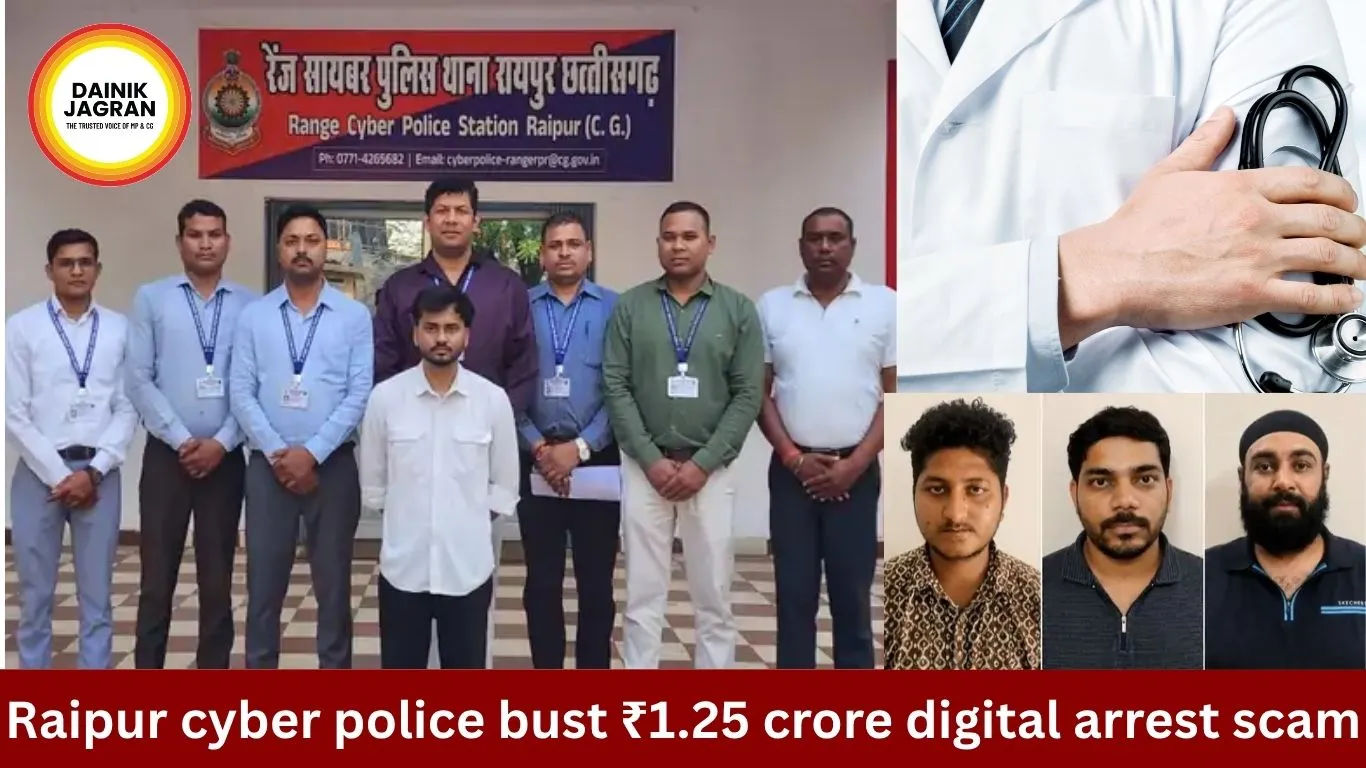
Raipur police have uncovered a major Raipur digital arrest scam, arresting three members of an interstate cyber fraud gang accused of cheating a retired veterinary doctor of ₹1.25 crore. The accused were traced to Delhi and Karnataka before being brought to Chhattisgarh for further investigation. Officials confirmed that one more accused had already been arrested earlier from Haryana, marking a significant breakthrough in the case.
Fake Legal Threats
The victim, Dr. Sapan Kumar, was targeted through a well-planned cyber fraud operation. The accused allegedly called him posing as law enforcement officials and claimed that his credit card had been linked to a money laundering investigation. The fraudsters used fear and urgency to manipulate the victim, repeatedly warning him of arrest if he failed to cooperate. This psychological pressure formed the core strategy of the Raipur digital arrest scam.
Digital Custody Trap
Investigators revealed that the victim was kept under what the accused described as “digital arrest” for nearly 24 hours a day. Through continuous video calls on messaging platforms, he was isolated and instructed not to contact anyone. The accused allegedly monitored his every move digitally and prevented him from seeking help. This created a controlled environment where the victim was unable to verify the claims made by the fraudsters.
Massive Financial Loss
Under sustained pressure, the retired doctor transferred approximately ₹1.25 crore into multiple bank accounts controlled by the gang. In one instance, he was even forced to break his fixed deposits to arrange funds. Reports suggest that on January 16, the accused specifically demanded ₹55 lakh into a separate account, pushing the victim to liquidate his savings. The total fraudulent transfers crossed ₹1.28 crore in related transactions.
Organized Cyber Network
Police investigations revealed that the gang operated using at least 18 mule bank accounts, which were used to route illegal transactions. These accounts collectively handled transactions worth over ₹10.76 crore. Authorities further found that the same accounts were linked to multiple cyber complaints registered across 17 states in India. This indicated the presence of a wide and structured cybercrime network operating at the national level.
Multiple Scam Methods
The arrested accused were reportedly involved in several types of cyber fraud beyond the Raipur digital arrest scam. These included fake job offers, OTP theft, phishing links, cryptocurrency scams, SIM swapping, OLX fraud, hotel booking fraud, and fake investment schemes. Police believe the gang operated like a cyber syndicate, adapting different fraud methods depending on the victim profile and opportunity.
Investigation Trail
The case began after the victim filed a complaint at the local police station in Raipur’s Vidhansabha area. Cyber cell teams immediately launched a technical investigation, tracking mobile numbers, IP logs, and financial transactions. The breakthrough came when investigators traced one accused to Haryana, leading to his arrest. Subsequent interrogation provided critical leads that helped locate and arrest the remaining suspects in Delhi and Karnataka.
Psychological Manipulation
Officials highlighted that the gang relied heavily on psychological intimidation techniques. By posing as government officials from agencies like police or crime branches, they created fear and confusion. Victims were often told that they were under surveillance and must comply immediately to avoid legal action. This tactic has become increasingly common in modern cyber fraud cases across India.
Police Advisory
Authorities have urged citizens not to panic in case of such calls and to verify claims independently. Police clarified that no agency conducts arrests or investigations through video calls or demands money transfers. The public has been advised to immediately report suspicious calls to the national cyber helpline number 1930 or nearest police station.
Growing Cyber Threat
The Raipur digital arrest scam reflects the rising sophistication of cybercrime networks targeting vulnerable individuals, especially retired professionals and senior citizens. The use of technology to create fake legal pressure is emerging as a major concern for law enforcement agencies. Experts believe that awareness and quick reporting are key to preventing financial losses in such cases.
-----------
--------
🚨 Beat the News Rush – Join Now!
Get breaking alerts, hot exclusives, and game-changing stories instantly on your phone. No delays, no fluff – just the edge you need. ⚡
Tap to join:
🟢 WhatsApp Channel: Dainik Jagran MP CG
Crave more?
🅕 Facebook: Dainik Jagran MP CG English
🅧 Twitter (X): Dainik Jagran MP CG
🅘 Instagram: Dainik Jagran MP CG
Share the fire – keep your crew ahead! 🗞️🔥
Raipur Digital Arrest Scam: Cyber Fraud Gang Busted in ₹1.25 Crore Cheating Case
Digital Desk
Raipur police have uncovered a major Raipur digital arrest scam, arresting three members of an interstate cyber fraud gang accused of cheating a retired veterinary doctor of ₹1.25 crore. The accused were traced to Delhi and Karnataka before being brought to Chhattisgarh for further investigation. Officials confirmed that one more accused had already been arrested earlier from Haryana, marking a significant breakthrough in the case.
Fake Legal Threats
The victim, Dr. Sapan Kumar, was targeted through a well-planned cyber fraud operation. The accused allegedly called him posing as law enforcement officials and claimed that his credit card had been linked to a money laundering investigation. The fraudsters used fear and urgency to manipulate the victim, repeatedly warning him of arrest if he failed to cooperate. This psychological pressure formed the core strategy of the Raipur digital arrest scam.
Digital Custody Trap
Investigators revealed that the victim was kept under what the accused described as “digital arrest” for nearly 24 hours a day. Through continuous video calls on messaging platforms, he was isolated and instructed not to contact anyone. The accused allegedly monitored his every move digitally and prevented him from seeking help. This created a controlled environment where the victim was unable to verify the claims made by the fraudsters.
Massive Financial Loss
Under sustained pressure, the retired doctor transferred approximately ₹1.25 crore into multiple bank accounts controlled by the gang. In one instance, he was even forced to break his fixed deposits to arrange funds. Reports suggest that on January 16, the accused specifically demanded ₹55 lakh into a separate account, pushing the victim to liquidate his savings. The total fraudulent transfers crossed ₹1.28 crore in related transactions.
Organized Cyber Network
Police investigations revealed that the gang operated using at least 18 mule bank accounts, which were used to route illegal transactions. These accounts collectively handled transactions worth over ₹10.76 crore. Authorities further found that the same accounts were linked to multiple cyber complaints registered across 17 states in India. This indicated the presence of a wide and structured cybercrime network operating at the national level.
Multiple Scam Methods
The arrested accused were reportedly involved in several types of cyber fraud beyond the Raipur digital arrest scam. These included fake job offers, OTP theft, phishing links, cryptocurrency scams, SIM swapping, OLX fraud, hotel booking fraud, and fake investment schemes. Police believe the gang operated like a cyber syndicate, adapting different fraud methods depending on the victim profile and opportunity.
Investigation Trail
The case began after the victim filed a complaint at the local police station in Raipur’s Vidhansabha area. Cyber cell teams immediately launched a technical investigation, tracking mobile numbers, IP logs, and financial transactions. The breakthrough came when investigators traced one accused to Haryana, leading to his arrest. Subsequent interrogation provided critical leads that helped locate and arrest the remaining suspects in Delhi and Karnataka.
Psychological Manipulation
Officials highlighted that the gang relied heavily on psychological intimidation techniques. By posing as government officials from agencies like police or crime branches, they created fear and confusion. Victims were often told that they were under surveillance and must comply immediately to avoid legal action. This tactic has become increasingly common in modern cyber fraud cases across India.
Police Advisory
Authorities have urged citizens not to panic in case of such calls and to verify claims independently. Police clarified that no agency conducts arrests or investigations through video calls or demands money transfers. The public has been advised to immediately report suspicious calls to the national cyber helpline number 1930 or nearest police station.
Growing Cyber Threat
The Raipur digital arrest scam reflects the rising sophistication of cybercrime networks targeting vulnerable individuals, especially retired professionals and senior citizens. The use of technology to create fake legal pressure is emerging as a major concern for law enforcement agencies. Experts believe that awareness and quick reporting are key to preventing financial losses in such cases.
-----------


