


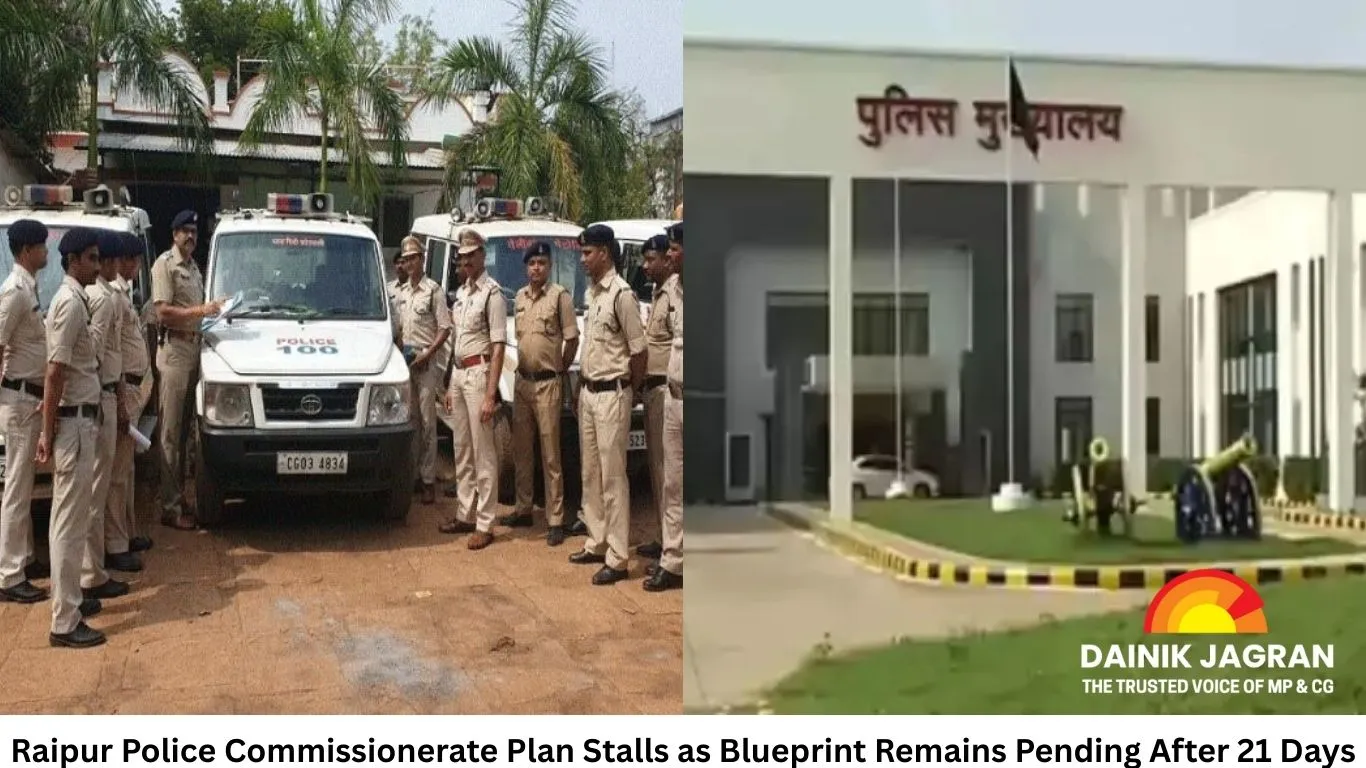
Raipur Police Commissionerate Plan Stalls as Blueprint Remains Pending After 21 Days
Digital Desk
The police commissionerate system, approved on December 31, is proposed to be implemented not only within the Raipur Municipal Corporation limits but potentially across the entire district. Areas such as Naya Raipur Atal Nagar, Mana and adjoining police station jurisdictions are likely to be brought under its ambit. However, despite the deadline nearing, no formal framework has been finalised.
After the recent cabinet meeting, Home Minister Vijay Sharma said the decision to implement the commissionerate system district-wide had been discussed earlier in a meeting chaired by Chief Minister Vishnu Deo Sai. “The proposal is under consideration from a district perspective. The Chief Minister will take a final decision soon,” Sharma said, adding that he has already written to the ADG-level committee recommending full administrative powers for the proposed police commissioner.
The delay is reportedly linked to differences within the administrative machinery. Sources indicate that some senior IAS officers have raised objections to extending the commissionerate system across the entire district, arguing that policing should continue under the traditional district administration framework. These objections, officials say, have slowed the drafting of the blueprint.
Security experts and former senior police officials, however, have strongly backed a comprehensive commissionerate model. Former Director General of Police Anvesh Mangalam said a strong law-and-order framework directly influences investment and employment opportunities. “States with effective policing systems inspire public confidence. The example of Uttar Pradesh shows how firm law enforcement can reshape governance outcomes,” he said.
Retired DGP Rajiv Mathur emphasised that Raipur’s rapid urban expansion necessitates a robust policing structure. He argued that Naya Raipur and surrounding strategic zones should be included, with administrative boundaries revised accordingly. Former Special DGP R.K. Vij echoed similar views, stressing that industrial areas, the airport, the secretariat and major administrative hubs must fall within the commissionerate’s jurisdiction, with policing powers granted without dilution.
The government is also weighing the financial implications of running two parallel policing systems. Officials estimate that maintaining a separate rural police setup outside municipal limits could cost over ₹50 crore, covering new offices, police lines, control rooms, wireless infrastructure and vehicles. Additionally, splitting police station jurisdictions could inconvenience residents, forcing them to travel longer distances to file complaints.
A recent public survey indicated that nearly 90 per cent of respondents favoured implementing the commissionerate system across the entire Raipur district, warning that a dual policing model could weaken law enforcement.
With the rollout date approaching, the state government faces mounting pressure to finalise the framework and clarify whether Raipur will adopt a limited urban commissionerate or a district-wide policing overhaul.
.jpg)




