
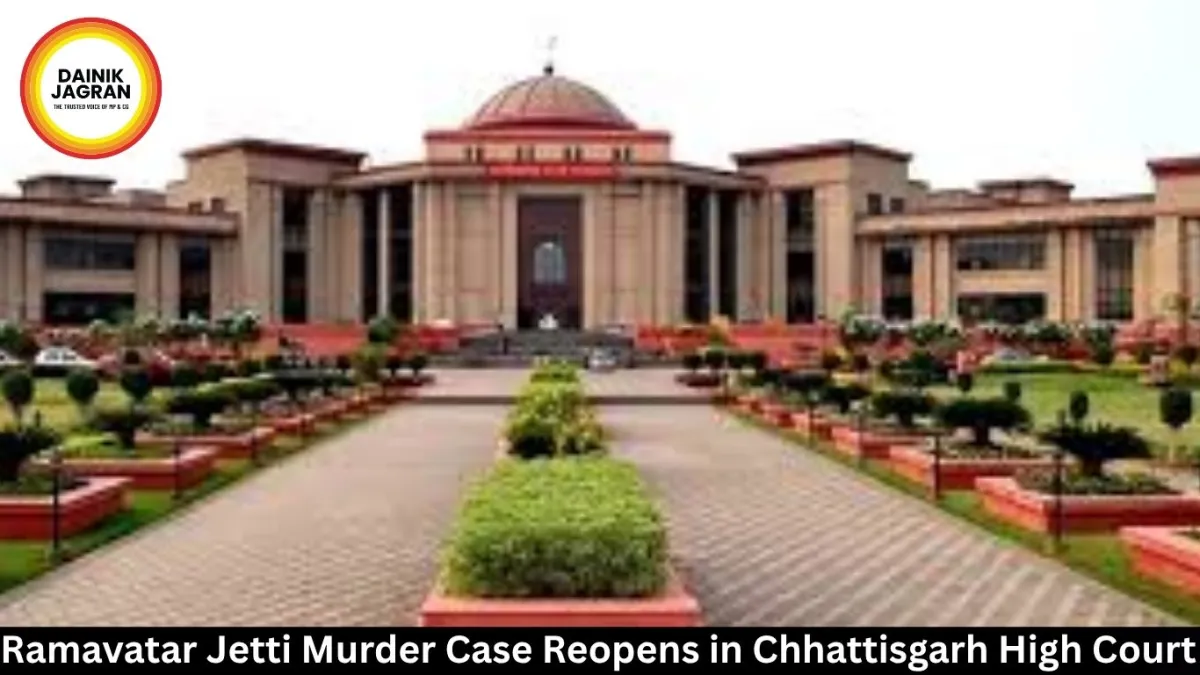

Ramavatar Jetti Murder Case Reopens in Chhattisgarh High Court
Digital Desk
Chhattisgarh High Court reopens Ramavatar Jetti murder case after Supreme Court order; final hearing set for April 2 in this high‑profile 2003 killing linked to Amit Jogi and state politics.
Ramavatar Jetti Murder Case Reopens in Chhattisgarh High Court
Chhattisgarh High Court reopens high‑profile Ramavatar Jetti murder case after Supreme Court order; final hearing scheduled for April 2 as Amit Jogi’s counsel seeks 24‑hour window to file reply.
Final hearing set for April 2
The Chhattisgarh High Court has recalled the final hearing in the 2003 Ramavatar Jetti murder case to Thursday, April 2, after the Supreme Court directed the matter be reconsidered on merit. A special division bench comprising Chief Justice Ramesh Sinha and Justice Arvind Verma today told Amit Jogi’s lawyer to file a written response within 24 hours, directing the CBI to immediately hand over the case file so the reply can be prepared.
Sources at the High Court said the bench stressed that the matter will then be heard on its “merits”, with no further adjournments expected in what has remained one of the most politically sensitive criminal cases in the state since its commission.
Court refuses additional time
At today’s hearing, the division bench saw presence from Satish Jetti, counsel for the slain leader’s family, the CBI, the Chhattisgarh government and Amit Jogi’s defence team. When Amit Jogi’s lawyer requested extra time to examine the file before filing his response, the court refused to grant an extended window, instead ordering the agency to make the file immediately available and setting a strict 24‑hour deadline for the rejoinder.
Judicial sources indicated that the bench wants to conclude the case quickly, given the long‑drawn history of appeals, political overtones and multiple court interventions over the past two decades.
Background: from shooting to CBI probe
The case dates back to June 4, 2003, when NCP leader Ramavatar Jetti was shot dead in a contract‑style killing in the former Madhya Pradesh‑era Raipur district, just months after the state of Chhattisgarh came into being. A total of 31 accused were arraigned, including shooters, local politicians and police officials, with Chiman Singh, Yahya Debbar, Abhay Goyal, Feroz Siddiqui and several others eventually convicted and sentenced to life imprisonment.
Initially investigated by state police, the probe drew allegations of political bias and evidence tampering, prompting the state government to hand over the file to the CBI. The central agency’s charge‑sheet later included Amit Jogi, then the son of the state’s first chief minister Ajit Jogi, but a Raipur special court acquitted him on June 31, 2007, citing lack of evidence.
Political and legal afterlife
Ramavatar Jetti’s son Satish Jetti challenged Amit Jogi’s acquittal in the Supreme Court, which initially stayed parts of the lower court order and later remanded the case back to the Chhattisgarh High Court for a fresh review. Over the years, the son’s legal team has argued that the killing was part of a conspiracy sponsored by the then‑state government, claiming that pressure and influence caused critical evidence to be diluted during the CBI probe.
Legal analysts in Raipur note that the reopening of the case, especially after the Supreme Court’s intervention, means Amit Jogi may no longer be able to rely on a clean acquittal and could now be forced to seek anticipatory bail or regular bail if the court reads the available material as pointing to a viable case against him.
Convictions that stood
While Amit Jogi walked free in 2007, the trial court and later the High Court upheld the life sentences of several other accused, including shooters, local political figures and even serving police officers. Two then‑serving CSP officers and a police station in‑charge were among those sent to jail for life, alongside gangsters and political aides, underscoring the case’s mix of organised crime and state‑linked complicity.
The list of convicted persons includes Abhay Goyal, Yahya Debbar, V K Pandey, Firoz Siddiqui, Rakesh Chandra Trivedi, Avinash Singh Lallan, Suryakant Tiwari, Amreek Singh Gill, Chiman Singh, Sunil Gupta, Raju Bhaduriya, Anil Pachauri, Ravindra Singh, Ravi Singh, Lalla Bhaduriya, Dharmendra, Sateyendranath Singh, Shivendra Singh Parihar, Vinod Singh Rathore, Sanjay Singh Kushwaha, Rakesh Kumar Sharma, Vikram Sharma (since deceased), Jabwanta, and Vishwanath Rajbhar.
What happens next
The April 2 hearing is now expected to be the last substantive round, with the High Court likely to either uphold the original acquittal of Amit Jogi, modify it, or order a fresh trial on the reopened record. Lawyers tracking the docket say that whichever way the court rules, the outcome will have implications for how politically sensitive murder cases are handled in the state, especially when central agencies and state power are involved.
As the case nears its judicial culmination after more than two decades, victims’ rights activists and political observers in Chhattisgarh are watching closely, describing the coming verdict as a test of the judiciary’s ability to override long‑standing allegations of political interference in serious criminal matters.
--------
🚨 Beat the News Rush – Join Now!
Get breaking alerts, hot exclusives, and game-changing stories instantly on your phone. No delays, no fluff – just the edge you need. ⚡
Tap to join:
🟢 WhatsApp Channel: Dainik Jagran MP CG
Crave more?
🅕 Facebook: Dainik Jagran MP CG English
🅧 Twitter (X): Dainik Jagran MP CG
🅘 Instagram: Dainik Jagran MP CG
Share the fire – keep your crew ahead! 🗞️🔥
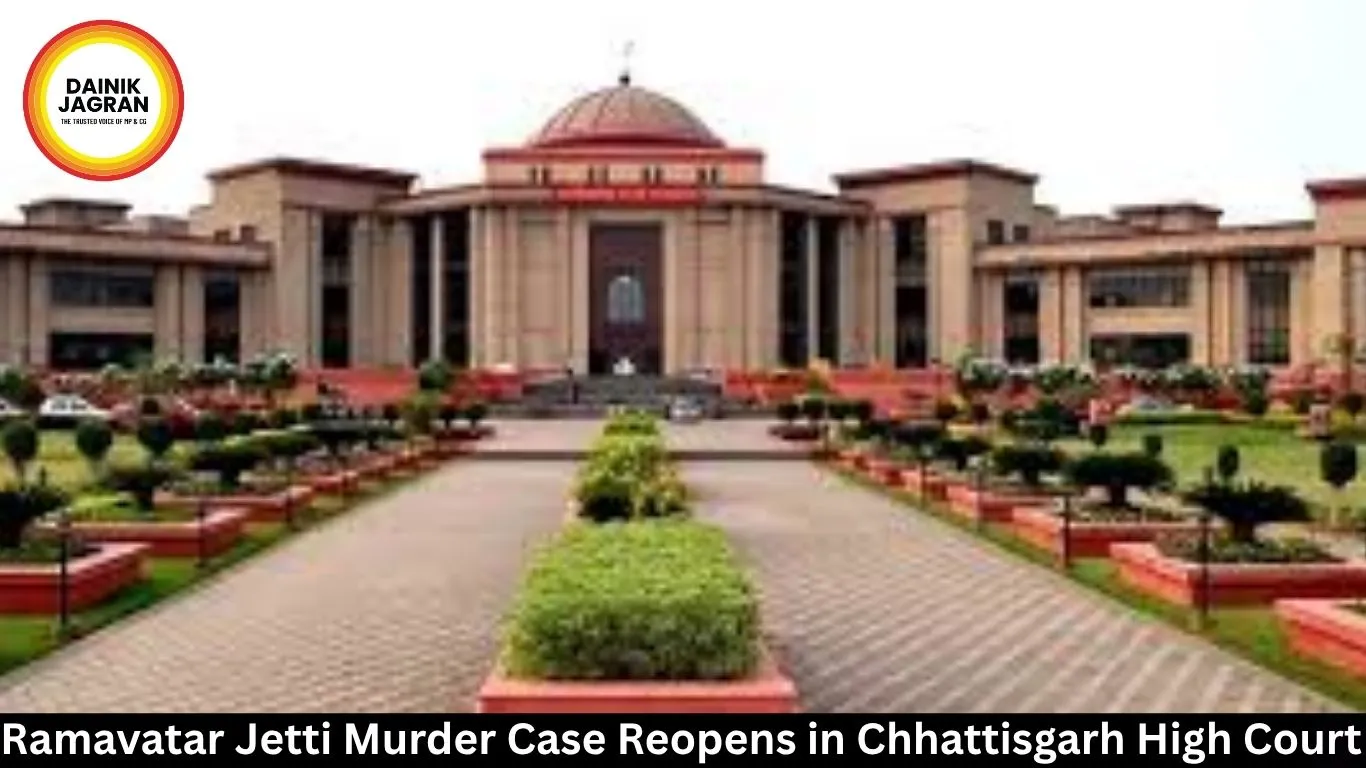
Ramavatar Jetti Murder Case Reopens in Chhattisgarh High Court
Digital Desk
Ramavatar Jetti Murder Case Reopens in Chhattisgarh High Court
Chhattisgarh High Court reopens high‑profile Ramavatar Jetti murder case after Supreme Court order; final hearing scheduled for April 2 as Amit Jogi’s counsel seeks 24‑hour window to file reply.
Final hearing set for April 2
The Chhattisgarh High Court has recalled the final hearing in the 2003 Ramavatar Jetti murder case to Thursday, April 2, after the Supreme Court directed the matter be reconsidered on merit. A special division bench comprising Chief Justice Ramesh Sinha and Justice Arvind Verma today told Amit Jogi’s lawyer to file a written response within 24 hours, directing the CBI to immediately hand over the case file so the reply can be prepared.
Sources at the High Court said the bench stressed that the matter will then be heard on its “merits”, with no further adjournments expected in what has remained one of the most politically sensitive criminal cases in the state since its commission.
Court refuses additional time
At today’s hearing, the division bench saw presence from Satish Jetti, counsel for the slain leader’s family, the CBI, the Chhattisgarh government and Amit Jogi’s defence team. When Amit Jogi’s lawyer requested extra time to examine the file before filing his response, the court refused to grant an extended window, instead ordering the agency to make the file immediately available and setting a strict 24‑hour deadline for the rejoinder.
Judicial sources indicated that the bench wants to conclude the case quickly, given the long‑drawn history of appeals, political overtones and multiple court interventions over the past two decades.
Background: from shooting to CBI probe
The case dates back to June 4, 2003, when NCP leader Ramavatar Jetti was shot dead in a contract‑style killing in the former Madhya Pradesh‑era Raipur district, just months after the state of Chhattisgarh came into being. A total of 31 accused were arraigned, including shooters, local politicians and police officials, with Chiman Singh, Yahya Debbar, Abhay Goyal, Feroz Siddiqui and several others eventually convicted and sentenced to life imprisonment.
Initially investigated by state police, the probe drew allegations of political bias and evidence tampering, prompting the state government to hand over the file to the CBI. The central agency’s charge‑sheet later included Amit Jogi, then the son of the state’s first chief minister Ajit Jogi, but a Raipur special court acquitted him on June 31, 2007, citing lack of evidence.
Political and legal afterlife
Ramavatar Jetti’s son Satish Jetti challenged Amit Jogi’s acquittal in the Supreme Court, which initially stayed parts of the lower court order and later remanded the case back to the Chhattisgarh High Court for a fresh review. Over the years, the son’s legal team has argued that the killing was part of a conspiracy sponsored by the then‑state government, claiming that pressure and influence caused critical evidence to be diluted during the CBI probe.
Legal analysts in Raipur note that the reopening of the case, especially after the Supreme Court’s intervention, means Amit Jogi may no longer be able to rely on a clean acquittal and could now be forced to seek anticipatory bail or regular bail if the court reads the available material as pointing to a viable case against him.
Convictions that stood
While Amit Jogi walked free in 2007, the trial court and later the High Court upheld the life sentences of several other accused, including shooters, local political figures and even serving police officers. Two then‑serving CSP officers and a police station in‑charge were among those sent to jail for life, alongside gangsters and political aides, underscoring the case’s mix of organised crime and state‑linked complicity.
The list of convicted persons includes Abhay Goyal, Yahya Debbar, V K Pandey, Firoz Siddiqui, Rakesh Chandra Trivedi, Avinash Singh Lallan, Suryakant Tiwari, Amreek Singh Gill, Chiman Singh, Sunil Gupta, Raju Bhaduriya, Anil Pachauri, Ravindra Singh, Ravi Singh, Lalla Bhaduriya, Dharmendra, Sateyendranath Singh, Shivendra Singh Parihar, Vinod Singh Rathore, Sanjay Singh Kushwaha, Rakesh Kumar Sharma, Vikram Sharma (since deceased), Jabwanta, and Vishwanath Rajbhar.
What happens next
The April 2 hearing is now expected to be the last substantive round, with the High Court likely to either uphold the original acquittal of Amit Jogi, modify it, or order a fresh trial on the reopened record. Lawyers tracking the docket say that whichever way the court rules, the outcome will have implications for how politically sensitive murder cases are handled in the state, especially when central agencies and state power are involved.
As the case nears its judicial culmination after more than two decades, victims’ rights activists and political observers in Chhattisgarh are watching closely, describing the coming verdict as a test of the judiciary’s ability to override long‑standing allegations of political interference in serious criminal matters.


