


Madhya Pradesh High Court Acquits Mother in Abhyuday Jain Case: Justice Prevails in Guna Murder Probe
Digital Desk
In a landmark ruling that underscores the importance of evidence-based justice, the Madhya Pradesh High Court has acquitted Alka Jain in the high-profile Abhyuday Jain case. The Gwalior Bench quashed all charges against the mother accused of murdering her 14-year-old son in Guna, stating that prolonging trials without solid proof violates fundamental rights. This decision, delivered just hours ago on February 25, 2026, brings closure to a case that gripped Madhya Pradesh since February 2025.
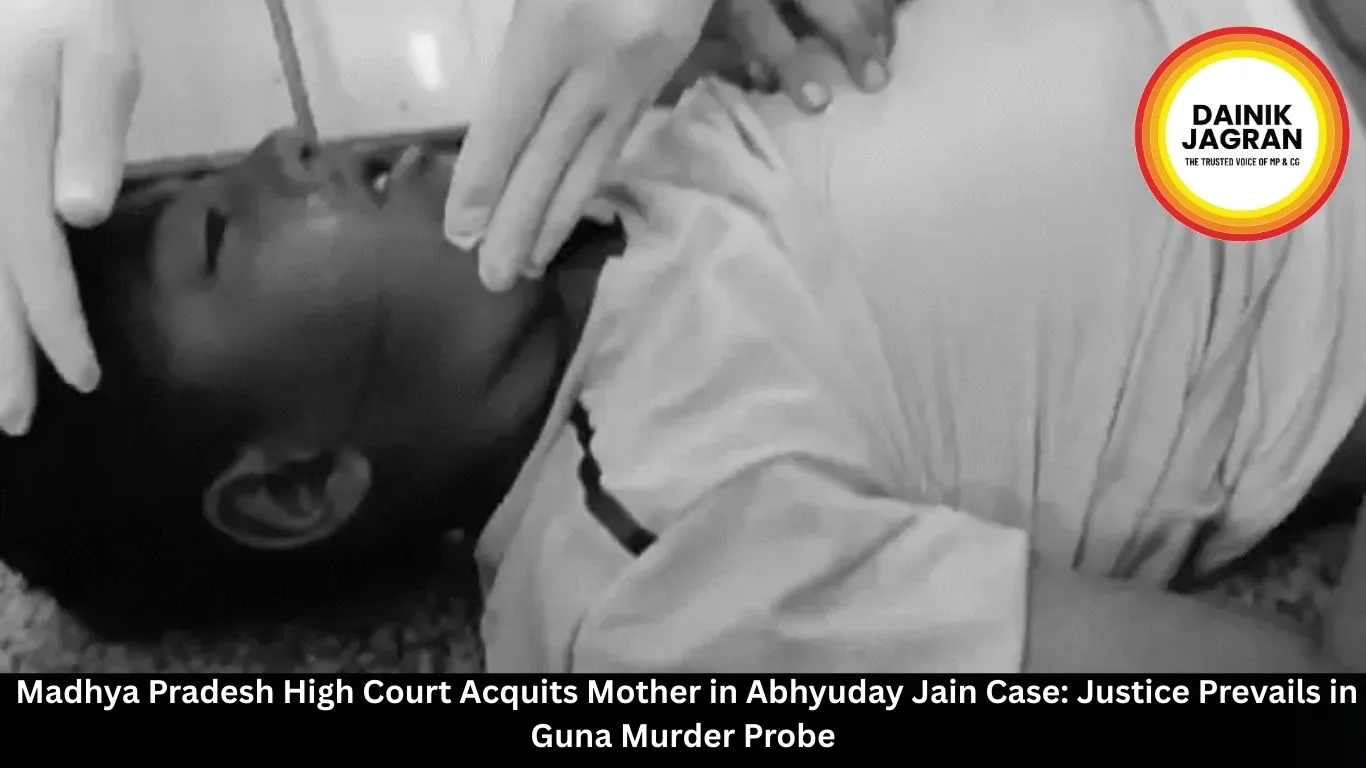
The Abhyuday Jain case began when the teenager's body was discovered in his home bathroom on February 14, 2025. Initial police investigations, relying on a post-mortem report and circumstantial evidence, pointed to Alka Jain as the prime suspect. An FIR was filed at Kotwali police station on February 22, leading to her arrest on March 8. She was later granted bail on June 17 amid growing doubts about the probe.
Timeline of the Investigation
The case evolved through several twists:
- Initial Probe and SIT Formation: Abhyuday's father, Anupam Jain, dissatisfied with the police's handling, prompted the formation of a Special Investigation Team (SIT) led by Shivpuri DSP Avneet Sharma. The SIT consulted experts at Gandhi Medical College, Bhopal, concluding the death resulted from hanging, not murder.
- Closure Report Rejected: On May 5, 2025, the SIT submitted a closure report exonerating Alka Jain. However, Guna's Chief Judicial Magistrate (CJM) Madhulika Mule rejected it on May 9, taking cognizance under sections for murder and evidence concealment in the Bharatiya Nyaya Sanhita 2023.
- High Court Intervention: Alka Jain challenged the CJM's order in the High Court. After hearings, the bench reserved judgment on February 9, 2026, and ruled today that the lower court's decision was based on "assumptions and conjectures," lacking "legally valid and conclusive evidence."
This verdict in the Abhyuday Jain case highlights ongoing concerns in India's judicial system, where hasty accusations can lead to prolonged suffering. Legal experts, like simulated commentary from advocate Rajesh Sharma, note: "This ruling reinforces that justice must be rooted in facts, not speculation. It sets a precedent for protecting innocents from baseless trials."
Why This Matters Now
In today's climate of rising scrutiny on police investigations—amid national debates on criminal justice reforms—the Abhyuday Jain case resonates deeply in Madhya Pradesh. It aligns with trends in local culture emphasizing family bonds and fair trials, especially in smaller towns like Guna. As MP grapples with similar high-profile cases, this outcome urges better training for investigators to avoid miscarriages of justice.
For families facing similar ordeals, practical takeaways include:
- Seek expert medico-legal opinions early.
- Challenge weak evidence through higher courts promptly.
- Document all proceedings to build a strong defense.
The High Court's order cancels the FIR (crime number 115/2025) and all related proceedings, fully acquitting Alka Jain. This resolution not only restores her freedom but also calls for accountability in law enforcement. As Madhya Pradesh High Court continues to address such issues, the Abhyuday Jain case serves as a reminder: True justice demands evidence over emotion.




.jpg)




