

101 Police Officers Honoured with K.F. Rustamjee Awards in Bhopal

Digital Desk

101 Police Officers Honoured with K.F. Rustamjee Awards in Bhopal

Chief Minister Mohan Yadav presents K.F. Rustamjee Awards to 101 Madhya Pradesh police officers. DGP recounts legacy of service, naxal-free status, and security challenges ahead.

101 Police Officers Honoured with Rustamjee Awards in Bhopal Ceremony

Chief Minister Mohan Yadav Presents Revolvers, DGP Recounts Legacy of Sacrifice in Service

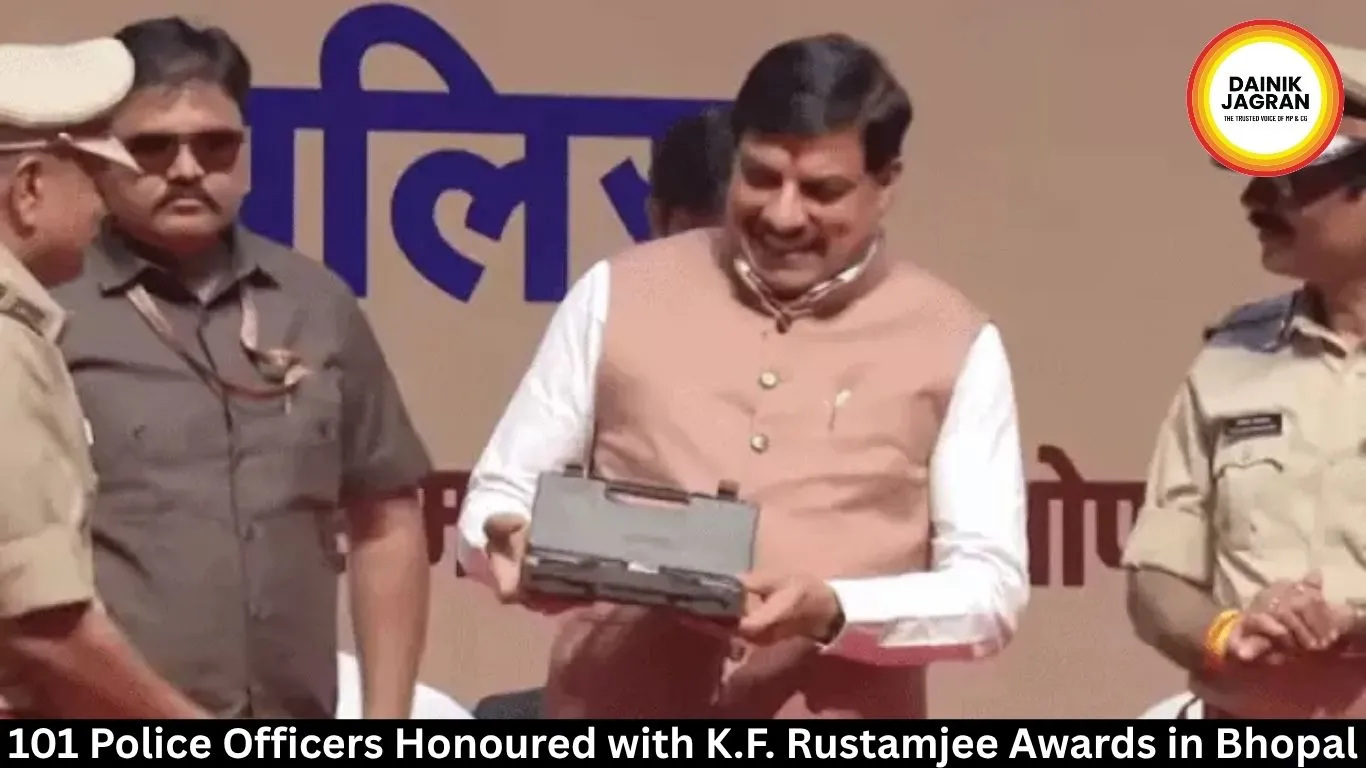
In a solemn ceremony held Monday at Ravindra Bhawan, Chief Minister Mohan Yadav and Police Commissioner Kailash Makwana honoured 101 police officers and constables with the K.F. Rustamjee Awards, recognising exceptional service rendered during 2019-20 and 2021-22.

The Rustamjee Awards, established in 2013, represent one of Madhya Pradesh's highest police honours. To date, 418 officers have received the distinction across nine years. Monday's ceremony saw seven recipients from the highest tier receive revolvers directly from the Chief Minister—a ceremonial gesture uncommon outside state decorations.

The Man Behind the Award

DGP Makwana opened the ceremony by tracing the origins of the award to Khurshed Framroze Rustamjee, who led Madhya Pradesh police from 1958 to 1965. His tenure witnessed landmark operations against dacoits and shaped institutional practices still followed today. When Rustamjee left the state in 1965, national leadership entrusted him with founding the Border Security Force—a responsibility that cemented his legacy as an architect of India's internal security apparatus.

"The elite force he shaped continues to play a critical role in safeguarding our nation," Makwana said, addressing the assembled officers.

A Personal Story of Duty

What distinguished Monday's address was Makwana's personal recollection. His father, selected as a Deputy Superintendent of Police in the 1968 batch, was among four officers chosen alongside figures who would later rise to ADG rank—Raghuwanshi and R.K. Tripathi among them.

During training, tragedy struck. A bus carrying the newly selected officers from Ratlam lost control in the Bazna ghat after the driver, intoxicated, lost command. The crash killed several and left others injured, including Makwana's father. Bleeding from a shattered windscreen, the young officer was hospitalised with spinal injuries.

Doctors warned him plainly: continue police service and paralysis would follow. The choice was between ambition and survival.

"My father chose differently," the DGP said. "He stepped away from the khaki he had dreamed of serving and returned to his previous posting as a Naib Tahsildar. He rose to Deputy Collector and retired with honour."

Twenty years later, in 1988, when Makwana himself was selected for the police force, his father's eyes welled. The khaki his father could not serve, the son would carry forward.

Three Tiers of Recognition

The awards spanned three categories. The highest tier—seven officers—received revolvers or firearms valued at five lakhs each for extraordinary bravery and professional excellence. These included Rajesh Sahay, Zonal Police Superintendent who now leads the Lokayukta, Indore.

Eight officers in the second category received firearms valued at two lakhs or cash equivalents for distinguished service in anti-terrorism and cybercrime operations. The remaining 86 recipients, spanning constables to sub-inspectors, received cash recognition of fifty thousand rupees.

Collectively, their citations reflected service in dacoity elimination, counter-naxal campaigns, communal harmony protection, and cyber fraud investigation—domains where police work often occurs invisible to public view.

State's Broader Security Push

The DGP used the platform to outline Madhya Pradesh's evolving security landscape. Last December, the state was formally declared naxal-free after sustained anti-insurgency operations. The police force, however, faces mounting pressure from cyber crime and narcotics trafficking.

"We process cyber fraud complaints exceeding one lakh rupees nearly daily," Makwana noted. An e-FIR system launched in December aims to streamline victim reporting. The state also partnered with the Heartfulness Institute to provide stress management training for station staff—an initiative signalling acknowledgment of mental health challenges in frontline policing.

Last year, police ranks swelled by 8,500 constables, addressing long-standing vacancies. Additional recruitment of 10,000 positions is expected to receive approval soon, partly driven by preparations for the Simhastha religious congregation in 2028—an event requiring enhanced deployment.

Drug-Free State as Target

The DGP outlined an ambitious three-year target: render Madhya Pradesh narcotics-free. Millions of students participated in community policing initiatives against substance abuse last year. The push reflects ground-level reality—drug trafficking has emerged as a critical challenge in smaller towns across central India.

Several proposals remain pending at government level for officer welfare, Makwana indicated. These include establishment of a police recruitment board and investigation allowances for officers conducting major inquiries—measures the Chief Minister has signalled support for in principle.

Recognition Across the Force

Officers honoured spanned senior ranks to constables. Notable among the top-tier awardees was Rajesh Tiwari, former Additional Police Superintendent in Narsinghpur, now retired. Multiple officers from anti-terrorism squads and cybercrime cells featured across categories, reflecting the state's focus on emerging threats.

Women officers received recognition as well, including Jyoti Tiwari, a former women constable from Sagar, and Shalini Dixit, who led the women's crime branch at state headquarters.

The ceremony concluded as late afternoon light filtered through Ravindra Bhawan's high windows—a moment when institutional memory, personal sacrifice, and contemporary duty intersected briefly in public acknowledgment.


--------

🚨 Beat the News Rush – Join Now!

Get breaking alerts, hot exclusives, and game-changing stories instantly on your phone. No delays, no fluff – just the edge you need. ⚔

Tap to join:Ā 

🟢 WhatsApp Channel: Dainik Jagran MP CG

Crave more?

šŸ…• Facebook: Dainik Jagran MP CG English

šŸ…§ Twitter (X): Dainik Jagran MP CG

šŸ…˜ Instagram: Dainik Jagran MP CG

Share the fire – keep your crew ahead! šŸ—žļøšŸ”„

english.dainikjagranmpcg.com
11 May 2026 By Abhishek Joshi

101 Police Officers Honoured with K.F. Rustamjee Awards in Bhopal

Digital Desk

101 Police Officers Honoured with Rustamjee Awards in Bhopal Ceremony

Chief Minister Mohan Yadav Presents Revolvers, DGP Recounts Legacy of Sacrifice in Service

In a solemn ceremony held Monday at Ravindra Bhawan, Chief Minister Mohan Yadav and Police Commissioner Kailash Makwana honoured 101 police officers and constables with the K.F. Rustamjee Awards, recognising exceptional service rendered during 2019-20 and 2021-22.

The Rustamjee Awards, established in 2013, represent one of Madhya Pradesh's highest police honours. To date, 418 officers have received the distinction across nine years. Monday's ceremony saw seven recipients from the highest tier receive revolvers directly from the Chief Minister—a ceremonial gesture uncommon outside state decorations.

The Man Behind the Award

DGP Makwana opened the ceremony by tracing the origins of the award to Khurshed Framroze Rustamjee, who led Madhya Pradesh police from 1958 to 1965. His tenure witnessed landmark operations against dacoits and shaped institutional practices still followed today. When Rustamjee left the state in 1965, national leadership entrusted him with founding the Border Security Force—a responsibility that cemented his legacy as an architect of India's internal security apparatus.

"The elite force he shaped continues to play a critical role in safeguarding our nation," Makwana said, addressing the assembled officers.

A Personal Story of Duty

What distinguished Monday's address was Makwana's personal recollection. His father, selected as a Deputy Superintendent of Police in the 1968 batch, was among four officers chosen alongside figures who would later rise to ADG rank—Raghuwanshi and R.K. Tripathi among them.

During training, tragedy struck. A bus carrying the newly selected officers from Ratlam lost control in the Bazna ghat after the driver, intoxicated, lost command. The crash killed several and left others injured, including Makwana's father. Bleeding from a shattered windscreen, the young officer was hospitalised with spinal injuries.

Doctors warned him plainly: continue police service and paralysis would follow. The choice was between ambition and survival.

"My father chose differently," the DGP said. "He stepped away from the khaki he had dreamed of serving and returned to his previous posting as a Naib Tahsildar. He rose to Deputy Collector and retired with honour."

Twenty years later, in 1988, when Makwana himself was selected for the police force, his father's eyes welled. The khaki his father could not serve, the son would carry forward.

Three Tiers of Recognition

The awards spanned three categories. The highest tier—seven officers—received revolvers or firearms valued at five lakhs each for extraordinary bravery and professional excellence. These included Rajesh Sahay, Zonal Police Superintendent who now leads the Lokayukta, Indore.

Eight officers in the second category received firearms valued at two lakhs or cash equivalents for distinguished service in anti-terrorism and cybercrime operations. The remaining 86 recipients, spanning constables to sub-inspectors, received cash recognition of fifty thousand rupees.

Collectively, their citations reflected service in dacoity elimination, counter-naxal campaigns, communal harmony protection, and cyber fraud investigation—domains where police work often occurs invisible to public view.

State's Broader Security Push

The DGP used the platform to outline Madhya Pradesh's evolving security landscape. Last December, the state was formally declared naxal-free after sustained anti-insurgency operations. The police force, however, faces mounting pressure from cyber crime and narcotics trafficking.

"We process cyber fraud complaints exceeding one lakh rupees nearly daily," Makwana noted. An e-FIR system launched in December aims to streamline victim reporting. The state also partnered with the Heartfulness Institute to provide stress management training for station staff—an initiative signalling acknowledgment of mental health challenges in frontline policing.

Last year, police ranks swelled by 8,500 constables, addressing long-standing vacancies. Additional recruitment of 10,000 positions is expected to receive approval soon, partly driven by preparations for the Simhastha religious congregation in 2028—an event requiring enhanced deployment.

Drug-Free State as Target

The DGP outlined an ambitious three-year target: render Madhya Pradesh narcotics-free. Millions of students participated in community policing initiatives against substance abuse last year. The push reflects ground-level reality—drug trafficking has emerged as a critical challenge in smaller towns across central India.

Several proposals remain pending at government level for officer welfare, Makwana indicated. These include establishment of a police recruitment board and investigation allowances for officers conducting major inquiries—measures the Chief Minister has signalled support for in principle.

Recognition Across the Force

Officers honoured spanned senior ranks to constables. Notable among the top-tier awardees was Rajesh Tiwari, former Additional Police Superintendent in Narsinghpur, now retired. Multiple officers from anti-terrorism squads and cybercrime cells featured across categories, reflecting the state's focus on emerging threats.

Women officers received recognition as well, including Jyoti Tiwari, a former women constable from Sagar, and Shalini Dixit, who led the women's crime branch at state headquarters.

The ceremony concluded as late afternoon light filtered through Ravindra Bhawan's high windows—a moment when institutional memory, personal sacrifice, and contemporary duty intersected briefly in public acknowledgment.


https://english.dainikjagranmpcg.com/states/madhya-pradesh/101-police-officers-honoured-with-kf-rustamjee-awards-in-bhopal/article-18047

Related Posts

Latest News


