


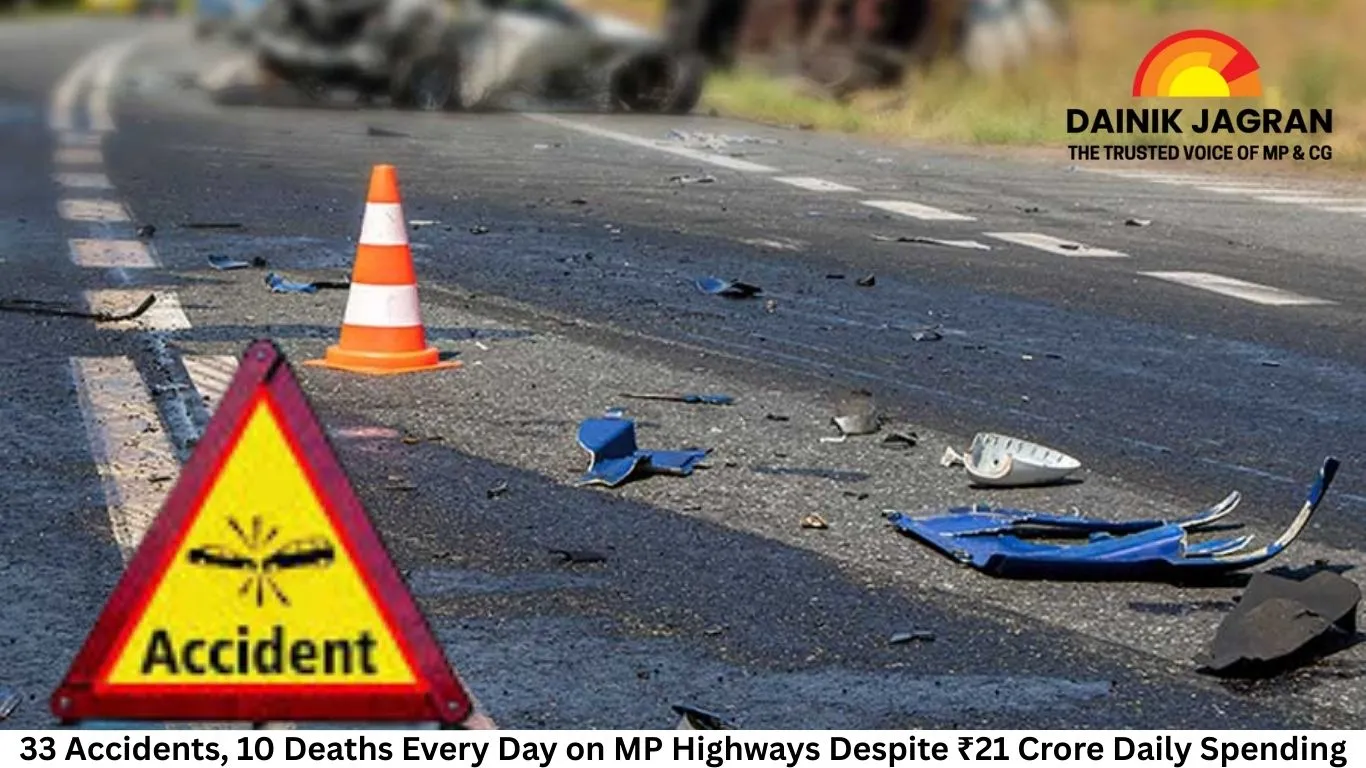
33 Accidents, 10 Deaths Every Day on MP Highways Despite ₹21 Crore Daily Spending
Digital Desk
The figures were revealed in a written reply by the Ministry of Road Transport and Highways (MoRTH) in the Lok Sabha. According to the data, Madhya Pradesh remains among the most accident-prone states in the country, even as the Centre spends nearly ₹21 crore every day on highway maintenance and development in the state.
Between 2020–21 and 2024–25, Madhya Pradesh received ₹38,700 crore for national highway projects, averaging ₹7,740 crore annually. The ministry stated that the funds were allocated for road maintenance, widening of highways, safety-related works and construction of new national highway stretches.
However, accident statistics suggest that the heavy expenditure has not translated into safer roads. Parliamentary records show that between 2021 and 2025, the state reported 61,176 road accidents and 19,416 fatalities on national highways. This amounts to an annual average of more than 12,200 accidents and nearly 3,900 deaths.
During the same period, over 4,000 kilometres of national highway projects were awarded in Madhya Pradesh, indicating rapid expansion of road infrastructure. Yet, experts point out that infrastructure growth alone cannot reduce fatalities without consistent focus on safety design, quality maintenance and strict enforcement.
In its response to Parliament, the ministry attributed most accidents to overspeeding, driver negligence, overloading, and poor road or vehicle conditions. Road safety experts, however, argue that these reasons overlook systemic gaps such as poorly identified accident-prone black spots, inadequate signage, insufficient lighting, unsafe median openings and lack of service roads in high-traffic zones.
They also stress the need for regular safety audits and real-time monitoring to ensure that funds earmarked for safety are effectively used on the ground.
The continuing loss of lives has triggered a larger question among policymakers and citizens alike: how effective is the current spending model if accident and fatality rates remain unchanged? Experts have called for outcome-based monitoring, transparent audits and stronger coordination between central agencies, state authorities and local enforcement bodies.
With thousands of crores invested and lives still being lost daily, the data underscores the urgent need to bridge the gap between expenditure and road safety outcomes on Madhya Pradesh’s highways.
.jpg)




