

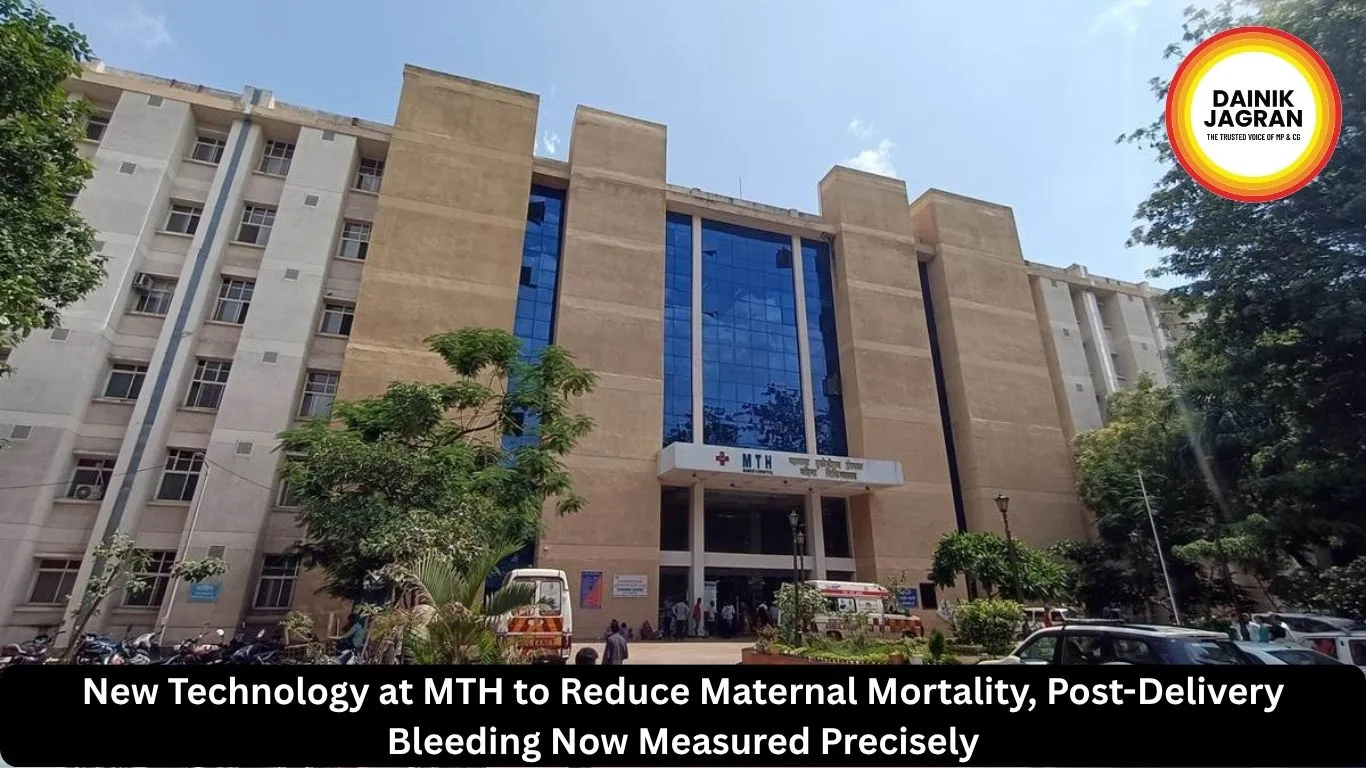
New Technology at MTH to Reduce Maternal Mortality, Post-Delivery Bleeding Now Measured Precisely
Indore (MP)
MTH Indore introduces blood collection drape to reduce maternal mortality by accurately measuring postpartum bleeding and improving patient safety.
A significant step has been taken in Madhya Pradesh to tackle the persistent issue of maternal mortality. A government-run maternity hospital in Indore has introduced a new medical technique aimed at improving the safety of women during and after childbirth. This initiative focuses on accurately measuring blood loss after delivery, which is one of the leading causes of maternal deaths.
Introduction of a new medical innovation
The MTH hospital, affiliated with MGM Medical College in Indore, has begun using a calibrated blood collection drape. This device allows healthcare professionals to measure postpartum bleeding in precise milliliters rather than relying on visual estimation. Earlier, doctors depended largely on their experience to judge the amount of blood loss, which could sometimes lead to delayed intervention.
How the technology improves patient safety
With the help of this new tool, medical staff can now assess the severity of postpartum hemorrhage with greater accuracy. This ensures that timely and appropriate treatment decisions are made. Experts believe that such precision will significantly reduce complications and improve survival rates among new mothers.
Support and implementation
The initiative has been made possible through the support of a social organization and the efforts of Dr. Sumitra Yadav. The blood collection drapes have been provided to the hospital to enhance maternal care. Additionally, a recent gynecology conference held in Indore included specialized training sessions for doctors and nursing staff. Medical professionals from across the division participated to learn the proper use of this technique.
Proven success in other states
States like Andhra Pradesh and Tamil Nadu have already implemented this technology and reported positive outcomes. Inspired by these results, the Indore healthcare system has adopted the same approach, marking the first such implementation in government hospitals in the region.
MTH as a major maternal care center
MTH hospital is one of the leading maternity centers in the state, receiving patients from several remote districts. The hospital administration believes that this initiative will benefit thousands of pregnant women and may eventually be expanded to other government healthcare facilities across Madhya Pradesh.
Concerns over maternal mortality in Madhya Pradesh
Despite various efforts, maternal mortality in the state remains higher than the national average. Reports indicate that approximately 173 maternal deaths occur per 100,000 live births. The situation is more severe in rural areas, where access to timely healthcare is limited.
Key causes behind maternal deaths
The primary factors contributing to maternal mortality include delayed medical intervention, poor nutrition, and widespread anemia among pregnant women. Among these, excessive bleeding after childbirth remains one of the most critical and preventable causes.
--------
๐จ Beat the News Rush โ Join Now!
Get breaking alerts, hot exclusives, and game-changing stories instantly on your phone. No delays, no fluff โ just the edge you need. โก
Tap to join:ย
๐ข WhatsApp Channel: Dainik Jagran MP CG
Crave more?
๐ Facebook: Dainik Jagran MP CG English
๐ ง Twitter (X): Dainik Jagran MP CG
๐ Instagram: Dainik Jagran MP CG
Share the fire โ keep your crew ahead! ๐๏ธ๐ฅ
New Technology at MTH to Reduce Maternal Mortality, Post-Delivery Bleeding Now Measured Precisely
Indore (MP)
A significant step has been taken in Madhya Pradesh to tackle the persistent issue of maternal mortality. A government-run maternity hospital in Indore has introduced a new medical technique aimed at improving the safety of women during and after childbirth. This initiative focuses on accurately measuring blood loss after delivery, which is one of the leading causes of maternal deaths.
Introduction of a new medical innovation
The MTH hospital, affiliated with MGM Medical College in Indore, has begun using a calibrated blood collection drape. This device allows healthcare professionals to measure postpartum bleeding in precise milliliters rather than relying on visual estimation. Earlier, doctors depended largely on their experience to judge the amount of blood loss, which could sometimes lead to delayed intervention.
How the technology improves patient safety
With the help of this new tool, medical staff can now assess the severity of postpartum hemorrhage with greater accuracy. This ensures that timely and appropriate treatment decisions are made. Experts believe that such precision will significantly reduce complications and improve survival rates among new mothers.
Support and implementation
The initiative has been made possible through the support of a social organization and the efforts of Dr. Sumitra Yadav. The blood collection drapes have been provided to the hospital to enhance maternal care. Additionally, a recent gynecology conference held in Indore included specialized training sessions for doctors and nursing staff. Medical professionals from across the division participated to learn the proper use of this technique.
Proven success in other states
States like Andhra Pradesh and Tamil Nadu have already implemented this technology and reported positive outcomes. Inspired by these results, the Indore healthcare system has adopted the same approach, marking the first such implementation in government hospitals in the region.
MTH as a major maternal care center
MTH hospital is one of the leading maternity centers in the state, receiving patients from several remote districts. The hospital administration believes that this initiative will benefit thousands of pregnant women and may eventually be expanded to other government healthcare facilities across Madhya Pradesh.
Concerns over maternal mortality in Madhya Pradesh
Despite various efforts, maternal mortality in the state remains higher than the national average. Reports indicate that approximately 173 maternal deaths occur per 100,000 live births. The situation is more severe in rural areas, where access to timely healthcare is limited.
Key causes behind maternal deaths
The primary factors contributing to maternal mortality include delayed medical intervention, poor nutrition, and widespread anemia among pregnant women. Among these, excessive bleeding after childbirth remains one of the most critical and preventable causes.


