

Bhopal Electricity Theft: 50kW Load on 4kW Connection Busted

Digital Desk

Bhopal Electricity Theft: 50kW Load on 4kW Connection Busted

Bhopal power utility uncovers massive electricity theft in Inayatpur. Residents running 50+ kilowatts on domestic connections. ₹31.36 lakh in dues assessed.

Vigilance team uncovers elaborate meter bypass scheme in Inayatpur, slaps ₹31.36 lakh bill on defaulters

Bhopal's electricity vigilance team pulled back the curtain on a brazen theft scheme this week, discovering that a residential connection in Inayatpur was siphoning power at more than twelve times its sanctioned limit. What began as a routine inspection at a residential address turned into one of the more striking cases of meter manipulation the utility has documented in recent months.

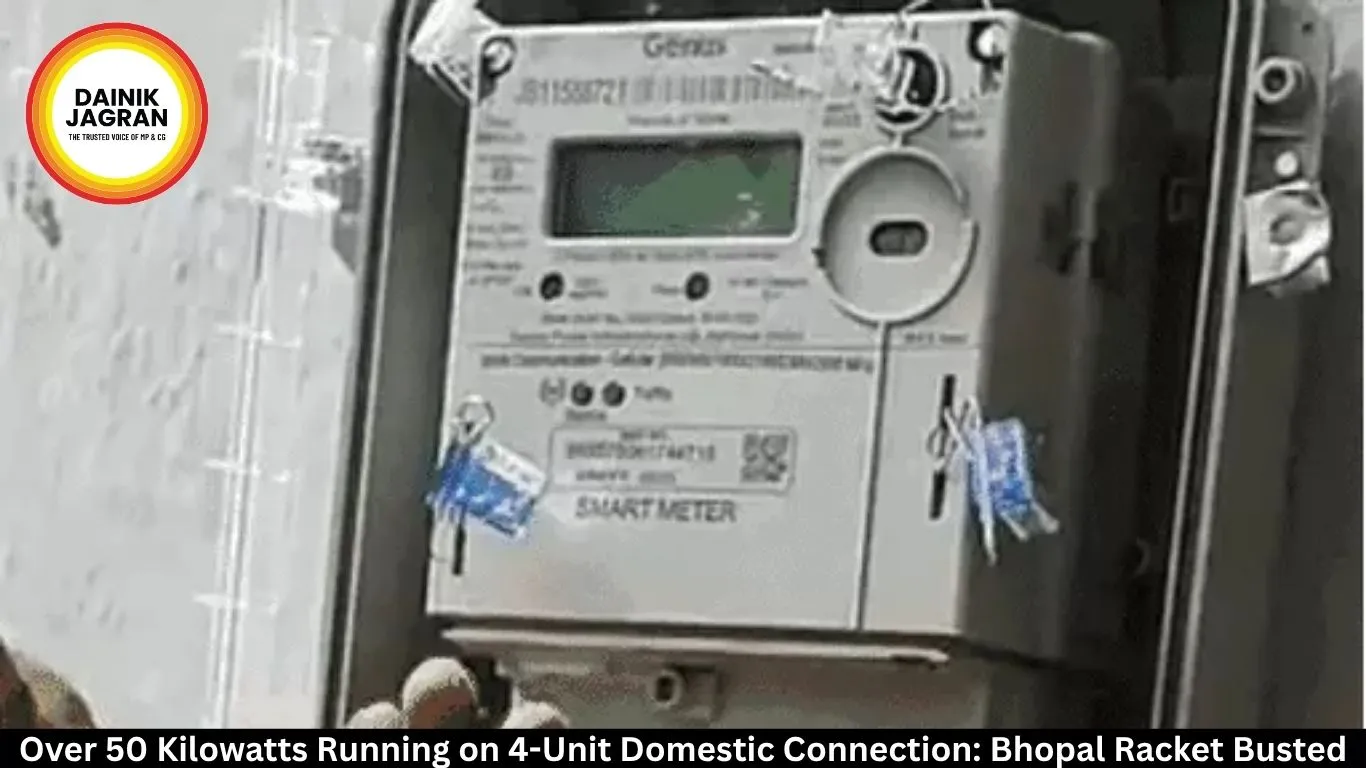
The operation involved two palatial havelis where residents had managed to operate commercial-grade electrical loads under the guise of ordinary domestic connections. The setup was sophisticated: flexible copper wires had been grafted onto the meter's incoming side to bypass measurement entirely, while service cables running through walls carried tapped lines to hidden junctions.

Meter Bypass: How It Worked

When the vigilance team arrived at the first address—the property of Iqbal Khan in Inayatpur—they found the meter had been fitted to handle just 4 kilowatts. Yet a load assessment revealed the connection was actually drawing 51.17 kilowatts. Inside the premises, investigators documented six air conditioners, 41 ceiling fans, 58 LED lights, eight refrigeration and cooling units, plus various high-powered machinery running simultaneously. The utility calculated a backdated bill of ₹7.52 lakh based on the illegal consumption.

At a second location belonging to Gufran Khan, the disparity was even more striking. A connection sanctioned for 4.5 kilowatts was found operating at 65.63 kilowatts—a ratio that roughly mirrors small hotel or mini-industrial operations. Eight air conditioners, an electric vehicle charger, deep freezer, water heater, and microwave oven lined the premises. Investigators traced the theft to tapping points concealed within wall cavities. The assessed dues came to ₹8.94 lakh.

A third site connected to one Mashoor Khan yielded another discovery. When the vigilance team arrived, residents had locked up and left. Officers scaled a neighbouring building's roof to locate the suspect cables, cut the line, seized the equipment, and filed a panchnama. Nineteen cases were registered in this instance alone under Section 135 of the Electricity Act.

Load That Large Strains Infrastructure

According to utility officials, a standard 4 to 5 kilowatt domestic connection is designed for conventional household appliances—fans, lights, basic cooling. But 50 to 65 kilowatts stretches into territory reserved for small hotels, mini factories, or substantial commercial establishments. When unauthorised loads of that magnitude run through a meter, the pressure on distribution transformers increases significantly, raising the risk of equipment failure across the broader grid.

The scheme appeared to work by exploiting a straightforward vulnerability: most inspectors conduct routine checks at predictable intervals. By keeping visible appliances modest and running heavy equipment sporadically or during off-peak hours, residents had managed to avoid detection for some time.

Broader Crackdown Underway

The Bhopal operation represents part of a sustained push by the power utility to tighten enforcement against electricity theft. Officials say such cases are no longer isolated incidents but part of an organised pattern where technically-skilled individuals wire connections to extract power without corresponding payment.

In total, across the cases filed during this drive, authorities have registered 41 cases and identified ₹31.36 lakh in dues. The utility has confiscated cables and filed formal charges. Preliminary investigation suggests the operation may have been running for several months before the raids.

The findings also highlight a persistent challenge for utilities in states like Madhya Pradesh, where large-scale theft compounds legitimate losses and inflates costs for paying consumers. Industry analysts say such operations are difficult to detect without physical inspections, and even then, require specialized knowledge to identify concealed bypass circuits.

Authorities indicated that follow-up checks will be conducted in the Inayatpur locality, where other connections may require scrutiny. The utility has also flagged the method to its broader surveillance network, alerting field teams to watch for similar meter-tampering patterns in other parts of the city.


--------

🚨 Beat the News Rush – Join Now!

Get breaking alerts, hot exclusives, and game-changing stories instantly on your phone. No delays, no fluff – just the edge you need. ⚡

Tap to join: 

🟢 WhatsApp Channel: Dainik Jagran MP CG

Crave more?

🅕 Facebook: Dainik Jagran MP CG English

🅧 Twitter (X): Dainik Jagran MP CG

🅘 Instagram: Dainik Jagran MP CG

Share the fire – keep your crew ahead! 🗞️🔥

english.dainikjagranmpcg.com
24 May 2026 By Abhishek Joshi

Bhopal Electricity Theft: 50kW Load on 4kW Connection Busted

Digital Desk

Vigilance team uncovers elaborate meter bypass scheme in Inayatpur, slaps ₹31.36 lakh bill on defaulters

Bhopal's electricity vigilance team pulled back the curtain on a brazen theft scheme this week, discovering that a residential connection in Inayatpur was siphoning power at more than twelve times its sanctioned limit. What began as a routine inspection at a residential address turned into one of the more striking cases of meter manipulation the utility has documented in recent months.

The operation involved two palatial havelis where residents had managed to operate commercial-grade electrical loads under the guise of ordinary domestic connections. The setup was sophisticated: flexible copper wires had been grafted onto the meter's incoming side to bypass measurement entirely, while service cables running through walls carried tapped lines to hidden junctions.

Meter Bypass: How It Worked

When the vigilance team arrived at the first address—the property of Iqbal Khan in Inayatpur—they found the meter had been fitted to handle just 4 kilowatts. Yet a load assessment revealed the connection was actually drawing 51.17 kilowatts. Inside the premises, investigators documented six air conditioners, 41 ceiling fans, 58 LED lights, eight refrigeration and cooling units, plus various high-powered machinery running simultaneously. The utility calculated a backdated bill of ₹7.52 lakh based on the illegal consumption.

At a second location belonging to Gufran Khan, the disparity was even more striking. A connection sanctioned for 4.5 kilowatts was found operating at 65.63 kilowatts—a ratio that roughly mirrors small hotel or mini-industrial operations. Eight air conditioners, an electric vehicle charger, deep freezer, water heater, and microwave oven lined the premises. Investigators traced the theft to tapping points concealed within wall cavities. The assessed dues came to ₹8.94 lakh.

A third site connected to one Mashoor Khan yielded another discovery. When the vigilance team arrived, residents had locked up and left. Officers scaled a neighbouring building's roof to locate the suspect cables, cut the line, seized the equipment, and filed a panchnama. Nineteen cases were registered in this instance alone under Section 135 of the Electricity Act.

Load That Large Strains Infrastructure

According to utility officials, a standard 4 to 5 kilowatt domestic connection is designed for conventional household appliances—fans, lights, basic cooling. But 50 to 65 kilowatts stretches into territory reserved for small hotels, mini factories, or substantial commercial establishments. When unauthorised loads of that magnitude run through a meter, the pressure on distribution transformers increases significantly, raising the risk of equipment failure across the broader grid.

The scheme appeared to work by exploiting a straightforward vulnerability: most inspectors conduct routine checks at predictable intervals. By keeping visible appliances modest and running heavy equipment sporadically or during off-peak hours, residents had managed to avoid detection for some time.

Broader Crackdown Underway

The Bhopal operation represents part of a sustained push by the power utility to tighten enforcement against electricity theft. Officials say such cases are no longer isolated incidents but part of an organised pattern where technically-skilled individuals wire connections to extract power without corresponding payment.

In total, across the cases filed during this drive, authorities have registered 41 cases and identified ₹31.36 lakh in dues. The utility has confiscated cables and filed formal charges. Preliminary investigation suggests the operation may have been running for several months before the raids.

The findings also highlight a persistent challenge for utilities in states like Madhya Pradesh, where large-scale theft compounds legitimate losses and inflates costs for paying consumers. Industry analysts say such operations are difficult to detect without physical inspections, and even then, require specialized knowledge to identify concealed bypass circuits.

Authorities indicated that follow-up checks will be conducted in the Inayatpur locality, where other connections may require scrutiny. The utility has also flagged the method to its broader surveillance network, alerting field teams to watch for similar meter-tampering patterns in other parts of the city.


https://english.dainikjagranmpcg.com/states/madhya-pradesh/bhopal-electricity-theft-50kw-load-on-4kw-connection-busted/article-19179

Related Posts

Latest News

Twisha Sharma second post-mortem at Bhopal AIIMS Twisha Sharma second post-mortem at Bhopal AIIMS
Delhi AIIMS team conducts fresh post-mortem of actress Twisha Sharma at Bhopal AIIMS; police remand for husband, family seeks CBI...
Drunk Youths Ram Car Into Pedestrians, Cops
Sheopur Farmer Murder Triggers Protest, Police Action
Bhopal Electricity Theft: 50kW Load on 4kW Connection Busted
Indore Water Crisis: Protests, Chakka Jam Over Shortage
Rewa Accident: Two Jain Nuns Killed by Car, Protest May 25
Brijmohan Agrawal Raps Officials on Illegal Liquor in Raipur


