


Bhopal Liquor Shop Tender 2026: ₹1,374 Crore Reserve Price, 82 Shops in 34 Groups — How MP Is Breaking the Monopoly
Digital Desk
The Biggest Liquor Auction in Bhopal's Recent History
Tuesday, March 17, 2026, is a defining day for Madhya Pradesh's excise revenue machine. Starting at 10 a.m. at the Bhopal Excise Commissioner's office, tenders are being opened for 82 of the city's composite liquor shops — divided into 34 groups — with a reserve price of ₹1,374.86 crore. The process is expected to run through the evening, with results expected before nightfall.
The Bhopal liquor shop tender 2026 is not just a revenue exercise. It is a deliberate policy shift — one designed to smash the grip of large operators who have dominated the city's liquor trade for years and open the door for smaller, newer players to compete for a slice of one of MP's most lucrative businesses.
The Backstory: Two Failed Tenders and a Monopoly Problem
Bhopal has a total of 87 composite liquor shops. In previous years, these were bundled into just 4 large groups — a structure that made it impossible for anyone except well-capitalised established players to participate. The result was predictable: monopoly, limited competition, and suppressed government revenue.
This year, the excise department made a bold structural change. The shops were initially reorganised into 29 groups — but even that proved insufficient to break entrenched interests. Two tender rounds were held and failed to attract broad participation. Groups were then expanded again to 35, with 34 groups now covering the 82 remaining shops up for tender today. One group — covering 5 shops — has already been allotted at approximately ₹97 crore.
The logic is straightforward: smaller groups mean lower entry barriers, more bidders, and ultimately more revenue for the state government.
The Numbers: 20% Price Jump and ₹239 Crore Extra for the Government
The financial scale of this tender is significant. In the financial year 2024-25, Bhopal's liquor shops were auctioned for over ₹1,193 crore — already 11% above target, delivering ₹120 crore more than projected. This year, the overall reserve price has been set at ₹1,432 crore — a flat 20% increase over the previous year's base.
That 20% hike has flowed directly into individual group prices. Bhopal's most expensive group this year is the Pipalani cluster, covering four shops — Pipalani, Ayodhya Nagar, Ratnagiri Tiraha, and Patel Nagar. Its reserve price has risen from ₹106.48 crore last year to ₹127.77 crore this year — a jump of over ₹21 crore for a single group. The Bagh Sevania group has similarly climbed from approximately ₹101 crore to over ₹121.89 crore.
If the tender clears at or above reserve price, the excise department projects a direct gain of ₹238-239 crore more than last year flowing into the state's treasury. Officials add that competitive bidding could push the final figure even higher.
How Tuesday's Process Works
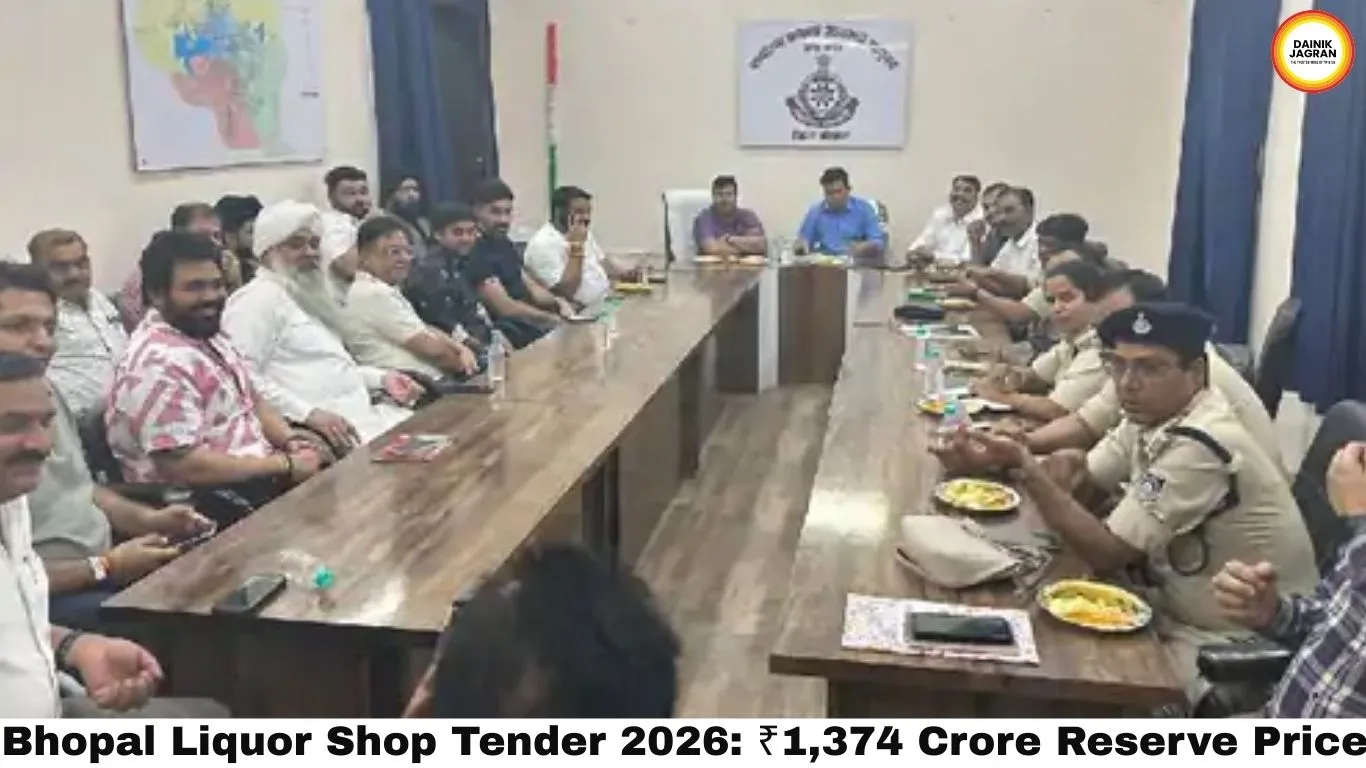
The tender process began at 10 a.m. with submission of bids, followed by opening of those bids before the evaluation committee through the day. The entire process — submission, opening, and preliminary evaluation — is being conducted via e-tender, in line with the state's shift to fully digital excise auctions. Deputy Commissioner Excise Divisional Flying Squad Bhopal Yashwant Banoura chaired a preparatory meeting on Monday at the Assistant Excise Commissioner's office, where prospective bidders were briefed on the restructured 34 groups and the updated policy framework.
Excise department officials have confirmed that allotment will be based strictly on the e-tender process, with the highest valid bid above reserve price winning each group.
Smart Policy, But Ask the Harder Question
The restructuring of Bhopal's liquor tender from 4 large groups to 35 smaller ones is genuinely good governance. It increases competition, reduces monopoly risk, brings in new participants, and generates more revenue for public services. The ₹239 crore additional inflow — if achieved — is meaningful money that can fund schools, hospitals, and roads.
But it is also worth pausing on what this revenue represents. Madhya Pradesh's excise income is built almost entirely on alcohol consumption — and a 20% annual price hike in liquor shop licence fees ultimately gets passed on to consumers through higher retail prices. In a state where addiction, domestic violence linked to alcohol, and rural poverty intersect in painful ways, every crore of excise revenue also carries a social cost that never appears in the department's press releases.
The government's job is not just to maximise liquor revenue — it is to ensure that the social infrastructure to address alcohol-related harm grows in proportion to the revenue extracted from it. Breaking the monopoly is the right call. Spending the windfall wisely is the obligation that follows.
.jpg)




