


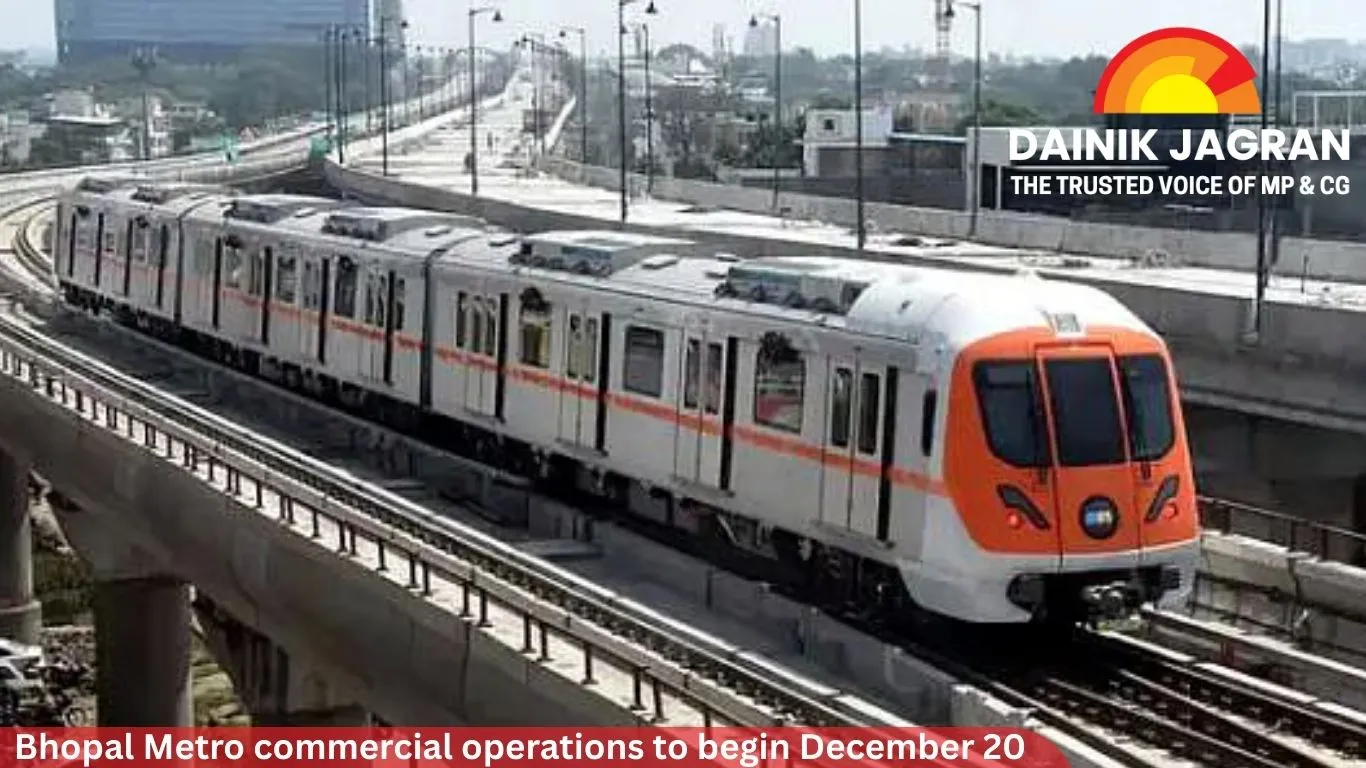
Bhopal Metro commercial operations to begin December 20; PM to flag off virtually
Digital Desk
The official launch event will be held at Kushabhau Thakre International Convention Centre (Minto Hall) at 4 pm. Following the virtual inauguration, ministers, MPs, MLAs and senior officials will board the metro from Subhash Nagar station and travel to AIIMS station, covering a 6.22-kilometre stretch that forms the first operational section of the Orange Line.
Authorities have stepped up security and final preparations at Subhash Nagar and AIIMS stations, with access currently restricted to authorised personnel. Additional security deployment has been made at MP Nagar, DB Mall, Rani Kamlapati, Central School, DRM Office and Alkapuri stations. While internal works have been completed, some external finishing will continue for the next two to three months and will not affect operations, officials said.
The Commissioner of Metro Rail Safety (CMRS) granted approval earlier this month after a three-day inspection of tracks, trains and safety systems. With clearance in place, only the formal flag-off remained pending.
Initially, three metro coaches will operate on the priority corridor. Fare details and schedules are yet to be officially notified, though officials indicated that the fare structure is likely to mirror Indore Metro, with possible introductory discounts. Services will begin with manual ticketing, as the tender process for an automatic fare collection system is underway.
The Bhopal Metro project, spanning 16.05 km from AIIMS to Karond, has been under construction since 2018. Officials said the launch of the first corridor is expected to significantly ease urban mobility and set the stage for expansion across the city.




.jpg)




