

Bhopal's Rs 220 Cr Waste-to-Charcoal Plant Trial Run Begins

Digital Desk

Bhopal's Rs 220 Cr Waste-to-Charcoal Plant Trial Run Begins

Bhopal Municipal Corporation begins trial run of MP's first waste-to-charcoal plant at Adampur. The Rs 220 crore PPP facility processes 400 tonnes of dry waste daily, saving BMC Rs 7.30 crore annually.

Bhopal has taken a significant stride in urban waste management with the Bhopal Municipal Corporation beginning the trial run of a state-of-the-art torrefied charcoal plant at its Adampur garbage processing site on Friday, March 27. Developed at a cost of Rs 220 crore under the Public-Private Partnership model, the facility is the first of its kind in Madhya Pradesh and only the second in the entire country — marking a turning point in how the state capital handles the mounting challenge of solid waste disposal.

From Garbage to Charcoal

The plant is built around a technically advanced process called torrefaction — a method that converts dry solid waste into torrefied charcoal by exposing it to controlled high temperatures in the absence of oxygen. The charcoal produced is not discarded but put to direct industrial use: NTPC Limited, which developed the facility as part of the Swachh Bharat Mission, will utilise the output in its own operations. This closed-loop arrangement transforms what was once a disposal problem into a productive resource stream — precisely the kind of circular economy approach that urban planners across India have been pushing for.

The plant is designed to process approximately 400 tonnes of dry waste every single day, giving Bhopal a powerful tool to tackle waste volumes that have long outpaced its existing disposal infrastructure.

Trial Phase Already Underway

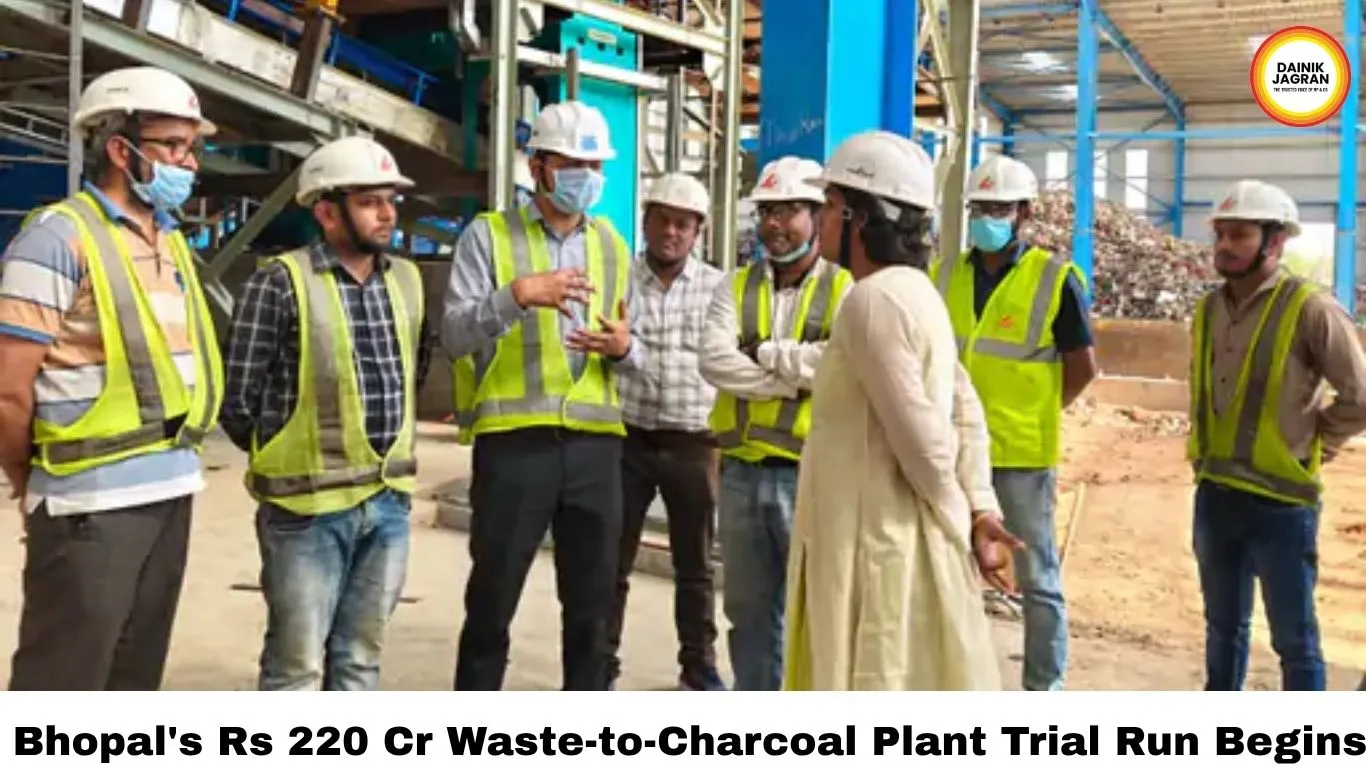
Even as the official trial run was launched on Friday, the plant has already demonstrated early operational readiness. During the preparatory phase, approximately 800 tonnes of dry waste were successfully processed, with officials setting a near-term target of treating 1,800 tonnes before scaling to full capacity. The speed at which the trial phase has progressed reflects both the urgency behind the project and the technical preparedness of the team managing it.

Municipal Commissioner Sanskriti Jain personally inspected the facility on the day of the trial launch, reviewed the plant's functioning in detail, and directed officials to accelerate the transition to full-scale operations without delay.

MP's First, India's Second

The significance of this facility extends well beyond Bhopal's city limits. A similar plant was set up earlier in Varanasi, making that the first such facility in India. However, the Bhopal plant has been developed with improved and updated technology, drawing on the operational learnings from the Varanasi experience to address earlier limitations and enhance efficiency. Spread across 15 acres at Adampur, the scale and technical sophistication of this facility make it a potential model for other cities in Madhya Pradesh and the broader region.

Annual Savings of Rs 7.30 Crore

Beyond its environmental credentials, the plant makes clear financial sense for the civic body. Officials confirmed that by reducing dependence on conventional and more expensive waste disposal methods, the BMC is estimated to save Rs 7.30 crore annually in waste management costs. Over a decade, that figure compounds into a substantial fiscal dividend — money that can be redirected towards other civic infrastructure and public services.

Commissioner Sanskriti Jain underlined this dual benefit, noting that the project would simultaneously reduce waste disposal expenditure and prevent the unchecked accumulation of dry waste across the city — a problem that has triggered public health concerns and environmental complaints for years.

The Adampur Context

The launch of the trial run comes at a particularly significant moment for the Adampur site, which has been at the centre of Bhopal's waste management crisis for some time. Just days earlier, on March 26, the BMC issued a Letter of Intent to Saurashtra Company to begin scientific disposal of the massive legacy waste dump at Adampur — estimated at 6.5 to 7.5 lakh metric tonnes. The Supreme Court has set a strict December 5, 2026 deadline for complete clearance of this dump, with serious consequences warned for officials if the target is missed.

The new charcoal plant and the legacy waste clearance project together represent a two-pronged attack on Bhopal's most persistent civic problem — dealing with the accumulated waste of the past while building infrastructure to responsibly handle the waste of the future.

A Blueprint for Urban India

Bhopal's waste-to-charcoal facility arrives at a time when Indian cities are under growing pressure — from courts, regulators and residents alike — to move beyond landfills and towards scientifically managed, resource-recovering waste systems. The PPP structure that underpins this project offers a replicable template: the civic body provides the land and waste stream, while a capable private or public sector partner brings capital, technology, and operational expertise.

With the Swachh Bharat Mission pushing urban local bodies across the country to demonstrate measurable progress on waste management, Bhopal's Adampur plant is now a case study that other cities will be watching closely. Whether the trial run transitions smoothly into full-scale operations in the coming weeks will determine just how effectively this Rs 220 crore investment delivers on its considerable promise.

--------

🚨 Beat the News Rush – Join Now!

Get breaking alerts, hot exclusives, and game-changing stories instantly on your phone. No delays, no fluff – just the edge you need. ⚡

Tap to join: 

🟢 WhatsApp Channel: Dainik Jagran MP CG

Crave more?

🅕 Facebook: Dainik Jagran MP CG English

🅧 Twitter (X): Dainik Jagran MP CG

🅘 Instagram: Dainik Jagran MP CG

Share the fire – keep your crew ahead! 🗞️🔥

english.dainikjagranmpcg.com
28 Mar 2026 By Nitin Trivedi

Bhopal's Rs 220 Cr Waste-to-Charcoal Plant Trial Run Begins

Digital Desk

Bhopal has taken a significant stride in urban waste management with the Bhopal Municipal Corporation beginning the trial run of a state-of-the-art torrefied charcoal plant at its Adampur garbage processing site on Friday, March 27. Developed at a cost of Rs 220 crore under the Public-Private Partnership model, the facility is the first of its kind in Madhya Pradesh and only the second in the entire country — marking a turning point in how the state capital handles the mounting challenge of solid waste disposal.

From Garbage to Charcoal

The plant is built around a technically advanced process called torrefaction — a method that converts dry solid waste into torrefied charcoal by exposing it to controlled high temperatures in the absence of oxygen. The charcoal produced is not discarded but put to direct industrial use: NTPC Limited, which developed the facility as part of the Swachh Bharat Mission, will utilise the output in its own operations. This closed-loop arrangement transforms what was once a disposal problem into a productive resource stream — precisely the kind of circular economy approach that urban planners across India have been pushing for.

The plant is designed to process approximately 400 tonnes of dry waste every single day, giving Bhopal a powerful tool to tackle waste volumes that have long outpaced its existing disposal infrastructure.

Trial Phase Already Underway

Even as the official trial run was launched on Friday, the plant has already demonstrated early operational readiness. During the preparatory phase, approximately 800 tonnes of dry waste were successfully processed, with officials setting a near-term target of treating 1,800 tonnes before scaling to full capacity. The speed at which the trial phase has progressed reflects both the urgency behind the project and the technical preparedness of the team managing it.

Municipal Commissioner Sanskriti Jain personally inspected the facility on the day of the trial launch, reviewed the plant's functioning in detail, and directed officials to accelerate the transition to full-scale operations without delay.

MP's First, India's Second

The significance of this facility extends well beyond Bhopal's city limits. A similar plant was set up earlier in Varanasi, making that the first such facility in India. However, the Bhopal plant has been developed with improved and updated technology, drawing on the operational learnings from the Varanasi experience to address earlier limitations and enhance efficiency. Spread across 15 acres at Adampur, the scale and technical sophistication of this facility make it a potential model for other cities in Madhya Pradesh and the broader region.

Annual Savings of Rs 7.30 Crore

Beyond its environmental credentials, the plant makes clear financial sense for the civic body. Officials confirmed that by reducing dependence on conventional and more expensive waste disposal methods, the BMC is estimated to save Rs 7.30 crore annually in waste management costs. Over a decade, that figure compounds into a substantial fiscal dividend — money that can be redirected towards other civic infrastructure and public services.

Commissioner Sanskriti Jain underlined this dual benefit, noting that the project would simultaneously reduce waste disposal expenditure and prevent the unchecked accumulation of dry waste across the city — a problem that has triggered public health concerns and environmental complaints for years.

The Adampur Context

The launch of the trial run comes at a particularly significant moment for the Adampur site, which has been at the centre of Bhopal's waste management crisis for some time. Just days earlier, on March 26, the BMC issued a Letter of Intent to Saurashtra Company to begin scientific disposal of the massive legacy waste dump at Adampur — estimated at 6.5 to 7.5 lakh metric tonnes. The Supreme Court has set a strict December 5, 2026 deadline for complete clearance of this dump, with serious consequences warned for officials if the target is missed.

The new charcoal plant and the legacy waste clearance project together represent a two-pronged attack on Bhopal's most persistent civic problem — dealing with the accumulated waste of the past while building infrastructure to responsibly handle the waste of the future.

A Blueprint for Urban India

Bhopal's waste-to-charcoal facility arrives at a time when Indian cities are under growing pressure — from courts, regulators and residents alike — to move beyond landfills and towards scientifically managed, resource-recovering waste systems. The PPP structure that underpins this project offers a replicable template: the civic body provides the land and waste stream, while a capable private or public sector partner brings capital, technology, and operational expertise.

With the Swachh Bharat Mission pushing urban local bodies across the country to demonstrate measurable progress on waste management, Bhopal's Adampur plant is now a case study that other cities will be watching closely. Whether the trial run transitions smoothly into full-scale operations in the coming weeks will determine just how effectively this Rs 220 crore investment delivers on its considerable promise.

https://english.dainikjagranmpcg.com/states/madhya-pradesh/bhopals-rs-220-cr-waste-to-charcoal-plant-trial-run-begins/article-16145

Related Posts

Latest News

Char Dham Yatra 2026: Plan Your Sacred Journey with Confidence Char Dham Yatra 2026: Plan Your Sacred Journey with Confidence
Prepare for your 2026 Char Dham Yatra. Get essential travel updates, safety tips, and secure your helicopter bookings exclusively through...
Anuppur Lodge Collapse: 3 Dead, Rescue On
MP Ayushman: 126 Hospitals Lose Recognition Over NABH
HC directs police to produce abducted minor girl in court
Betul-Baretha Ghat Tiger Corridor: NH-46 Four-Lane Approved
Lucknow Fake Cigarettes Seizure: MP Smugglers Arrested
Rs 4.65 Crore Barrage to Irrigate 280 Hectares in Jhabua


