

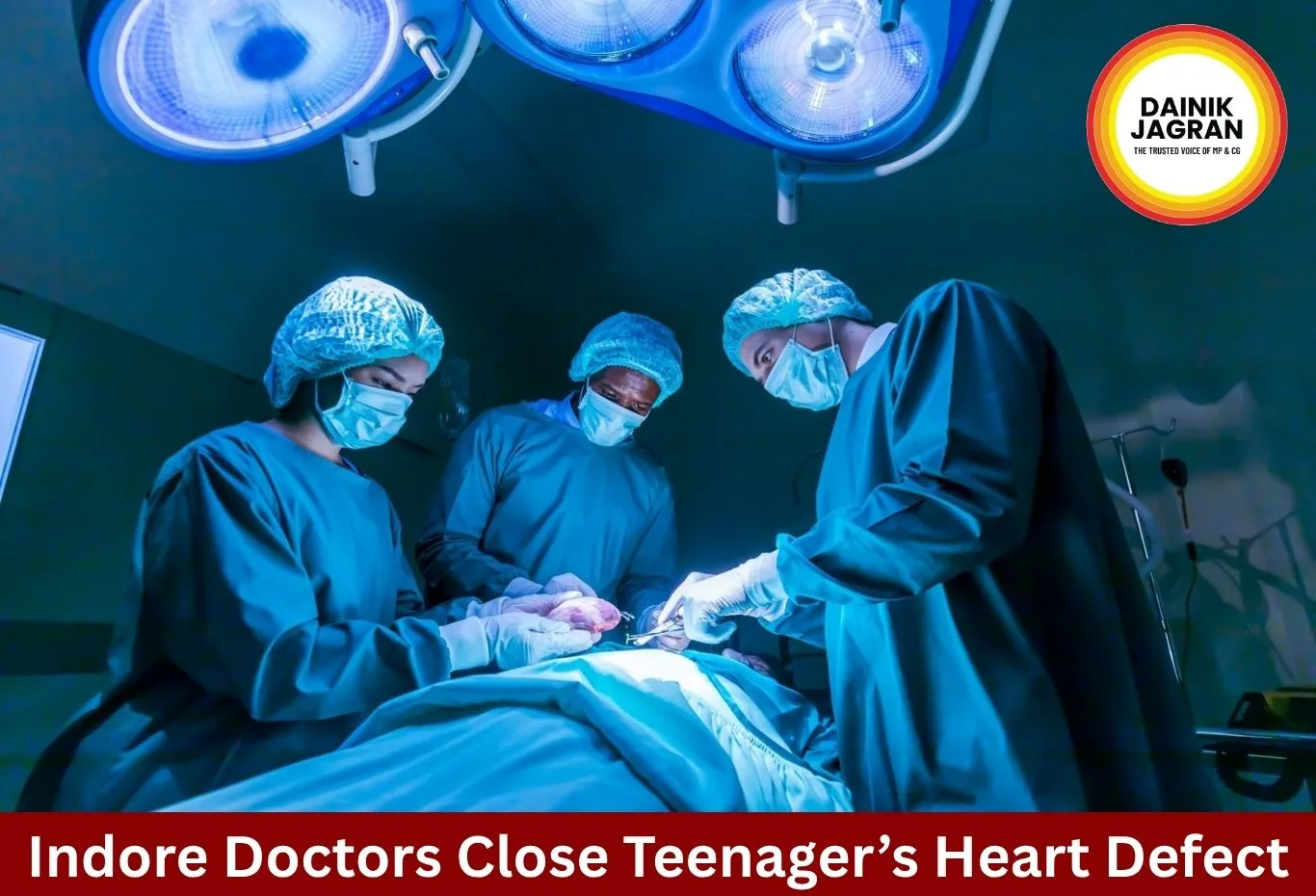
Doctors Close Teenager’s 27 MM Heart Defect In Indore

Digital Desk

Doctors Close Teenager’s 27 MM Heart Defect In Indore

Indore doctors successfully treated a 16-year-old boy suffering from a large heart defect using advanced catheter-based technology without open-heart surgery.

Doctors in Indore successfully treated a 16-year-old boy suffering from a serious congenital heart defect by closing a 27 mm hole in his heart through a minimally invasive procedure. The operation was completed in nearly 20 minutes without performing open-heart surgery, giving major relief to the teenager’s financially struggling farmer family.

According to doctors, the boy had been suffering from severe health complications for the last six months. His condition had worsened significantly over the past two months, during which he frequently experienced weakness, breathlessness, anxiety and episodes of unconsciousness. The case has drawn attention as a major Public Interest Story highlighting advances in affordable cardiac treatment and the role of government healthcare schemes in supporting economically weaker families.

Serious Symptoms Ignored

The teenager, a resident of a village near Khandwa, reportedly faced continuous health issues for several months. Family members said he would get tired quickly, struggle to breathe and often feel dizzy during normal activities.

Doctors stated that repeated fainting episodes over the last two months indicated a serious cardiac problem. Due to financial difficulties, the family could not afford expensive treatment at private medical facilities despite attempting treatment at several places earlier. The teenager was finally admitted to Index Super Speciality Hospital on May 15, where doctors conducted detailed medical examinations and identified a large 27 mm hole in his heart.

Rare Heart Condition Diagnosed

Medical experts diagnosed the teenager with Atrial Septal Defect (ASD), a congenital heart disease in which a hole develops between the upper chambers of the heart.

Doctors explained that the condition affects normal blood circulation and can gradually weaken heart functioning if left untreated for a long period. In severe cases, the disease may lead to life-threatening complications. Cardiology specialists stated that timely diagnosis and intervention are critical in such cases, especially when symptoms become severe during adolescence. The incident quickly became part of the Latest News Today updates because of the successful use of advanced heart treatment technology without open surgery.

Advanced Procedure Used

Paediatric cardiology expert Dr Sudip Verma said the operation was performed on May 16 using modern interventional cardiology techniques instead of traditional open-heart surgery. During the procedure, doctors inserted a catheter through veins in the patient’s leg and guided it carefully to the heart. Using specialised ASD closure devices and a septal occluder, the medical team successfully sealed the hole inside the heart. Doctors confirmed that the entire process took nearly 20 minutes and was completed without major surgical cuts or invasive chest opening procedures. According to experts, such minimally invasive techniques significantly reduce recovery time and lower the risk of complications and infections compared to conventional surgery.

Faster Recovery Expected

Hospital authorities stated that the teenager’s condition has improved rapidly after the procedure. Doctors said the patient remains under observation and is expected to be discharged soon. Medical experts noted that minimally invasive cardiac procedures are increasingly becoming preferred treatment options for suitable heart defect cases because patients recover faster and experience less physical trauma. The successful treatment has also highlighted the growing availability of advanced cardiac care facilities in cities like Indore.

Ayushman Scheme Brings Relief

A major relief for the family came through the Ayushman Bharat health scheme, under which the entire treatment was reportedly provided free of cost. The boy’s family, which depends on farming for livelihood, expressed gratitude to the doctors and hospital management for saving the teenager’s life without placing any financial burden on them.

Officials said government-supported healthcare schemes continue to help economically weaker patients access expensive treatments that were previously beyond their reach. The case is also being seen as an example of how public healthcare support and modern medical infrastructure can improve survival rates in critical heart conditions.

Experts Explain Symptoms

Doctors said parents should not ignore symptoms that may indicate congenital heart disease in children and teenagers. According to cardiology experts, common warning signs include frequent fatigue, breathlessness, weakness, dizziness, irregular heartbeat, chest pain and fainting episodes.

Experts added that some children may also experience difficulty during physical activities, poor weight gain and reduced stamina compared to others in their age group. Medical professionals advised parents to seek immediate cardiac evaluation if such symptoms persist for a long period. The successful treatment in Indore has offered hope to families dealing with similar medical conditions while underlining the importance of early diagnosis and access to specialised healthcare services.


--------

🚨 Beat the News Rush – Join Now!

Get breaking alerts, hot exclusives, and game-changing stories instantly on your phone. No delays, no fluff – just the edge you need. ⚡

Tap to join: 

🟢 WhatsApp Channel: Dainik Jagran MP CG

Crave more?

🅕 Facebook: Dainik Jagran MP CG English

🅧 Twitter (X): Dainik Jagran MP CG

🅘 Instagram: Dainik Jagran MP CG

Share the fire – keep your crew ahead! 🗞️🔥

english.dainikjagranmpcg.com
19 May 2026 By Vaishnavi

Doctors Close Teenager’s 27 MM Heart Defect In Indore

Digital Desk

Doctors in Indore successfully treated a 16-year-old boy suffering from a serious congenital heart defect by closing a 27 mm hole in his heart through a minimally invasive procedure. The operation was completed in nearly 20 minutes without performing open-heart surgery, giving major relief to the teenager’s financially struggling farmer family.

According to doctors, the boy had been suffering from severe health complications for the last six months. His condition had worsened significantly over the past two months, during which he frequently experienced weakness, breathlessness, anxiety and episodes of unconsciousness. The case has drawn attention as a major Public Interest Story highlighting advances in affordable cardiac treatment and the role of government healthcare schemes in supporting economically weaker families.

Serious Symptoms Ignored

The teenager, a resident of a village near Khandwa, reportedly faced continuous health issues for several months. Family members said he would get tired quickly, struggle to breathe and often feel dizzy during normal activities.

Doctors stated that repeated fainting episodes over the last two months indicated a serious cardiac problem. Due to financial difficulties, the family could not afford expensive treatment at private medical facilities despite attempting treatment at several places earlier. The teenager was finally admitted to Index Super Speciality Hospital on May 15, where doctors conducted detailed medical examinations and identified a large 27 mm hole in his heart.

Rare Heart Condition Diagnosed

Medical experts diagnosed the teenager with Atrial Septal Defect (ASD), a congenital heart disease in which a hole develops between the upper chambers of the heart.

Doctors explained that the condition affects normal blood circulation and can gradually weaken heart functioning if left untreated for a long period. In severe cases, the disease may lead to life-threatening complications. Cardiology specialists stated that timely diagnosis and intervention are critical in such cases, especially when symptoms become severe during adolescence. The incident quickly became part of the Latest News Today updates because of the successful use of advanced heart treatment technology without open surgery.

Advanced Procedure Used

Paediatric cardiology expert Dr Sudip Verma said the operation was performed on May 16 using modern interventional cardiology techniques instead of traditional open-heart surgery. During the procedure, doctors inserted a catheter through veins in the patient’s leg and guided it carefully to the heart. Using specialised ASD closure devices and a septal occluder, the medical team successfully sealed the hole inside the heart. Doctors confirmed that the entire process took nearly 20 minutes and was completed without major surgical cuts or invasive chest opening procedures. According to experts, such minimally invasive techniques significantly reduce recovery time and lower the risk of complications and infections compared to conventional surgery.

Faster Recovery Expected

Hospital authorities stated that the teenager’s condition has improved rapidly after the procedure. Doctors said the patient remains under observation and is expected to be discharged soon. Medical experts noted that minimally invasive cardiac procedures are increasingly becoming preferred treatment options for suitable heart defect cases because patients recover faster and experience less physical trauma. The successful treatment has also highlighted the growing availability of advanced cardiac care facilities in cities like Indore.

Ayushman Scheme Brings Relief

A major relief for the family came through the Ayushman Bharat health scheme, under which the entire treatment was reportedly provided free of cost. The boy’s family, which depends on farming for livelihood, expressed gratitude to the doctors and hospital management for saving the teenager’s life without placing any financial burden on them.

Officials said government-supported healthcare schemes continue to help economically weaker patients access expensive treatments that were previously beyond their reach. The case is also being seen as an example of how public healthcare support and modern medical infrastructure can improve survival rates in critical heart conditions.

Experts Explain Symptoms

Doctors said parents should not ignore symptoms that may indicate congenital heart disease in children and teenagers. According to cardiology experts, common warning signs include frequent fatigue, breathlessness, weakness, dizziness, irregular heartbeat, chest pain and fainting episodes.

Experts added that some children may also experience difficulty during physical activities, poor weight gain and reduced stamina compared to others in their age group. Medical professionals advised parents to seek immediate cardiac evaluation if such symptoms persist for a long period. The successful treatment in Indore has offered hope to families dealing with similar medical conditions while underlining the importance of early diagnosis and access to specialised healthcare services.

https://english.dainikjagranmpcg.com/states/madhya-pradesh/doctors-close-teenager%E2%80%99s-27-mm-heart-defect-in-indore/article-18789

Latest News


