

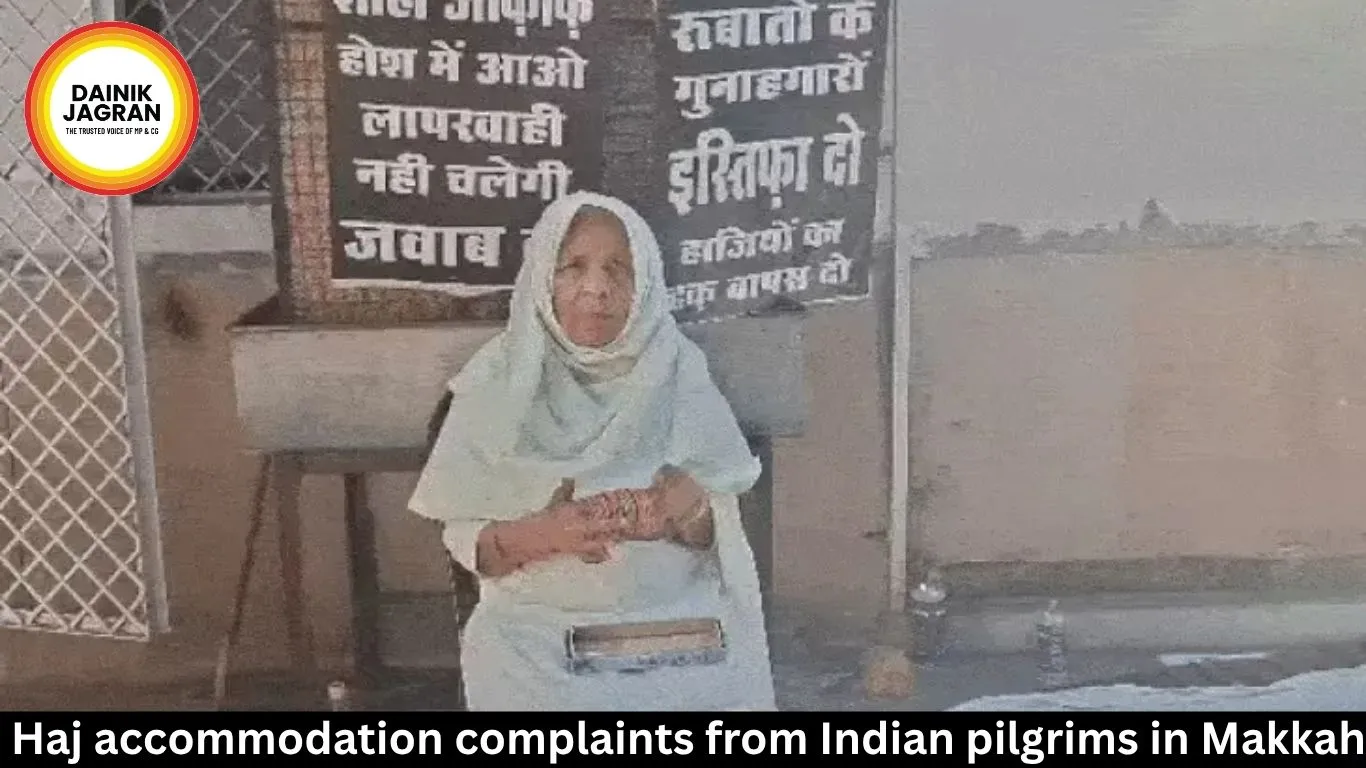
Haj accommodation complaints from Indian pilgrims in Makkah
Digital Desk
Indian Haj pilgrims in Makkah’s Aziziyah area allege poor facilities despite spending up to ₹4 lakh, prompting calls for impartial inquiry by Central Haj Committee.
Haj pilgrims in Makkah raise alarm over accommodation, hygiene, and overcrowding
Indian Haj pilgrims camping in Makkah’s Aziziyah locality have raised a fresh set of complaints about overcrowding, poor hygiene, and lack of basic facilities, even as many report having spent up to ₹4 lakh on the trip. The issue has come to the fore after a video shot by pilgrims inside an Aziziyah hostel surfaced on social media, showing cramped rooms, clogged washrooms, and non‑functional lifts.
“Charging high fees but basic facilities missing”
According to initial reports, the video, which is circulating on WhatsApp and other platforms, was recorded by Indian Hajis themselves and shows them complaining about the state of lodging in a building near the holy sites. In the clips, pilgrims point at shared toilets that appear unclean, soaked floors, and water seeping into rooms. “One room is being used by 16 people. Families are being separated, and there is only one washroom for many,” one of the voices in the video says, describing the layout of the Aziziyah hostel.
Residents of Aziziyah, an area commonly used during Haj for budget‑conscious pilgrims, say the building is several storeys high and is largely meant to house groups on government or private Haj packages. The video alleges that despite transferring large sums to Haj agents or state Haj committees, many feel they are not getting minimum comfort and privacy.
Overcrowding and safety concerns
Local Haj organisers and returning pilgrims from past years have privately spoken of recurring issues in certain Aziziyah properties, where the number of beds in a room is routinely exceeded to maximise occupancy. The latest video appears to echo those concerns, with one pilgrim estimating that the actual number of people staying in a single room is nearly double the intended capacity.
“Think of 16 people in one room, with only one washroom and a lift that does not work. In the heat of Makkah, this becomes a safety and health risk,” an organiser who has worked with pilgrims from Madhya Pradesh said, requesting anonymity. Security, fire escapes, and movement of elderly and differently‑abled pilgrims are among the points that have been raised by some on the ground.
Political and religious groups demand action
In Bhopal, the controversy has prompted fresh political and community‑level agitation. Haji Mohammad Imran Haaroon, Secretary of the Madhya Pradesh Sarvadharm Sadbhavana Manch, has publicly called for an impartial inquiry into the hostel conditions shown in the video. “Every year, thousands of Indian citizens travel to Haj. In recent years, there have been continuous complaints about accommodation and facilities. The video from Aziziyah is deeply disturbing,” Haaroon told local reporters.
He has urged the Central Haj Committee to dispatch a team to Makkah immediately to inspect the building and other lodgings being used by Indian pilgrims, and to correct deficiencies wherever found. “Hajis are paying lakhs of rupees, even after additional charges. If such complaints keep coming, it is a serious matter of concern for the community,” he added.
Overlap with old “Rubat” dispute
The current uproar over paid hostels in Makkah and Madina overlaps with an older dispute over the so‑called “Rubat” properties originally built by Bhopal’s erstwhile Nawabs for free accommodation of Hajis. In recent years, Indian Hajis from Madhya Pradesh and other states have complained that these historic waqf properties in and around Makkah and Madina are either not being used as intended or are being occupied by people from other nationalities.
Haaroon has separately written to the central government and the Ministry of Minority Affairs, demanding intervention with Saudi authorities to restore the Rubat facilities for Indian pilgrims and to obtain a factual explanation from the “Shahi Auqaf” office. “There is a time gap between the actual charity created by our forebears and the way it is being managed today,” he said, adding that this has only deepened the sense of neglect among Hajis.
What authorities are saying
Officials with the Central Haj Committee and Indian diplomatic missions in Saudi Arabia have not yet issued a detailed public statement on the specific Aziziyah hostel featured in the video. However, in the past, the committee has asked Haj applicants to raise grievances through formal channels, including on‑site helplines and email portals, and to lodge complaints with the Haj Mission in Jeddah.
The Ministry of Minority Affairs has, in earlier Haj cycles, acknowledged that some private agents and local operators in Saudi Arabia push pilgrims into overcrowded or low‑cost rooms, and has advised devotees to insist on pre‑agreed accommodation standards while booking. The ministry has also tightened scrutiny of Haj package details, including stay duration and distance from holy sites, in response to repeated complaints.
Next steps and what it means for pilgrims
As Haj 2026 progresses, community leaders including Haaroon are pushing for a transparent investigation into the Aziziyah hostel and similar facilities, and for strict action if any Indian Haj agent or Saudi operator is found to be violating capacity norms or safety standards. Pilgrims are being advised to keep receipts, package details, and contact numbers of Haj Mission officials handy, and to avoid taking bedding or food compromises solely on the promise of “near‑by” location.
Given that many Indian states, including Madhya Pradesh, have multiple Haj operators and overlapping packages, the current disquiet over overcrowded rooms and poor sanitation could feed into broader demands for a more standardised and monitored Haj framework—both in terms of accommodation quality and smoother grievance‑redressal mechanisms on the ground.
--------
🚨 Beat the News Rush – Join Now!
Get breaking alerts, hot exclusives, and game-changing stories instantly on your phone. No delays, no fluff – just the edge you need. ⚡
Tap to join:
🟢 WhatsApp Channel: Dainik Jagran MP CG
Crave more?
🅕 Facebook: Dainik Jagran MP CG English
🅧 Twitter (X): Dainik Jagran MP CG
🅘 Instagram: Dainik Jagran MP CG
Share the fire – keep your crew ahead! 🗞️🔥
Haj accommodation complaints from Indian pilgrims in Makkah
Digital Desk
Haj pilgrims in Makkah raise alarm over accommodation, hygiene, and overcrowding
Indian Haj pilgrims camping in Makkah’s Aziziyah locality have raised a fresh set of complaints about overcrowding, poor hygiene, and lack of basic facilities, even as many report having spent up to ₹4 lakh on the trip. The issue has come to the fore after a video shot by pilgrims inside an Aziziyah hostel surfaced on social media, showing cramped rooms, clogged washrooms, and non‑functional lifts.
“Charging high fees but basic facilities missing”
According to initial reports, the video, which is circulating on WhatsApp and other platforms, was recorded by Indian Hajis themselves and shows them complaining about the state of lodging in a building near the holy sites. In the clips, pilgrims point at shared toilets that appear unclean, soaked floors, and water seeping into rooms. “One room is being used by 16 people. Families are being separated, and there is only one washroom for many,” one of the voices in the video says, describing the layout of the Aziziyah hostel.
Residents of Aziziyah, an area commonly used during Haj for budget‑conscious pilgrims, say the building is several storeys high and is largely meant to house groups on government or private Haj packages. The video alleges that despite transferring large sums to Haj agents or state Haj committees, many feel they are not getting minimum comfort and privacy.
Overcrowding and safety concerns
Local Haj organisers and returning pilgrims from past years have privately spoken of recurring issues in certain Aziziyah properties, where the number of beds in a room is routinely exceeded to maximise occupancy. The latest video appears to echo those concerns, with one pilgrim estimating that the actual number of people staying in a single room is nearly double the intended capacity.
“Think of 16 people in one room, with only one washroom and a lift that does not work. In the heat of Makkah, this becomes a safety and health risk,” an organiser who has worked with pilgrims from Madhya Pradesh said, requesting anonymity. Security, fire escapes, and movement of elderly and differently‑abled pilgrims are among the points that have been raised by some on the ground.
Political and religious groups demand action
In Bhopal, the controversy has prompted fresh political and community‑level agitation. Haji Mohammad Imran Haaroon, Secretary of the Madhya Pradesh Sarvadharm Sadbhavana Manch, has publicly called for an impartial inquiry into the hostel conditions shown in the video. “Every year, thousands of Indian citizens travel to Haj. In recent years, there have been continuous complaints about accommodation and facilities. The video from Aziziyah is deeply disturbing,” Haaroon told local reporters.
He has urged the Central Haj Committee to dispatch a team to Makkah immediately to inspect the building and other lodgings being used by Indian pilgrims, and to correct deficiencies wherever found. “Hajis are paying lakhs of rupees, even after additional charges. If such complaints keep coming, it is a serious matter of concern for the community,” he added.
Overlap with old “Rubat” dispute
The current uproar over paid hostels in Makkah and Madina overlaps with an older dispute over the so‑called “Rubat” properties originally built by Bhopal’s erstwhile Nawabs for free accommodation of Hajis. In recent years, Indian Hajis from Madhya Pradesh and other states have complained that these historic waqf properties in and around Makkah and Madina are either not being used as intended or are being occupied by people from other nationalities.
Haaroon has separately written to the central government and the Ministry of Minority Affairs, demanding intervention with Saudi authorities to restore the Rubat facilities for Indian pilgrims and to obtain a factual explanation from the “Shahi Auqaf” office. “There is a time gap between the actual charity created by our forebears and the way it is being managed today,” he said, adding that this has only deepened the sense of neglect among Hajis.
What authorities are saying
Officials with the Central Haj Committee and Indian diplomatic missions in Saudi Arabia have not yet issued a detailed public statement on the specific Aziziyah hostel featured in the video. However, in the past, the committee has asked Haj applicants to raise grievances through formal channels, including on‑site helplines and email portals, and to lodge complaints with the Haj Mission in Jeddah.
The Ministry of Minority Affairs has, in earlier Haj cycles, acknowledged that some private agents and local operators in Saudi Arabia push pilgrims into overcrowded or low‑cost rooms, and has advised devotees to insist on pre‑agreed accommodation standards while booking. The ministry has also tightened scrutiny of Haj package details, including stay duration and distance from holy sites, in response to repeated complaints.
Next steps and what it means for pilgrims
As Haj 2026 progresses, community leaders including Haaroon are pushing for a transparent investigation into the Aziziyah hostel and similar facilities, and for strict action if any Indian Haj agent or Saudi operator is found to be violating capacity norms or safety standards. Pilgrims are being advised to keep receipts, package details, and contact numbers of Haj Mission officials handy, and to avoid taking bedding or food compromises solely on the promise of “near‑by” location.
Given that many Indian states, including Madhya Pradesh, have multiple Haj operators and overlapping packages, the current disquiet over overcrowded rooms and poor sanitation could feed into broader demands for a more standardised and monitored Haj framework—both in terms of accommodation quality and smoother grievance‑redressal mechanisms on the ground.


