

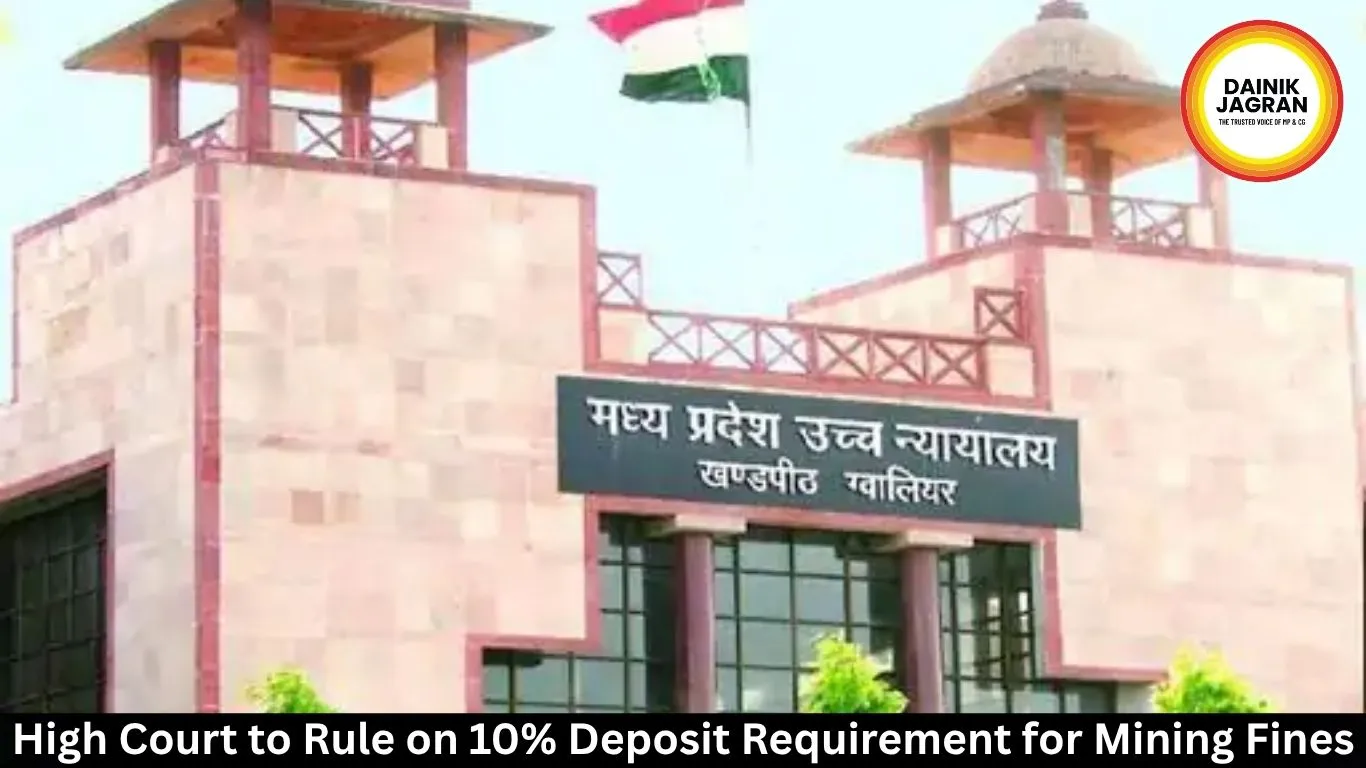
High Court to Rule on 10% Deposit Requirement for Mining Fines

Digital Desk

High Court to Rule on 10% Deposit Requirement for Mining Fines

Gwalior High Court examines if 2022 rules apply to pre-2022 illegal mining cases. The ₹6.43 crore fine case raises questions about appeal rights and financial conditions.


Gwalior High Court to Decide If 10% Fine Deposit Required for Old Mining Cases

Can new rules apply retrospectively to pre-2022 cases? Court set to rule on appeal rights

A major legal dispute over illegal mining fines has reached Madhya Pradesh's High Court, forcing judges to untangle a thorny question: should stricter deposit rules apply to cases filed before the new regulations came into effect?

The bench comprising Justice Anand Pathak and Justice Pushpendra Yadav is now hearing arguments on whether applicants must deposit 10 percent of the fine amount before appealing in cases predating the 2022 rules. The case centres on a staggering fine of ₹6 crore 43 lakh 50 thousand levied by Gwalior's mineral department for illegal quarrying.

The ₹6.43 Crore Fine

Authorities in Gwalior imposed the hefty penalty under what they termed a 20-fold multiplier rule. Petitioner Smita Neekhara challenged the order after failing to secure relief through initial relief mechanisms. The state mineral department maintained that the 2022 regulations mandate a 10 percent advance deposit before an appeal can proceed—a condition Neekhara contests.

A Clash of Timing and Rules

The core argument hinges on a temporal issue. Neekhara's legal team argues that since the violation occurred and the case was initiated before 2022 regulations came into force, the new stricter conditions cannot be retroactively imposed on her.

"The new rules cannot bind those whose cases originated under the older legal framework," her advocate Mahesh Goyal told the court. He cited significant Supreme Court precedents—notably Mukund Dev v. Mahadu and cases involving ECGC Limited—to argue that a person's right to appeal crystallises on the date the "cause of action" arises, not when new procedural rules are adopted.

Two Key Legal Questions on the Table

The bench is specifically examining whether the right to appeal constitutes a procedural right or a fundamental entitlement. The distinction matters enormously. Procedural rights can sometimes be modified through new rules; fundamental rights generally cannot.

The second question is equally significant: can the 2022 rules impose financial preconditions on matters that fell outside their legislative window?

What the State Arguments Look Like

The Additional Advocate General initially raised a preliminary objection, suggesting Neekhara should have exhausted departmental appeal channels under Rule 27 before approaching the High Court. However, the bench has signalled it wants to address the "fine deposit necessity" question more broadly.

State authorities maintain that the regulations exist to prevent frivolous appeals and protect the exchequer. Mining violations, they argue, demand stricter procedural safeguards.

Broader Implications for Pending Cases

This case carries consequences beyond Neekhara's specific situation. Hundreds of illegal mining and transportation cases continue through Madhya Pradesh's courts. Many fall in the legal grey zone—violations committed before 2022 but still under adjudication. A ruling against the deposit requirement could open fresh appeal avenues for similarly positioned applicants. Conversely, a judgment upholding the rule might close doors for those unable to deposit the amount.

Ground-level enforcement of mining regulations in districts like Gwalior has intensified over the past three years. Yet confusion over appeal procedures has occasionally stalled case progression, frustrating both authorities seeking swift resolution and accused parties seeking fair process.

The Court's Concern

During initial hearings, Justice Pathak noted the delicate balance at stake. "The matter is serious because it concerns the right to appeal and the financial conditions attached to it. We must examine whether new rules can legitimately narrow earlier rights," he observed.

The observation underscores judicial awareness of the precedent this ruling will set. Retrospective application of procedural rules—even minor ones—raises constitutional concerns about fairness and the rule of law.

What Comes Next

The bench has scheduled further hearings to examine comparative case law and examine whether deposit rules qualify as substantive or merely procedural. Legal experts tracking the case suggest a ruling could emerge within 4-6 weeks, though the High Court's calendar sometimes stretches timelines.

Meanwhile, Neekhara's case remains pending. She has not yet attempted to deposit the 10 percent amount—a deliberate choice her counsel argues is justified if the deposit requirement itself lacks legal foundation.

The Gwalior bench's final order will likely set precedent across mineral-rich regions of central India where similar regulatory changes occurred around the same period.


--------

🚨 Beat the News Rush – Join Now!

Get breaking alerts, hot exclusives, and game-changing stories instantly on your phone. No delays, no fluff – just the edge you need. ⚡

Tap to join: 

🟢 WhatsApp Channel: Dainik Jagran MP CG

Crave more?

🅕 Facebook: Dainik Jagran MP CG English

🅧 Twitter (X): Dainik Jagran MP CG

🅘 Instagram: Dainik Jagran MP CG

Share the fire – keep your crew ahead! 🗞️🔥

english.dainikjagranmpcg.com
10 May 2026 By Abhishek Joshi

High Court to Rule on 10% Deposit Requirement for Mining Fines

Digital Desk

Gwalior High Court to Decide If 10% Fine Deposit Required for Old Mining Cases

Can new rules apply retrospectively to pre-2022 cases? Court set to rule on appeal rights

A major legal dispute over illegal mining fines has reached Madhya Pradesh's High Court, forcing judges to untangle a thorny question: should stricter deposit rules apply to cases filed before the new regulations came into effect?

The bench comprising Justice Anand Pathak and Justice Pushpendra Yadav is now hearing arguments on whether applicants must deposit 10 percent of the fine amount before appealing in cases predating the 2022 rules. The case centres on a staggering fine of ₹6 crore 43 lakh 50 thousand levied by Gwalior's mineral department for illegal quarrying.

The ₹6.43 Crore Fine

Authorities in Gwalior imposed the hefty penalty under what they termed a 20-fold multiplier rule. Petitioner Smita Neekhara challenged the order after failing to secure relief through initial relief mechanisms. The state mineral department maintained that the 2022 regulations mandate a 10 percent advance deposit before an appeal can proceed—a condition Neekhara contests.

A Clash of Timing and Rules

The core argument hinges on a temporal issue. Neekhara's legal team argues that since the violation occurred and the case was initiated before 2022 regulations came into force, the new stricter conditions cannot be retroactively imposed on her.

"The new rules cannot bind those whose cases originated under the older legal framework," her advocate Mahesh Goyal told the court. He cited significant Supreme Court precedents—notably Mukund Dev v. Mahadu and cases involving ECGC Limited—to argue that a person's right to appeal crystallises on the date the "cause of action" arises, not when new procedural rules are adopted.

Two Key Legal Questions on the Table

The bench is specifically examining whether the right to appeal constitutes a procedural right or a fundamental entitlement. The distinction matters enormously. Procedural rights can sometimes be modified through new rules; fundamental rights generally cannot.

The second question is equally significant: can the 2022 rules impose financial preconditions on matters that fell outside their legislative window?

What the State Arguments Look Like

The Additional Advocate General initially raised a preliminary objection, suggesting Neekhara should have exhausted departmental appeal channels under Rule 27 before approaching the High Court. However, the bench has signalled it wants to address the "fine deposit necessity" question more broadly.

State authorities maintain that the regulations exist to prevent frivolous appeals and protect the exchequer. Mining violations, they argue, demand stricter procedural safeguards.

Broader Implications for Pending Cases

This case carries consequences beyond Neekhara's specific situation. Hundreds of illegal mining and transportation cases continue through Madhya Pradesh's courts. Many fall in the legal grey zone—violations committed before 2022 but still under adjudication. A ruling against the deposit requirement could open fresh appeal avenues for similarly positioned applicants. Conversely, a judgment upholding the rule might close doors for those unable to deposit the amount.

Ground-level enforcement of mining regulations in districts like Gwalior has intensified over the past three years. Yet confusion over appeal procedures has occasionally stalled case progression, frustrating both authorities seeking swift resolution and accused parties seeking fair process.

The Court's Concern

During initial hearings, Justice Pathak noted the delicate balance at stake. "The matter is serious because it concerns the right to appeal and the financial conditions attached to it. We must examine whether new rules can legitimately narrow earlier rights," he observed.

The observation underscores judicial awareness of the precedent this ruling will set. Retrospective application of procedural rules—even minor ones—raises constitutional concerns about fairness and the rule of law.

What Comes Next

The bench has scheduled further hearings to examine comparative case law and examine whether deposit rules qualify as substantive or merely procedural. Legal experts tracking the case suggest a ruling could emerge within 4-6 weeks, though the High Court's calendar sometimes stretches timelines.

Meanwhile, Neekhara's case remains pending. She has not yet attempted to deposit the 10 percent amount—a deliberate choice her counsel argues is justified if the deposit requirement itself lacks legal foundation.

The Gwalior bench's final order will likely set precedent across mineral-rich regions of central India where similar regulatory changes occurred around the same period.


https://english.dainikjagranmpcg.com/states/madhya-pradesh/high-court-to-rule-on-10-deposit-requirement-for-mining/article-17999

Related Posts

Latest News


