

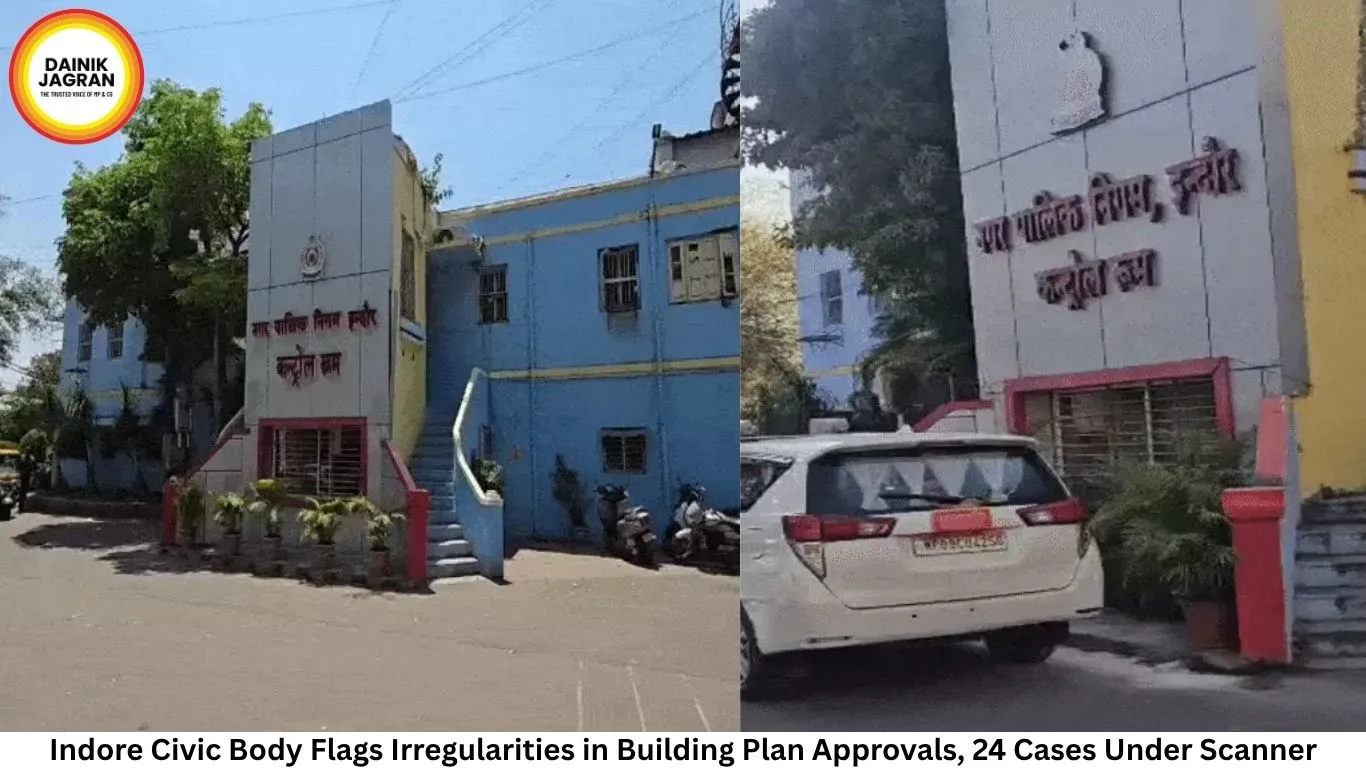
Indore Civic Body Flags Irregularities in Building Plan Approvals, 24 Cases Under Scanner

Digital Desk

Indore Civic Body Flags Irregularities in Building Plan Approvals, 24 Cases Under Scanner

Review of 300 building plans reveals fee discrepancies in 24 cases; municipal corporation orders wider investigation into past approvals

Questions have emerged over Indore Municipal Corporation’s deemed approval system, a mechanism introduced to speed up building plan approvals for smaller constructions without requiring applicants to visit government offices. A recent review conducted by the civic body's building department uncovered irregularities in multiple cases, raising concerns about the effectiveness of automated scrutiny and oversight.

According to officials, a detailed examination of nearly 300 building plans approved over the past month revealed that 24 applicants allegedly secured approval after paying fees lower than the prescribed amount. In several cases, the difference between the required and deposited fee ranged between ₹8,000 and ₹10,000.

The findings have prompted the municipal administration to initiate action against both property owners and licensed consultants allegedly involved in the irregularities. Notices have been issued, and authorities have announced a broader investigation into previously approved plans processed through the same system.

How the System Works

The deemed approval mechanism was introduced to simplify and accelerate the building permission process. Under the system, authorized architects or engineers upload building plans on an online portal on behalf of applicants. The software automatically verifies technical parameters and approves eligible proposals within a fixed timeline.

Officials said the process largely eliminates manual scrutiny by municipal staff, reducing delays and paperwork. However, the absence of direct human verification appears to have created opportunities for misuse in certain cases.

During the latest review, authorities found discrepancies between the prescribed approval fee and the amount actually deposited by some applicants. The issue has raised concerns about whether technical loopholes or incorrect declarations were used to obtain approvals.

Earlier Concerns in Smart City Area

This is not the first time concerns have surfaced regarding the system's implementation. A similar issue had previously been detected in the Area-Based Development (ABD) zone under the Smart City project.

Under existing regulations, building permission charges in the ABD area are higher than those in other parts of the city. As a result, deemed approval provisions are not applicable in those zones. Despite this restriction, some applicants reportedly managed to obtain online approvals by exploiting technical gaps in the system, forcing the municipal corporation to re-examine several permissions.

The recurrence of such cases has renewed debate over the need for stronger digital safeguards and periodic audits of automated approval mechanisms.

Corporation Orders Wider Probe

Additional Municipal Commissioner Prakhar Singh confirmed that the review had identified irregularities in a number of cases. According to officials, differences were found between the applicable fees and the amounts deposited by applicants.

The corporation has initiated corrective action and directed officials to conduct a comprehensive review of previously approved plans. The investigation will determine whether the discrepancies were isolated incidents or part of a broader pattern affecting the approval process.

Urban planning experts say the episode highlights the importance of balancing ease of doing business with accountability. While automated approval systems can significantly reduce delays, regular audits and verification mechanisms remain essential to prevent misuse and protect public revenue.

The outcome of the investigation is expected to influence future reforms in Indore’s building permission framework and could lead to stricter monitoring of digital approval systems. The case has become a significant public-interest issue amid ongoing discussions on transparency, governance, and technology-driven urban administration.

--------

🚨 Beat the News Rush – Join Now!

Get breaking alerts, hot exclusives, and game-changing stories instantly on your phone. No delays, no fluff – just the edge you need. ⚡

Tap to join: 

🟢 WhatsApp Channel: Dainik Jagran MP CG

Crave more?

🅕 Facebook: Dainik Jagran MP CG English

🅧 Twitter (X): Dainik Jagran MP CG

🅘 Instagram: Dainik Jagran MP CG

Share the fire – keep your crew ahead! 🗞️🔥

english.dainikjagranmpcg.com
22 Jun 2026 By Rishita

Indore Civic Body Flags Irregularities in Building Plan Approvals, 24 Cases Under Scanner

Digital Desk

Questions have emerged over Indore Municipal Corporation’s deemed approval system, a mechanism introduced to speed up building plan approvals for smaller constructions without requiring applicants to visit government offices. A recent review conducted by the civic body's building department uncovered irregularities in multiple cases, raising concerns about the effectiveness of automated scrutiny and oversight.

According to officials, a detailed examination of nearly 300 building plans approved over the past month revealed that 24 applicants allegedly secured approval after paying fees lower than the prescribed amount. In several cases, the difference between the required and deposited fee ranged between ₹8,000 and ₹10,000.

The findings have prompted the municipal administration to initiate action against both property owners and licensed consultants allegedly involved in the irregularities. Notices have been issued, and authorities have announced a broader investigation into previously approved plans processed through the same system.

How the System Works

The deemed approval mechanism was introduced to simplify and accelerate the building permission process. Under the system, authorized architects or engineers upload building plans on an online portal on behalf of applicants. The software automatically verifies technical parameters and approves eligible proposals within a fixed timeline.

Officials said the process largely eliminates manual scrutiny by municipal staff, reducing delays and paperwork. However, the absence of direct human verification appears to have created opportunities for misuse in certain cases.

During the latest review, authorities found discrepancies between the prescribed approval fee and the amount actually deposited by some applicants. The issue has raised concerns about whether technical loopholes or incorrect declarations were used to obtain approvals.

Earlier Concerns in Smart City Area

This is not the first time concerns have surfaced regarding the system's implementation. A similar issue had previously been detected in the Area-Based Development (ABD) zone under the Smart City project.

Under existing regulations, building permission charges in the ABD area are higher than those in other parts of the city. As a result, deemed approval provisions are not applicable in those zones. Despite this restriction, some applicants reportedly managed to obtain online approvals by exploiting technical gaps in the system, forcing the municipal corporation to re-examine several permissions.

The recurrence of such cases has renewed debate over the need for stronger digital safeguards and periodic audits of automated approval mechanisms.

Corporation Orders Wider Probe

Additional Municipal Commissioner Prakhar Singh confirmed that the review had identified irregularities in a number of cases. According to officials, differences were found between the applicable fees and the amounts deposited by applicants.

The corporation has initiated corrective action and directed officials to conduct a comprehensive review of previously approved plans. The investigation will determine whether the discrepancies were isolated incidents or part of a broader pattern affecting the approval process.

Urban planning experts say the episode highlights the importance of balancing ease of doing business with accountability. While automated approval systems can significantly reduce delays, regular audits and verification mechanisms remain essential to prevent misuse and protect public revenue.

The outcome of the investigation is expected to influence future reforms in Indore’s building permission framework and could lead to stricter monitoring of digital approval systems. The case has become a significant public-interest issue amid ongoing discussions on transparency, governance, and technology-driven urban administration.

https://english.dainikjagranmpcg.com/states/madhya-pradesh/indore-civic-body-flags-irregularities-in-building-plan-approvals-24/article-20466

Related Posts

Latest News
