


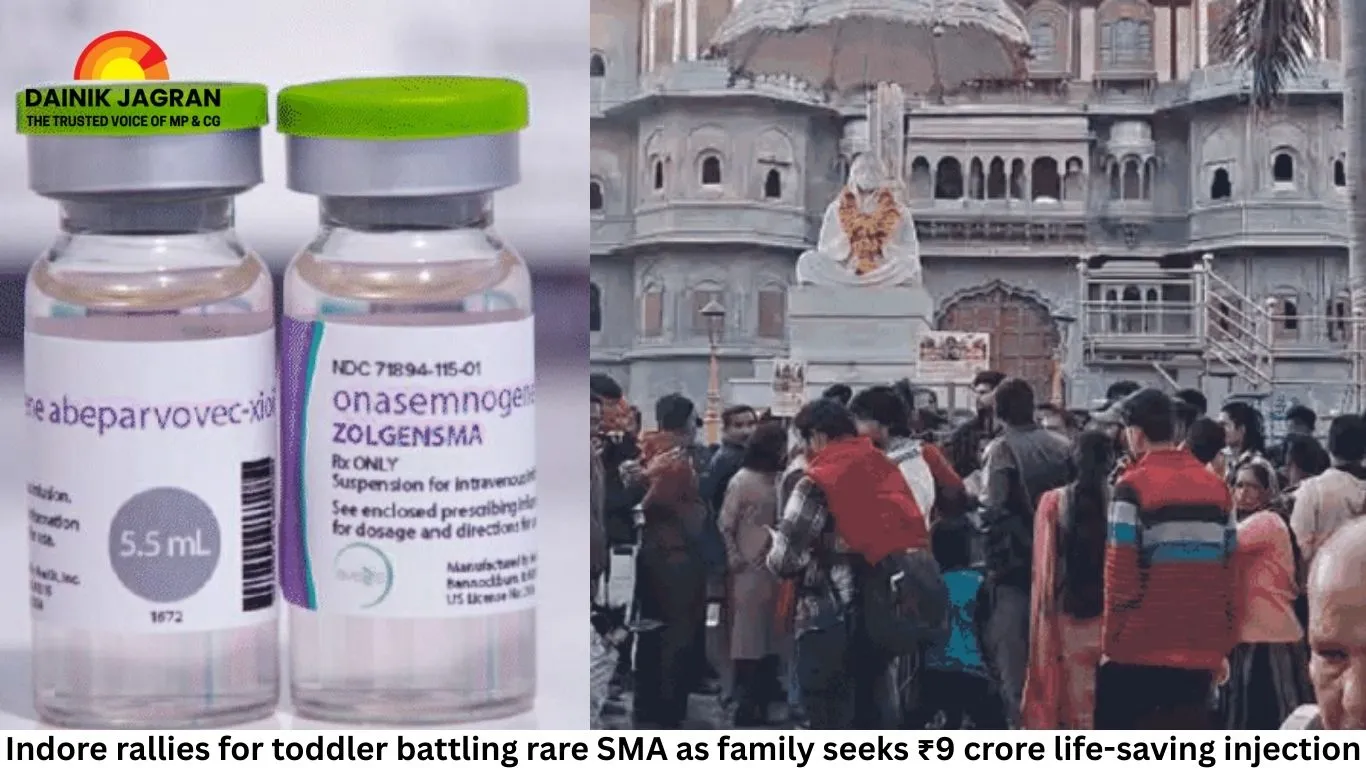
Indore rallies for toddler battling rare SMA as family seeks ₹9 crore life-saving injection
Digital Desk
Kanika, a resident of Dwarkapuri, has been diagnosed with SMA Type-2, a condition that causes progressive muscle weakness due to damage to motor nerve cells in the spinal cord. Without timely intervention, the disease can severely impair mobility, breathing and swallowing, and may prove fatal.
Her parents, Praveen and Sangeeta Sharma, have launched a fundraising campaign, appealing to the public as well as political leaders, actors and senior officials for support. On December 15, a large crowd gathered at Rajwada in Indore on Kanika’s birthday to raise funds for her treatment. So far, around ₹2.5 crore has been collected.
Doctors involved in the case said that once the full amount is arranged, the injection will be ordered from the US through AIIMS, which facilitates the import and administration of the drug. The medicine is manufactured by global pharmaceutical major Novartis and is costly due to limited global demand and complex gene-therapy technology.
Explaining the disease, paediatrician Dr Hemant Jain, former dean of MGM Medical College, said SMA is a neuro-muscular genetic disorder in which communication between the brain and muscles gradually weakens. “As motor neurons are destroyed, the child loses control over movement. Early diagnosis is critical, as damaged nerve cells cannot be revived,” he said.
Experts added that SMA can be detected during pregnancy through genetic testing and counselling, allowing for early intervention. While the Zolgensma injection is not considered a guaranteed cure, doctors say timely administration can significantly improve outcomes and, in some cases, allow children to lead near-normal lives.
The family continues to appeal for support, hoping to secure the remaining funds before the disease progresses further.




.jpg)




