

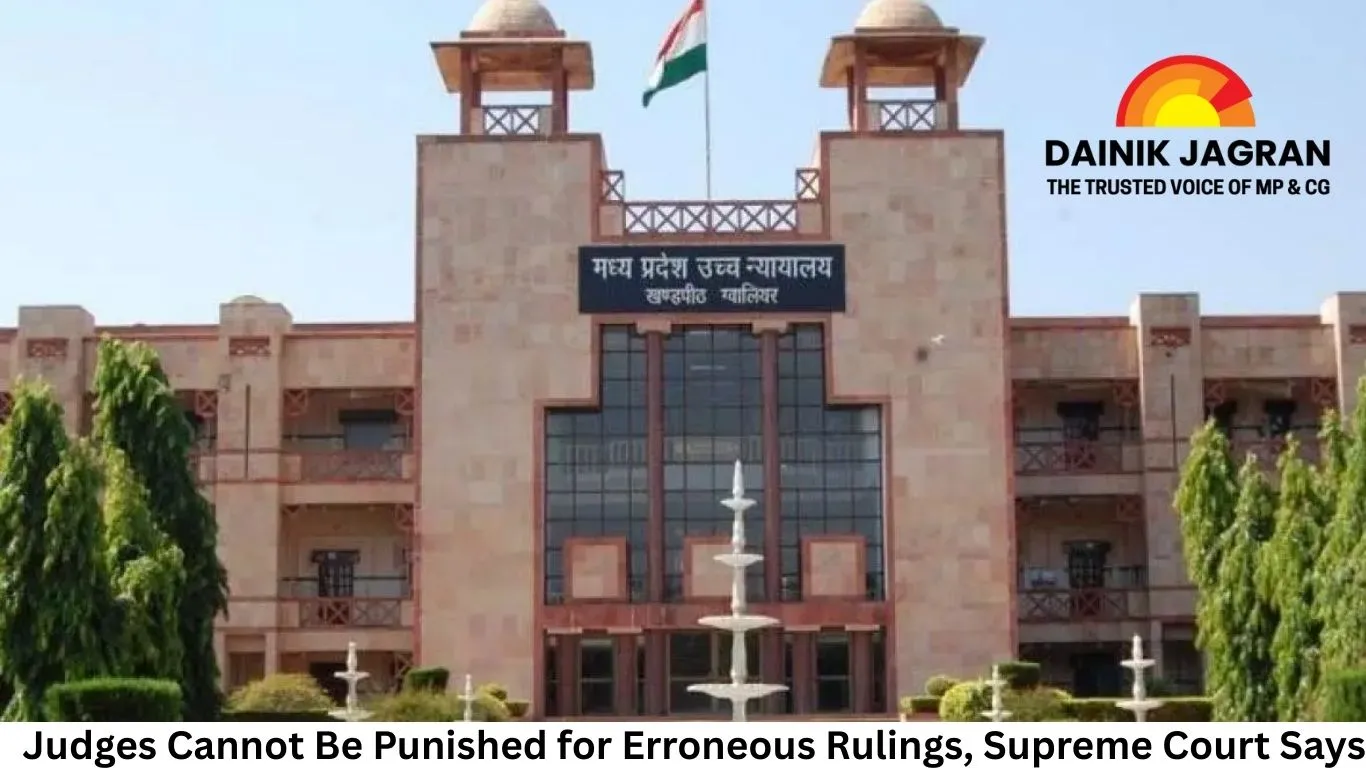
Judges Cannot Be Punished for Erroneous Rulings, Supreme Court Says; MP Judicial Officer’s Dismissal Quashed
Digital Desk
The Supreme Court on Monday set aside the dismissal of a Madhya Pradesh judicial officer, holding that judges cannot be punished merely for passing incorrect or debatable judicial orders. Emphasising the need to protect judicial independence, the court ruled that errors in decision-making do not amount to misconduct unless clear evidence of corruption or mala fide intent is established.
A bench comprising Justice J.B. Pardiwala and Justice K.V. Viswanathan quashed the 2014 removal of Nirbhay Singh Suliya, who was serving as an Additional District and Sessions Judge in Khargone at the time. The court found that the disciplinary action taken against him was unjustified and procedurally flawed.
Suliya had faced departmental proceedings over allegations related to his bail orders. He was accused of applying inconsistent standards while granting bail in cases under the Prevention of Corruption Act and the Excise Act. The charges alleged that he allowed bail in certain liquor seizure cases involving more than 50 bulk litres, while rejecting bail in other cases on similar facts. Following an inquiry, the Madhya Pradesh High Court dismissed him from service.
The Supreme Court, however, drew a clear distinction between judicial error and misconduct. “An incorrect order passed by a judicial officer does not, by itself, constitute misconduct,” the bench observed, adding that disciplinary proceedings cannot be used to punish judges for decisions that may later be found erroneous.
The court noted that Suliya had an unblemished service record spanning 27 years and was removed without adherence to due process. Such action, it said, undermines judicial independence and discourages judges from exercising discretion freely.
Warning High Courts against “mechanical action” in disciplinary matters, the bench said excessive scrutiny of judicial orders can create a climate of fear among trial court judges. This fear, the court observed, often leads to reluctance in granting bail even in deserving cases, pushing litigants to approach higher courts and increasing their workload.
The Supreme Court also called on High Courts to consider the intense pressure, heavy caseloads and working conditions faced by district judiciary members before initiating disciplinary action. It said proceedings should be launched only where there are strong and clear grounds pointing to misconduct.
At the same time, the bench made it clear that the ruling does not shield corruption. “If misconduct or corruption is clearly established, strict and immediate action must follow,” the court said, reiterating that corruption in the judiciary is unacceptable.
The court also expressed concern over false and baseless complaints against judges, directing that strict action be taken against complainants. If a lawyer is found to have made such complaints, the matter should be referred to the Bar Council for appropriate action.
--------
🚨 Beat the News Rush – Join Now!
Get breaking alerts, hot exclusives, and game-changing stories instantly on your phone. No delays, no fluff – just the edge you need. ⚡
Tap to join:
🟢 WhatsApp Channel: Dainik Jagran MP CG
Crave more?
🅕 Facebook: Dainik Jagran MP CG English
🅧 Twitter (X): Dainik Jagran MP CG
🅘 Instagram: Dainik Jagran MP CG
Share the fire – keep your crew ahead! 🗞️🔥
Judges Cannot Be Punished for Erroneous Rulings, Supreme Court Says; MP Judicial Officer’s Dismissal Quashed
Digital Desk
A bench comprising Justice J.B. Pardiwala and Justice K.V. Viswanathan quashed the 2014 removal of Nirbhay Singh Suliya, who was serving as an Additional District and Sessions Judge in Khargone at the time. The court found that the disciplinary action taken against him was unjustified and procedurally flawed.
Suliya had faced departmental proceedings over allegations related to his bail orders. He was accused of applying inconsistent standards while granting bail in cases under the Prevention of Corruption Act and the Excise Act. The charges alleged that he allowed bail in certain liquor seizure cases involving more than 50 bulk litres, while rejecting bail in other cases on similar facts. Following an inquiry, the Madhya Pradesh High Court dismissed him from service.
The Supreme Court, however, drew a clear distinction between judicial error and misconduct. “An incorrect order passed by a judicial officer does not, by itself, constitute misconduct,” the bench observed, adding that disciplinary proceedings cannot be used to punish judges for decisions that may later be found erroneous.
The court noted that Suliya had an unblemished service record spanning 27 years and was removed without adherence to due process. Such action, it said, undermines judicial independence and discourages judges from exercising discretion freely.
Warning High Courts against “mechanical action” in disciplinary matters, the bench said excessive scrutiny of judicial orders can create a climate of fear among trial court judges. This fear, the court observed, often leads to reluctance in granting bail even in deserving cases, pushing litigants to approach higher courts and increasing their workload.
The Supreme Court also called on High Courts to consider the intense pressure, heavy caseloads and working conditions faced by district judiciary members before initiating disciplinary action. It said proceedings should be launched only where there are strong and clear grounds pointing to misconduct.
At the same time, the bench made it clear that the ruling does not shield corruption. “If misconduct or corruption is clearly established, strict and immediate action must follow,” the court said, reiterating that corruption in the judiciary is unacceptable.
The court also expressed concern over false and baseless complaints against judges, directing that strict action be taken against complainants. If a lawyer is found to have made such complaints, the matter should be referred to the Bar Council for appropriate action.


