Meenakshi Natarajan Nomination Row Reaches Supreme Court
Digital Desk
Meenakshi Natarajan nomination dispute reaches the Supreme Court as Congress MLAs march to Rashtrapati Bhavan seeking intervention.
The Meenakshi Natarajan nomination row has escalated politically, with Congress legislators gathering in Delhi for a protest march while the Supreme Court is set to hear the challenge against the rejection of her Rajya Sabha nomination.
Congress Mobilises in Delhi
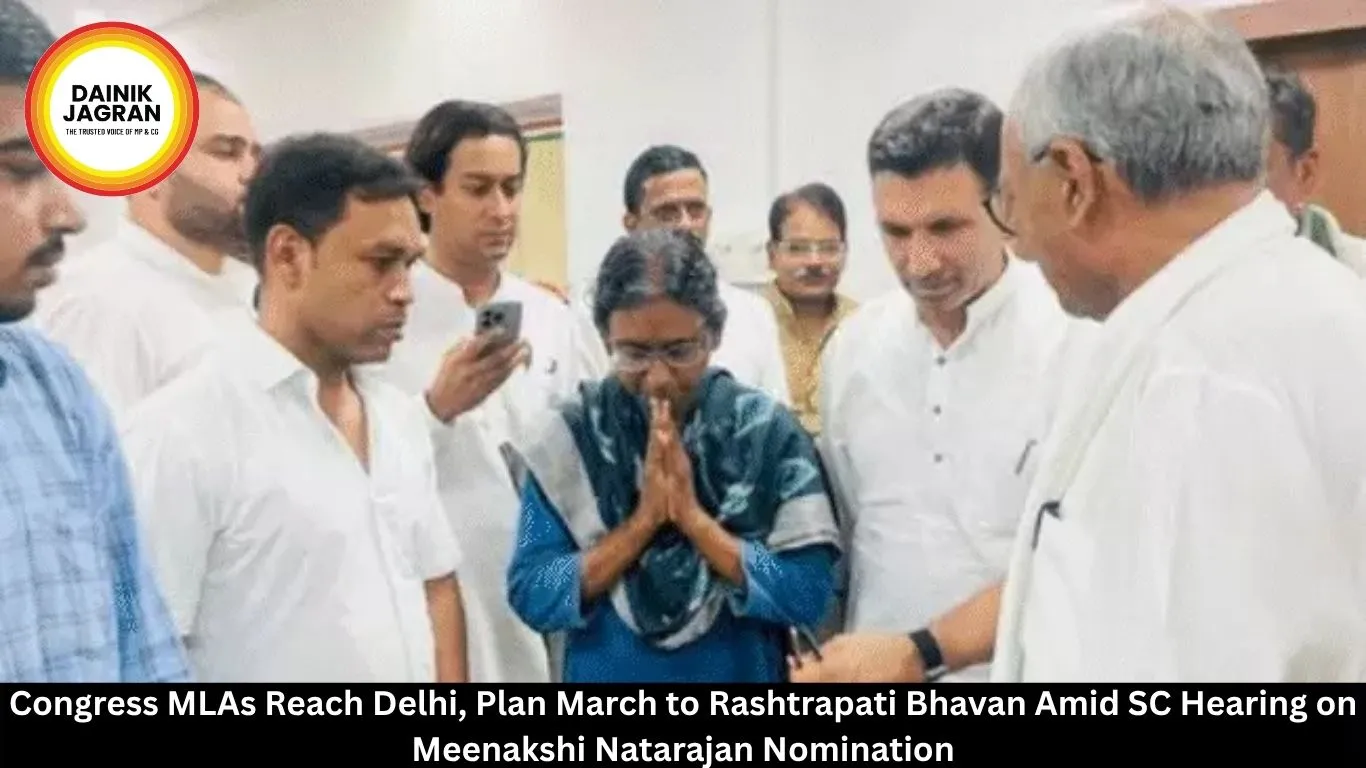
The political battle over the rejection of Congress Rajya Sabha candidate Meenakshi Natarajan’s nomination is set to intensify on Thursday, with party legislators from Madhya Pradesh arriving in Delhi for a coordinated protest and legal push.
Led by Leader of Opposition Umang Singhar, Congress MLAs are expected to march towards Rashtrapati Bhavan shortly. The party has also scheduled a press conference in the national capital, where senior leaders are likely to outline their position on the controversy surrounding Natarajan’s candidature.
Rajya Sabha candidate Meenakshi Natarajan, Madhya Pradesh Congress chief Jitu Patwari, state in-charge Harish Chaudhary and Singhar are expected to address the media.
Supreme Court Hearing Today
Alongside the political mobilisation, attention is focused on the Supreme Court, which is scheduled to hear the Congress challenge against the rejection of Natarajan’s nomination papers.
The party is hopeful that the court may provide relief and examine whether the nomination was rejected in accordance with established electoral and legal procedures.
The outcome of the hearing could have a direct bearing on the ongoing Rajya Sabha election process in Madhya Pradesh and determine whether further steps are required by election authorities.
Nomination Rejected During Scrutiny
The controversy began on June 9 when Returning Officer Arvind Sharma rejected Natarajan’s nomination during the scrutiny process.
The decision came after objections were raised by BJP candidate Mahesh Kewat and other BJP leaders. They alleged that Natarajan had failed to disclose details of a pending legal matter in a Telangana court in her election affidavit submitted as part of Form 26.
Election affidavits require candidates to provide information regarding criminal cases, assets, liabilities and other declarations mandated under election rules.
BJP Raises Disclosure Concerns
The Bharatiya Janata Party has maintained that the rejection was based on deficiencies in the nomination documents and was in line with electoral norms.
According to the objections submitted by BJP leaders, the alleged omission related to information that should have been disclosed in the affidavit accompanying the nomination papers.
Congress, however, has questioned both the grounds and the manner in which the nomination was rejected. Party leaders have argued that the decision deprived their candidate of a fair opportunity and has wider implications for democratic representation.
Legal Questions at Centre
Legal observers say the Supreme Court hearing is likely to focus on whether the Returning Officer acted within the framework of election law and whether principles of natural justice were adequately followed.
Congress is expected to argue that the rejection was disproportionate and that procedural fairness was not maintained. On the other hand, election authorities and the opposing side are likely to defend the Returning Officer’s decision as being consistent with statutory requirements.
The court’s observations could provide clarity on the extent of scrutiny powers available to election officials during the nomination process.
Political Stakes Remain High
The issue has quickly become a major political flashpoint in Madhya Pradesh. Congress leaders view the rejection as a challenge to the party’s participation in the Rajya Sabha election, while the BJP has defended the electoral process and the objections raised against the nomination.
With both political and legal developments unfolding simultaneously in Delhi, the Supreme Court’s response and the Congress protest march are expected to shape the next phase of the dispute.
The Meenakshi Natarajan nomination case is likely to remain under close watch as parties await judicial clarity and possible implications for the Rajya Sabha election process.

--------
๐จ Beat the News Rush โ Join Now!
Get breaking alerts, hot exclusives, and game-changing stories instantly on your phone. No delays, no fluff โ just the edge you need. โก
Tap to join:ย
๐ข WhatsApp Channel: Dainik Jagran MP CG
Crave more?
๐ Facebook: Dainik Jagran MP CG English
๐ ง Twitter (X): Dainik Jagran MP CG
๐ Instagram: Dainik Jagran MP CG
Share the fire โ keep your crew ahead! ๐๏ธ๐ฅ
Meenakshi Natarajan Nomination Row Reaches Supreme Court
Digital Desk
The Meenakshi Natarajan nomination row has escalated politically, with Congress legislators gathering in Delhi for a protest march while the Supreme Court is set to hear the challenge against the rejection of her Rajya Sabha nomination.
Congress Mobilises in Delhi
The political battle over the rejection of Congress Rajya Sabha candidate Meenakshi Natarajan’s nomination is set to intensify on Thursday, with party legislators from Madhya Pradesh arriving in Delhi for a coordinated protest and legal push.
Led by Leader of Opposition Umang Singhar, Congress MLAs are expected to march towards Rashtrapati Bhavan shortly. The party has also scheduled a press conference in the national capital, where senior leaders are likely to outline their position on the controversy surrounding Natarajan’s candidature.
Rajya Sabha candidate Meenakshi Natarajan, Madhya Pradesh Congress chief Jitu Patwari, state in-charge Harish Chaudhary and Singhar are expected to address the media.
Supreme Court Hearing Today
Alongside the political mobilisation, attention is focused on the Supreme Court, which is scheduled to hear the Congress challenge against the rejection of Natarajan’s nomination papers.
The party is hopeful that the court may provide relief and examine whether the nomination was rejected in accordance with established electoral and legal procedures.
The outcome of the hearing could have a direct bearing on the ongoing Rajya Sabha election process in Madhya Pradesh and determine whether further steps are required by election authorities.
Nomination Rejected During Scrutiny
The controversy began on June 9 when Returning Officer Arvind Sharma rejected Natarajan’s nomination during the scrutiny process.
The decision came after objections were raised by BJP candidate Mahesh Kewat and other BJP leaders. They alleged that Natarajan had failed to disclose details of a pending legal matter in a Telangana court in her election affidavit submitted as part of Form 26.
Election affidavits require candidates to provide information regarding criminal cases, assets, liabilities and other declarations mandated under election rules.
BJP Raises Disclosure Concerns
The Bharatiya Janata Party has maintained that the rejection was based on deficiencies in the nomination documents and was in line with electoral norms.
According to the objections submitted by BJP leaders, the alleged omission related to information that should have been disclosed in the affidavit accompanying the nomination papers.
Congress, however, has questioned both the grounds and the manner in which the nomination was rejected. Party leaders have argued that the decision deprived their candidate of a fair opportunity and has wider implications for democratic representation.
Legal Questions at Centre
Legal observers say the Supreme Court hearing is likely to focus on whether the Returning Officer acted within the framework of election law and whether principles of natural justice were adequately followed.
Congress is expected to argue that the rejection was disproportionate and that procedural fairness was not maintained. On the other hand, election authorities and the opposing side are likely to defend the Returning Officer’s decision as being consistent with statutory requirements.
The court’s observations could provide clarity on the extent of scrutiny powers available to election officials during the nomination process.
Political Stakes Remain High
The issue has quickly become a major political flashpoint in Madhya Pradesh. Congress leaders view the rejection as a challenge to the party’s participation in the Rajya Sabha election, while the BJP has defended the electoral process and the objections raised against the nomination.
With both political and legal developments unfolding simultaneously in Delhi, the Supreme Court’s response and the Congress protest march are expected to shape the next phase of the dispute.
The Meenakshi Natarajan nomination case is likely to remain under close watch as parties await judicial clarity and possible implications for the Rajya Sabha election process.