


MP Take Home Ration Scheme Row: Why Mohan Govt's Rethink of Shivraj's Policy Puts Lakhs of Women and Children at Risk
Digital Desk
Madhya Pradesh is in the middle of a political storm. The Mohan Yadav government is reportedly reconsidering the Take Home Ration scheme — a flagship nutrition programme built during Shivraj Singh Chouhan's 18-year reign. But as the two BJP heavyweights play out their differences, the real question is: who pays the price?
What Is the Take Home Ration Scheme, First?
The Take Home Ration — or THR — scheme is a government nutrition programme that delivers ready-to-eat or raw fortified food packets directly to the doorsteps of pregnant women, lactating mothers, and children between six months and three years of age. It was designed to eliminate the old problem of beneficiaries having to travel to Anganwadi centres to collect their ration.
Under Shivraj Singh Chouhan, the MP Take Home Ration scheme became one of the most visible welfare programmes in the state's remote districts. Now, the Mohan Yadav government is talking about reviewing the entire policy structure — and that is where the political trouble begins.
Mohan vs Shivraj — A Battle Inside the BJP?
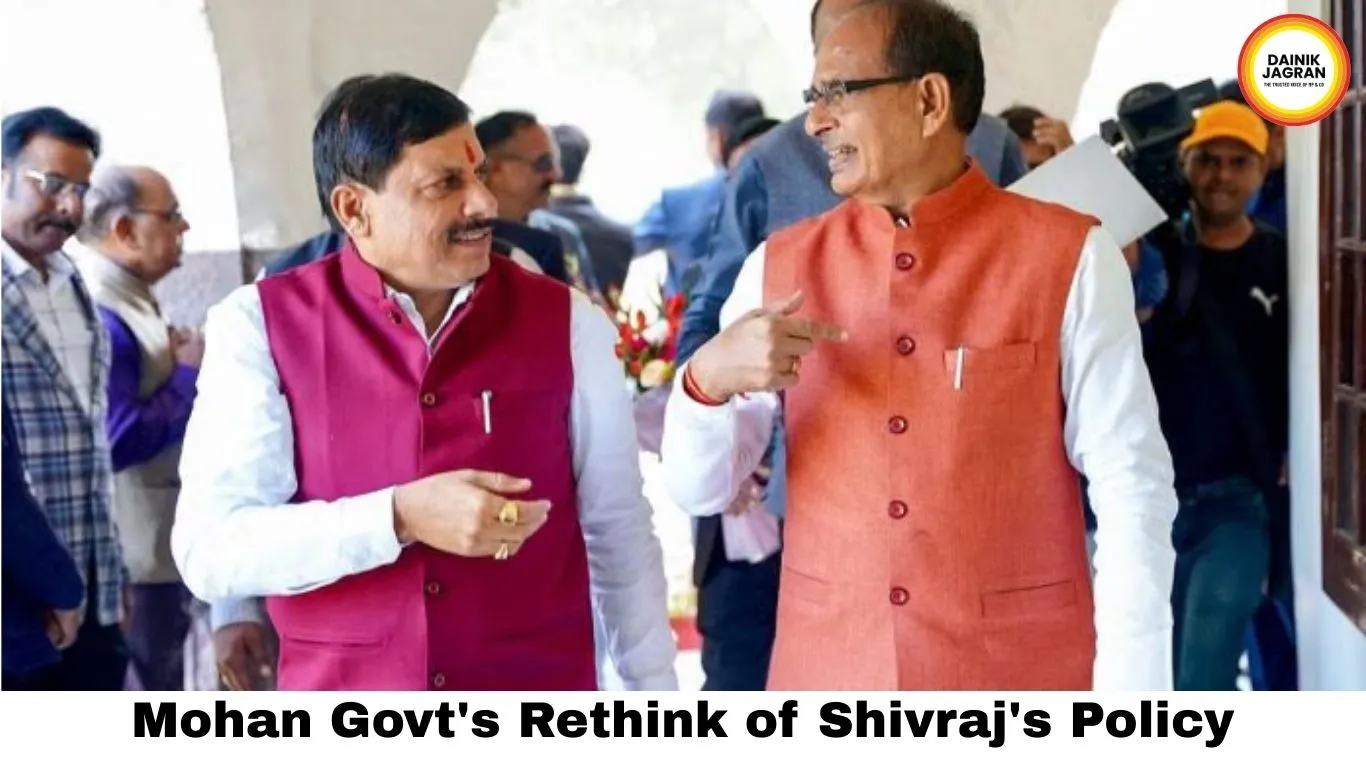
This is not simply a question of administrative efficiency. It reflects a deeper tension between two powerful leaders sharing the same political roof. On one side is Shivraj Singh Chouhan — now Union Agriculture Minister but still a dominant force in MP's political landscape. On the other is Mohan Yadav — who became Chief Minister in December 2023 and is clearly trying to establish his own identity beyond Shivraj's shadow.
Congress leader Umang Singhar has directly alleged that the friction between the two is visibly damaging governance. When leaders within the same party settle political scores at the top, it is the people waiting for ration at the bottom who suffer the consequences.
Who Really Loses If This Scheme Changes?
The beneficiaries of the THR scheme are among the most vulnerable sections of society — and that is precisely what makes this debate so serious. Any disruption to the scheme directly affects:
- Children aged 6 to 36 months — who receive fortified nutrition packets
- Pregnant women — for whom this ration is critical during pregnancy
- Lactating mothers — who need the highest calorie support
- Severely malnourished children — identified and tracked at Anganwadi centres
Madhya Pradesh continues to report alarmingly high rates of stunting and wasting among children under five. In this context, even a short disruption in ration delivery has lasting consequences on child development — consequences that cannot be reversed years later with political apologies.
The Corruption Cloud That Never Fully Lifted
The MP Take Home Ration scheme has not had a clean record. The State Accountant General's audit report previously flagged serious irregularities — delivery vehicles listed as trucks turned out to be motorcycles and ordinary cars. In plain terms, ration was never delivered but was recorded as delivered on paper.
Congress had used these findings to corner Shivraj Singh Chouhan during his tenure. Now that the Mohan government is framing this as a "reconsideration," a legitimate question arises — is this a genuine governance correction, or is it political distancing from Shivraj's legacy? Either way, shutting down or disrupting the scheme is not an answer. Fixing it is.
Delhi Is Watching — The POSHAN 2.0 Pressure
The Centre's POSHAN 2.0 framework and the Union Budget 2026-27's allocation of Rs 23,100 crore for Saksham Anganwadi and nutrition programmes send a clear message — states are expected to strengthen their THR delivery chains, not weaken them.
Both NITI Aayog and the World Food Programme have specifically recommended THR reforms for states like Madhya Pradesh. If Bhopal remains consumed by internal politics while children's nutrition suffers, India's goal of eliminating malnutrition by 2030 under the UN Sustainable Development Goals will remain a distant promise.
Opinion: Welfare Schemes Are Not One Government's Legacy — They Are a National Commitment
The argument is straightforward. If the scheme has flaws, fix them. Bring in digital tracking, integrate POSHAN Tracker for real-time monitoring, hold contractors accountable, bring Self-Help Groups into decentralised production. But do not dismantle what exists before building something better.
A hungry child cannot wait for political clarity. A poor mother's nutritional needs do not pause during an election cycle. Welfare schemes are not a Chief Minister's personal monument — they are a social contract that must survive changes in government.
The Mohan Yadav government has a real opportunity here — to reform a flawed system the right way, and to do so transparently. But if the decision is driven by the need to distance from Shivraj rather than a genuine concern for beneficiaries, history will record not just that Shivraj's scheme was discontinued — it will record that the ration meant for the most vulnerable children in Madhya Pradesh was taken away from them.

.jpg)




