Petrol, Diesel Prices Hiked by Rs 3 Per Litre Across MP

Digital Desk

Petrol, Diesel Prices Hiked by Rs 3 Per Litre Across MP

Fuel prices increased sharply across Madhya Pradesh from Friday morning after a rise in global crude oil rates linked to the Iran-US-Israel conflict.

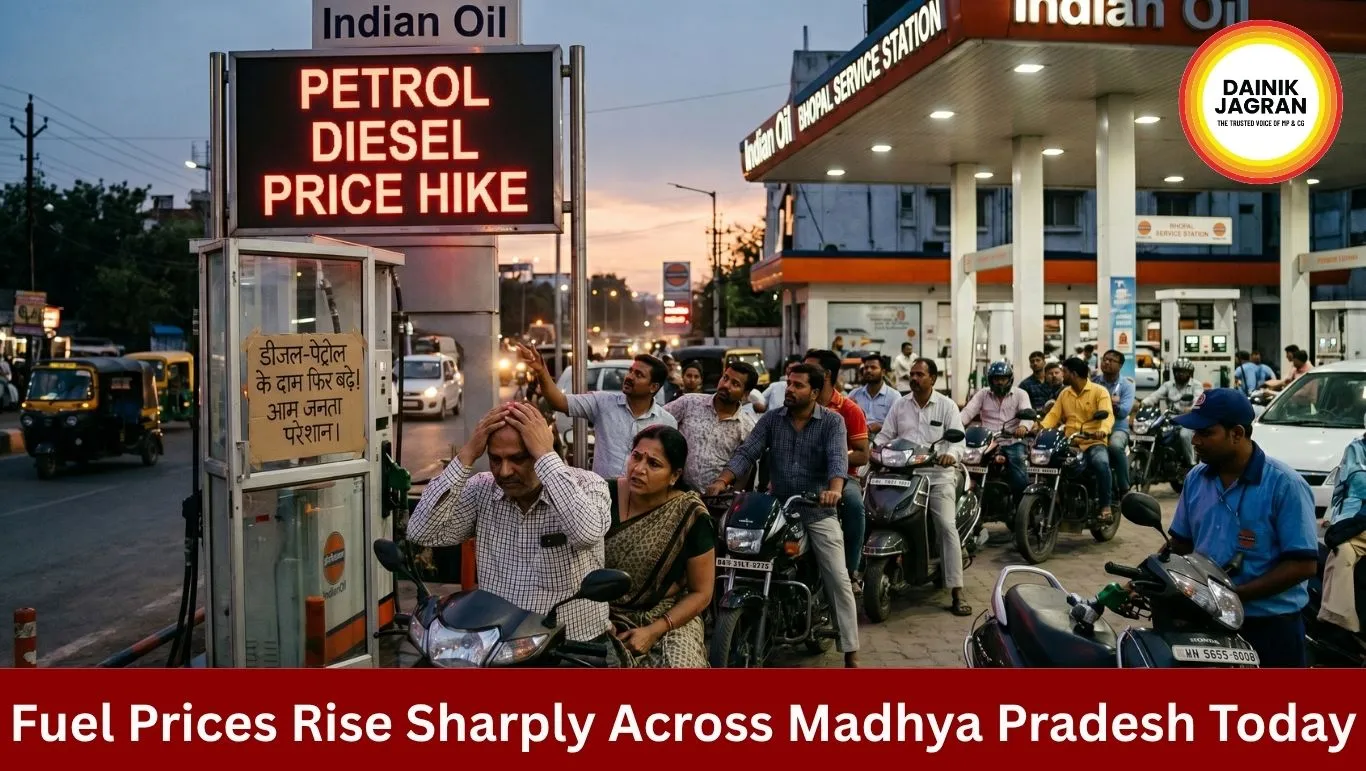
Petrol and diesel prices have increased sharply across Madhya Pradesh after oil companies revised fuel rates in response to rising international crude oil prices. The new prices came into effect from 6 am on Friday, leading to a fresh burden on consumers across the state. The development has become a major India News Update as the increase is directly linked to the ongoing geopolitical tensions involving Iran, Israel and the United States.

According to the revised rates, petrol and diesel prices have gone up by nearly Rs 3 per litre across Madhya Pradesh. In Bhopal, petrol now costs Rs 109.71 per litre, compared to the earlier rate of Rs 106.68. Diesel prices in the state capital have increased from Rs 91.87 to Rs 94.88 per litre. In Indore, petrol prices have reached Rs 109.86 per litre, while diesel is now being sold at Rs 95.06 per litre. Premium speed petrol in the city has also become costlier and is currently priced at Rs 119.56 per litre.

Other major cities in the state have also witnessed similar increases. Petrol in Ujjain is now retailing at Rs 110.16 per litre, while diesel has climbed to Rs 95.34. In Jabalpur, petrol prices touched Rs 110.10 per litre and diesel reached Rs 95.28 per litre. Gwalior recorded petrol prices at Rs 110.02 per litre and diesel at Rs 95.19 per litre. Officials from the Madhya Pradesh Petrol Diesel Association said Mandla and Pandhurna currently have the highest petrol prices in the state, where rates have reached Rs 111.29 per litre. Several other districts, including Alirajpur, Balaghat, Burhanpur, Khandwa, Maihar, Mauganj, Panna, Rewa and Sheopur, are also witnessing petrol prices above Rs 111 per litre.

Diesel prices are reportedly highest in Anuppur and Maihar, where consumers are paying nearly Rs 96.50 per litre after the latest revision. Industry experts said the primary reason behind the fuel price hike is the sharp rise in global crude oil prices. Before the escalation of tensions in West Asia, crude oil prices were hovering around 70 US dollars per barrel. However, after the intensifying conflict involving Iran, oil prices reportedly crossed the 100-dollar mark in the international market.

Oil marketing companies were facing mounting financial pressure due to the continued rise in crude prices. Officials indicated that the latest increase in retail fuel prices was necessary to reduce losses incurred by public sector oil companies. According to government estimates, major oil companies, including Indian Oil Corporation, Bharat Petroleum and Hindustan Petroleum, have been suffering heavy losses on the sale of petrol, diesel and LPG due to rising import costs.

Petroleum Ministry Joint Secretary Sujata Sharma reportedly stated that government-run oil companies were losing nearly Rs 30,000 crore every month because of high global crude prices and regulated domestic fuel rates. The price revision marks the first major increase in fuel rates after a long period of stability. Petrol and diesel prices had largely remained unchanged since March 2024, when the central government announced a reduction of Rs 2 per litre ahead of the Lok Sabha elections.

Although fuel prices in India are technically deregulated and companies can revise rates daily based on the average global crude oil price over 15 days, political and economic considerations often influence the timing of such changes. Government officials earlier maintained that despite rising international oil prices, the burden had not been transferred fully to Indian consumers. Neighbouring countries such as Pakistan, Nepal and Sri Lanka had already witnessed fuel price increases ranging between 15 and 20 percent due to the global energy crisis.

Experts now believe the current increase may not be the final revision if international crude prices continue to rise. Market analysts suggest that public sector oil companies may still require additional increases in petrol and diesel rates to fully recover losses and reach a break-even position.

According to industry estimates, companies may eventually need to raise petrol prices by nearly Rs 28 per litre and diesel prices by up to Rs 32 per litre if crude oil prices remain elevated for a prolonged period. The Centre had earlier attempted to stabilise fuel prices by reducing special additional excise duty on petrol and diesel by Rs 10 per litre each. Following the cut, excise duty on petrol had reduced significantly, while diesel duties were also lowered to provide relief to consumers.

Meanwhile, Prime Minister Narendra Modi recently urged citizens to use petrol, diesel and gas carefully amid the uncertain geopolitical situation in West Asia. During a public event in Telangana, the Prime Minister appealed for restrained use of imported petroleum products to reduce pressure on foreign exchange reserves and minimise the economic impact of global conflicts.

The sharp rise in fuel prices is expected to affect transportation costs, daily commuting expenses and prices of essential commodities in the coming weeks. Economists believe sectors dependent on fuel transportation could witness increased operational costs if crude oil prices remain volatile.

----------

--------

🚨 Beat the News Rush – Join Now!

Get breaking alerts, hot exclusives, and game-changing stories instantly on your phone. No delays, no fluff – just the edge you need. ⚡

Tap to join: 

🟢 WhatsApp Channel: Dainik Jagran MP CG

Crave more?

🅕 Facebook: Dainik Jagran MP CG English

🅧 Twitter (X): Dainik Jagran MP CG

🅘 Instagram: Dainik Jagran MP CG

Share the fire – keep your crew ahead! 🗞️🔥

english.dainikjagranmpcg.com
15 May 2026 By Vaishnavi

Petrol, Diesel Prices Hiked by Rs 3 Per Litre Across MP

Digital Desk

Petrol and diesel prices have increased sharply across Madhya Pradesh after oil companies revised fuel rates in response to rising international crude oil prices. The new prices came into effect from 6 am on Friday, leading to a fresh burden on consumers across the state. The development has become a major India News Update as the increase is directly linked to the ongoing geopolitical tensions involving Iran, Israel and the United States.

According to the revised rates, petrol and diesel prices have gone up by nearly Rs 3 per litre across Madhya Pradesh. In Bhopal, petrol now costs Rs 109.71 per litre, compared to the earlier rate of Rs 106.68. Diesel prices in the state capital have increased from Rs 91.87 to Rs 94.88 per litre. In Indore, petrol prices have reached Rs 109.86 per litre, while diesel is now being sold at Rs 95.06 per litre. Premium speed petrol in the city has also become costlier and is currently priced at Rs 119.56 per litre.

Other major cities in the state have also witnessed similar increases. Petrol in Ujjain is now retailing at Rs 110.16 per litre, while diesel has climbed to Rs 95.34. In Jabalpur, petrol prices touched Rs 110.10 per litre and diesel reached Rs 95.28 per litre. Gwalior recorded petrol prices at Rs 110.02 per litre and diesel at Rs 95.19 per litre. Officials from the Madhya Pradesh Petrol Diesel Association said Mandla and Pandhurna currently have the highest petrol prices in the state, where rates have reached Rs 111.29 per litre. Several other districts, including Alirajpur, Balaghat, Burhanpur, Khandwa, Maihar, Mauganj, Panna, Rewa and Sheopur, are also witnessing petrol prices above Rs 111 per litre.

Diesel prices are reportedly highest in Anuppur and Maihar, where consumers are paying nearly Rs 96.50 per litre after the latest revision. Industry experts said the primary reason behind the fuel price hike is the sharp rise in global crude oil prices. Before the escalation of tensions in West Asia, crude oil prices were hovering around 70 US dollars per barrel. However, after the intensifying conflict involving Iran, oil prices reportedly crossed the 100-dollar mark in the international market.

Oil marketing companies were facing mounting financial pressure due to the continued rise in crude prices. Officials indicated that the latest increase in retail fuel prices was necessary to reduce losses incurred by public sector oil companies. According to government estimates, major oil companies, including Indian Oil Corporation, Bharat Petroleum and Hindustan Petroleum, have been suffering heavy losses on the sale of petrol, diesel and LPG due to rising import costs.

Petroleum Ministry Joint Secretary Sujata Sharma reportedly stated that government-run oil companies were losing nearly Rs 30,000 crore every month because of high global crude prices and regulated domestic fuel rates. The price revision marks the first major increase in fuel rates after a long period of stability. Petrol and diesel prices had largely remained unchanged since March 2024, when the central government announced a reduction of Rs 2 per litre ahead of the Lok Sabha elections.

Although fuel prices in India are technically deregulated and companies can revise rates daily based on the average global crude oil price over 15 days, political and economic considerations often influence the timing of such changes. Government officials earlier maintained that despite rising international oil prices, the burden had not been transferred fully to Indian consumers. Neighbouring countries such as Pakistan, Nepal and Sri Lanka had already witnessed fuel price increases ranging between 15 and 20 percent due to the global energy crisis.

Experts now believe the current increase may not be the final revision if international crude prices continue to rise. Market analysts suggest that public sector oil companies may still require additional increases in petrol and diesel rates to fully recover losses and reach a break-even position.

According to industry estimates, companies may eventually need to raise petrol prices by nearly Rs 28 per litre and diesel prices by up to Rs 32 per litre if crude oil prices remain elevated for a prolonged period. The Centre had earlier attempted to stabilise fuel prices by reducing special additional excise duty on petrol and diesel by Rs 10 per litre each. Following the cut, excise duty on petrol had reduced significantly, while diesel duties were also lowered to provide relief to consumers.

Meanwhile, Prime Minister Narendra Modi recently urged citizens to use petrol, diesel and gas carefully amid the uncertain geopolitical situation in West Asia. During a public event in Telangana, the Prime Minister appealed for restrained use of imported petroleum products to reduce pressure on foreign exchange reserves and minimise the economic impact of global conflicts.

The sharp rise in fuel prices is expected to affect transportation costs, daily commuting expenses and prices of essential commodities in the coming weeks. Economists believe sectors dependent on fuel transportation could witness increased operational costs if crude oil prices remain volatile.

----------

https://english.dainikjagranmpcg.com/states/madhya-pradesh/petrol-diesel-prices-hiked-by-rs-3-per-litre-across/article-18339

Latest News